A woman in her early fifties messaged me last month with a question I hear often: her BP had been running around 138/88 for two years, well managed on a single tablet, and her gynaecologist had mentioned HRT for her hot flashes and disrupted sleep. Then a relative told her that “hormones are dangerous for blood pressure” and she should not even ask. She wanted to know who was right.
Neither version is quite accurate. Well-controlled hypertension does not rule HRT out on its own. What it does is push the decision toward a more deliberate choice of route, dose, and monitoring, so the plan is built around your actual numbers rather than a guess.
This post walks through what actually changes when hypertension is in the picture: why the route of oestrogen matters more than whether you take HRT at all, what “controlled” needs to mean before starting, the monitoring plan that follows, and when your gynaecologist brings a cardiologist into the conversation. If you want the mechanism behind why blood pressure tends to shift at this life stage in the first place, our guide to menopause and blood pressure covers that separately. This post is about the treatment decision once BP is already part of your picture.
The Short Answer: Controlled Hypertension Is Not an Absolute Contraindication
This is worth stating plainly because so much of what circulates informally suggests otherwise. NICE guideline NG23 (nice.org.uk, last reviewed April 2026) states that cardiovascular risk factors, including hypertension, are not a contraindication to HRT when they are optimally managed. The British Menopause Society’s HRT prescribing guidance (thebms.org.uk) takes the same position: well-controlled blood pressure does not close the door on hormone therapy.
What changes is how the conversation gets structured: which route of oestrogen makes sense, what “controlled” needs to look like before starting, and what gets monitored afterward. A woman with hypertension who is a candidate for HRT and a woman with no blood pressure history at all can both reasonably be offered hormone therapy, arrived at through a slightly different path.
Managing blood pressure and wondering if HRT is still on the table for you? Dr. Suganya reviews your BP history, current control, and overall cardiovascular picture before recommending a route.
Why the Route of Oestrogen Matters So Much Here
The single most important factor for a woman with hypertension is not whether she takes oestrogen, but how it enters her bloodstream.
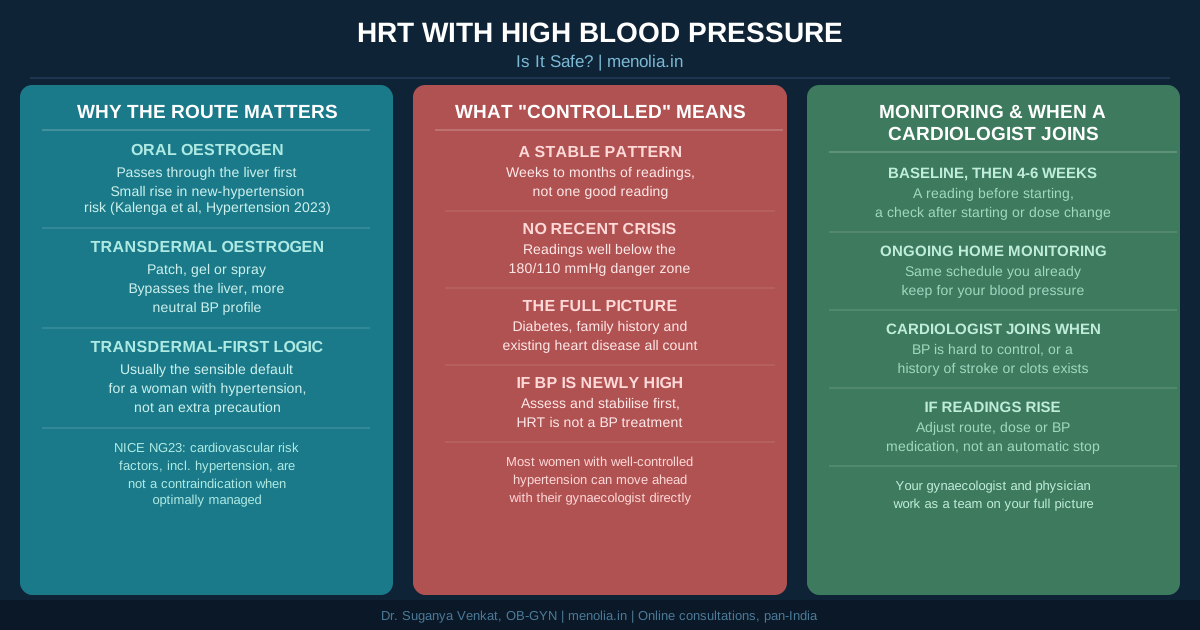
Oral oestrogen passes through the liver first, before reaching general circulation. This is called first-pass metabolism, and it changes several things: it increases the liver’s production of certain clotting proteins, and it can influence the renin-angiotensin system, the hormonal pathway that helps regulate blood pressure. This is part of why oral oestrogen has a small, measurable association with blood pressure and clotting effects that transdermal oestrogen does not share to the same degree.
Transdermal oestrogen, delivered through a patch, gel, or spray, is absorbed directly into the bloodstream through the skin, bypassing the liver almost entirely. It avoids that first-pass effect, which is why it is the route generally preferred for women with hypertension, elevated clot risk, or other cardiovascular considerations.
A large population-based cohort study of over 112,000 postmenopausal women found oral oestrogen was associated with a meaningfully higher incidence of newly diagnosed hypertension than transdermal oestrogen (HR 1.14, 95% CI 1.08-1.20; Kalenga CZ et al., Hypertension, 2023). This was an observational study, so it shows an association rather than proof of direct cause, but it lines up with what is already understood about first-pass metabolism, and it is consistent with why menopause societies favour the transdermal route for this group.
This is what I mean by “transdermal-first logic”: for a woman who already has hypertension, starting with a patch or gel is not an extra precaution layered on top of HRT. It is usually simply the sensible default, in the same way your doctor might default to a particular blood pressure medication class based on your specific profile.
Our guide to the estradiol patch in India covers cost, brands, and how to use it if this is the route your doctor recommends.
What “Controlled” Needs to Mean Before Starting
“Controlled hypertension” is doing a lot of work in that opening sentence, so it is worth being specific about what it means in practice before HRT enters the conversation.
Blood pressure that is stable on your current management, whether that is lifestyle measures alone or lifestyle plus medication, over a period of weeks to months, not a single good reading. Your doctor is looking at a pattern, not a moment.
No recent hypertensive crisis or dramatically fluctuating readings. Severely uncontrolled blood pressure, described in the British Menopause Society’s cardiovascular disease guidance (thebms.org.uk) as readings persistently at or above 180/110 mmHg, is treated as an uncontrolled cardiac risk factor that needs stabilising and a fuller cardiovascular risk review, before HRT becomes a routine discussion.
An honest look at what else is present alongside the hypertension. A woman with well-controlled BP and nothing else of note is in a different position from a woman whose hypertension sits alongside diabetes, a strong family history of stroke, or existing heart disease. The blood pressure number alone does not tell the whole story; your gynaecologist is weighing your overall cardiovascular risk profile, not just one reading.
If your BP is newly elevated, or you have not had it properly evaluated and treated yet, the sequence that works is to get it assessed and stabilised first. HRT is not a treatment for hypertension, and layering a new hormone into an unmanaged blood pressure picture makes it harder to know what is causing what.
The Monitoring Plan Once You Start
If you and your doctor decide HRT is appropriate, monitoring becomes part of the plan rather than an afterthought. This typically looks like:
A baseline reading before starting, so there is a clear “before” to compare against, ideally from a short run of home readings rather than a single clinic visit, which can run higher from nervousness alone (a pattern sometimes called white-coat hypertension).
A follow-up check within the first four to six weeks of starting or changing dose. This is the window where any effect, in either direction, is most likely to show up, and it is a natural point for your doctor to confirm the current dose and route are working well for you.
Ongoing home monitoring at the frequency you and your doctor agree on, alongside your regular BP checks. Many women already track this if hypertension is established; starting HRT is a good reason to keep that habit consistent rather than let it lapse.
A clear plan for what happens if readings rise. This does not automatically mean stopping HRT. It might mean adjusting your blood pressure medication, confirming the transdermal route and dose are optimal, or, occasionally, reconsidering the treatment plan. The point of monitoring is to catch a change early and respond to it, not to treat any single elevated reading as an emergency.
Already on blood pressure medication and considering HRT? Dr. Suganya works through your current BP control, medication, and symptom picture over a video consultation and gives you a specific route recommendation, not a generic rule. WhatsApp consultation at Rs 399.
When a Cardiologist Joins the Decision
Most women with well-controlled hypertension and no other significant cardiovascular history do not need a cardiologist involved to start HRT; the gynaecologist manages this conversation directly, often alongside the physician who prescribes the blood pressure medication.
A cardiologist typically becomes part of the conversation when:
Blood pressure has been difficult to control despite medication, or has needed several changes in regimen to stabilise.
There is a personal history of heart disease, stroke, or a prior blood clot, alongside the hypertension, rather than hypertension in isolation.
Multiple cardiovascular risk factors are present together, such as hypertension plus diabetes plus a strong family history, where the combined risk picture benefits from a specialist’s assessment rather than a single-factor view.
Blood pressure has been severely uncontrolled, meeting or approaching that 180/110 mmHg threshold, and needs stabilisation and a cardiovascular risk review before HRT is even discussed as routine.
This is not a sign that something has gone wrong. It reflects the same collaborative approach we take with any medical comorbidity: your gynaecologist manages the hormonal and menopause-specific side, and works alongside the specialist managing your cardiovascular health, so the decision is made with your complete picture in view, not in isolation.
What This Looks Like in Practice
For most women who message me with hypertension already stable on treatment, the path is straightforward: confirm the BP is genuinely well controlled with a short run of home readings, start with transdermal oestrogen at the lowest effective dose, add the appropriate progestogen if the uterus is present, recheck BP at four to six weeks, and then continue routine monitoring alongside whatever schedule they already keep for their blood pressure.
At Fertilia and Menolia, Dr. Suganya Venkat sees this exact scenario often in video consultations across India: a woman managing hypertension well who assumed HRT was simply off the table because of it. It usually isn’t. The more useful question to bring to your gynaecologist is “which route, at what dose, with what monitoring, is right for my specific numbers,” and that is a conversation she is well placed to have with you directly.
If oral tablets like Progynova come up in that conversation for reasons unrelated to blood pressure, our guide to Progynova and oral oestrogen options explains how they differ from the transdermal route discussed here. And if you are earlier in the decision and want the full picture on benefits, risks, and who HRT suits, our complete HRT guide is the place to start.
Frequently Asked Questions
Can I take HRT if I have high blood pressure?
Yes, in most cases, provided your blood pressure is well controlled. Both NICE guidance and the British Menopause Society treat hypertension as a factor to manage carefully rather than an absolute contraindication. Your gynaecologist will typically recommend transdermal oestrogen (patch or gel) as the preferred route and build in blood pressure monitoring around your start date.
Does HRT raise blood pressure?
It depends on the route. Oral oestrogen has a small, measurable association with a higher rate of newly diagnosed hypertension in research involving over 112,000 women, thought to relate to how it is processed by the liver. Transdermal oestrogen (patch, gel, or spray) bypasses that liver processing step and has a more neutral blood pressure profile in the same research, which is why it is generally preferred for women who already have hypertension.
Is transdermal HRT safer than oral HRT for blood pressure?
Current evidence suggests transdermal oestrogen is associated with a lower risk of new hypertension compared with oral oestrogen, and menopause society guidance favours transdermal HRT for women with existing blood pressure concerns. This is one of the main reasons doctors often default to a patch or gel over a tablet when hypertension is part of a woman’s history.
What blood pressure level is too high to start HRT?
There is no single universal cutoff, but persistently uncontrolled readings, generally described as 180/110 mmHg or higher in cardiovascular guidance, are treated as a signal to stabilise blood pressure and review overall cardiovascular risk before HRT becomes a routine discussion. Well-controlled hypertension, even if it requires medication, does not carry the same restriction.
Will I need to see a cardiologist before starting HRT?
Not usually, if your hypertension is well controlled and you have no other significant cardiovascular history. Your gynaecologist can manage this decision directly. A cardiologist typically becomes involved when blood pressure has been difficult to control, when there is a history of heart disease or stroke, or when several cardiovascular risk factors are present together.
How often will my blood pressure be checked once I start HRT?
A common pattern is a baseline check before starting, a follow-up around four to six weeks after starting or changing dose, and then ongoing monitoring at whatever frequency you and your doctor agree suits your overall blood pressure management. This is not different in spirit from monitoring after starting any new medication that could interact with your cardiovascular health.
If my blood pressure rises after starting HRT, do I have to stop?
Not automatically. A rise is first assessed in context: is the route the most suitable one, is the dose appropriate, does your existing blood pressure medication need adjustment. Stopping HRT is one option among several, and your doctor will usually try the least disruptive adjustment first, then reassess.
If you are managing blood pressure and weighing whether HRT is right for you, this is exactly the kind of decision worth talking through directly rather than guessing from general advice. Message Dr. Suganya Venkat on WhatsApp to start the conversation.