It is almost always at night. A woman is closing up the kitchen, sees the strip of tablets on the shelf, and realises the one from this morning is still sitting in its blister. Or she reaches to change a patch on Thursday and finds Monday’s patch still on her hip. The next thought is usually the same one: have I undone something?
Almost certainly not. A single missed dose of hormone therapy is one of the most common things women write to me about, and it is also one of the least consequential. But the advice for what to do next is not one rule. It changes depending on whether you take oestrogen on its own, a combined tablet, a capsule of progesterone at bedtime, or a patch you change twice a week. Getting told a generic answer is how women end up doubling a dose they should have skipped.
This post sets out what the general guidance is for each format, what you might notice for a day or two afterwards, the one part of the regimen worth guarding more carefully than the rest, and when a gap is long enough to be worth a phone call.
Before any of it, the single most important line in this post: the leaflet inside your own box is the authority. Missed-dose instructions are product-specific and they genuinely differ between brands, even between two products containing the same hormones. What follows tells you the general shape so you know what to expect and what never to do. It does not replace the sheet your pharmacist can also read out to you in a minute.
The General Pattern, by Format
This table summarises what the NHS medicines pages on nhs.uk say for each HRT type. Your product may say something slightly different, and where it does, it wins.
| What you take | What NHS guidance says |
|---|---|
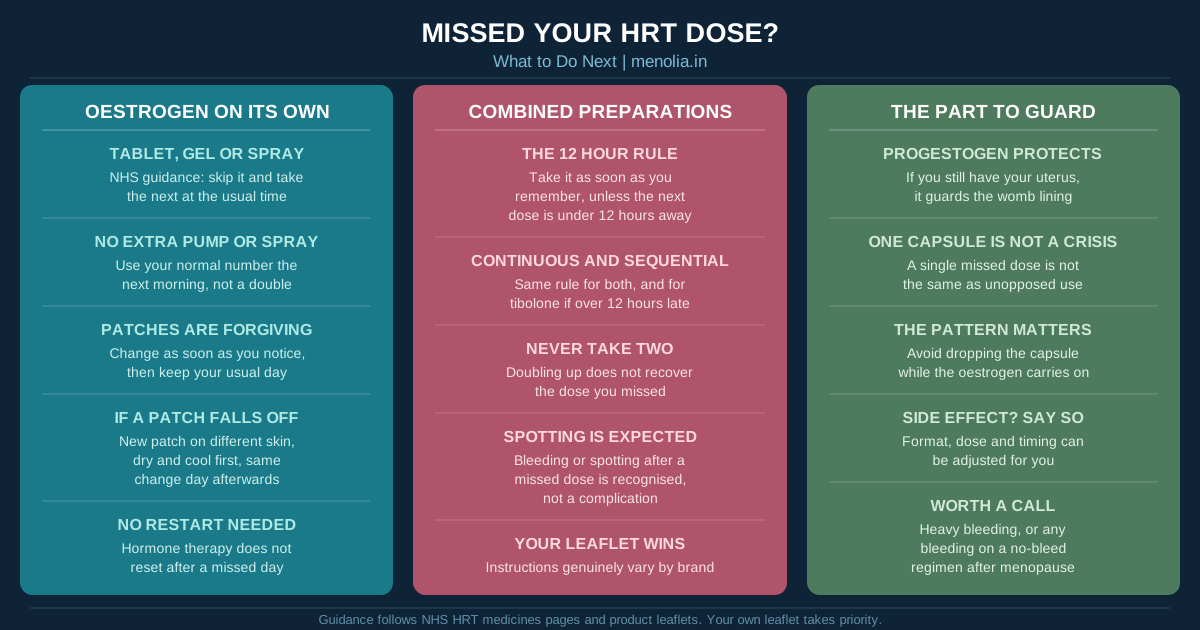
| Oestrogen-only tablet, gel or spray | Take or use it as soon as you remember, unless the next dose is due within about 12 hours. Then skip the missed one |
| Oestrogen patch (Estradot, Climara and similar) | Change it as soon as you remember, then change again on your usual day |
| Continuous combined tablet or capsule | Take it as soon as you remember, unless the next dose is due in under 12 hours. Then skip it |
| Sequential combined tablet | Same rule: take it as soon as you remember, unless under 12 hours to the next |
| Combined patch | Apply a new patch as soon as you remember, then go back to changing it on your usual day. Never wear two patches |
| Micronised progesterone capsule (Utrogestan, Susten) | Take it as soon as you remember, unless it is nearly time for the next one |
| Tibolone | Take it as soon as you remember, unless more than 12 hours have passed since it was due |
Individual product leaflets do vary. Some leaflets for oral, gel and spray oestrogen set a different cut-off, and a few instead ask you to skip the missed dose altogether and carry on at the usual time, so if yours says that, follow it. The same applies to patches, where the wording on what to do when the next change is almost due differs between brands.
One instruction, however, runs through every source I have seen. Never take two doses together to make up for a missed one, and never apply an extra patch for the same reason.
Spotting in the day or two after a missed dose is a recognised response to the gap, and for most women on a combined or sequential regimen that is what it turns out to be. It is not a rule you can apply to yourself in every situation, though. If you are past menopause and have been on a no-bleed regimen with no bleeding for some time, bleeding is assessed on its own merits regardless of a missed tablet, and the section on when to call sets out why.
The rows above follow the NHS medicines pages for oestrogen tablets, patches, gel and spray; continuous combined HRT; sequential combined HRT; Utrogestan; and tibolone, all last reviewed in January 2023.
Oestrogen on Its Own: Tablet, Gel or Spray
If you take oestrogen alone, because you have had a hysterectomy or because your progestogen comes separately, the general pattern is straightforward. Take the tablet, or apply the gel or spray, as soon as you remember. If the next dose is already due within about 12 hours, leave the missed one out and take or use the next one at the usual time.
That is general guidance for the class, not an instruction for your particular brand. Plenty of individual product leaflets take the other approach and ask you to skip the missed dose and simply take the next one at the usual time, which is equally reasonable. Check yours and follow it. What neither approach permits is a double pump of gel, a double spray, or two tablets to compensate.
The no-doubling rule surprises women who expect to be told to catch up. The reasoning is practical: an extra dose does not restore the level you missed in any useful way, and it does add a day of higher oestrogen than your body is used to, which is what tends to produce breast tenderness or nausea over the next 24 hours. Missing one day and carrying on cleanly usually causes less disturbance than trying to correct it.
If you are on gel, one detail catches people out. Oestrogel and Divigel are measured in pumps or sachets your doctor has set for you, and the temptation after a missed day is to use an extra pump the next morning. Use your normal number. Our guide on Oestrogel and Divigel in India covers the routine dosing in detail.
For oral oestrogen such as Progynova or Premarin, the same applies, and the practical pattern of daily use is set out in our post on oral HRT tablets in India.
If You Forgot a Patch, or One Came Off
Patches are forgiving, which is part of why many women in India prefer them once they have tried both. An estradiol patch is releasing hormone steadily across several days, so being a day late is a smaller event than being a day late with a tablet.
If your change day has slipped past, put a fresh patch on as soon as you notice, then go back to changing it on your usual day. You do not need to restart a cycle count or shift your schedule permanently.
What to do when the next change is almost due anyway is the point where leaflets diverge, so this is one to read rather than reason out. The general instruction is to apply a new patch as soon as you notice and then return to your usual change day, never wearing two at once; some individual leaflets instead tell you to leave the missed change and simply change on the usual day. Your product’s sheet tells you which applies to you.
If a patch has fallen off, that is a slightly different situation, and it is worth knowing the distinction because the two get muddled. A patch that comes off is not a missed dose so much as an interrupted one. Put a new patch on a different area of skin, then continue changing it at your usual time. If it came off in the bath or shower, dry the skin and let it cool before applying the new one, because warm damp skin is the main reason the next patch fails to stick too. Applying a patch straight after a hot shower, or onto skin where moisturiser or talc has just gone on, is the commonest cause of a patch that quietly peels away by lunchtime.
Patches that repeatedly lift in Indian summers are a real problem rather than a user error, and the fix is usually placement and timing rather than a stronger adhesive. The practical detail is in our post on the estradiol patch in India.
Missing doses more often than you would like? That is usually a sign the regimen does not fit your day rather than a failure of memory. Dr. Suganya reviews the format, the timing and the reminders that would suit your routine, over a video consultation.
Combined Tablets: Where the 12 Hour Mark Comes In
For combined preparations, whether continuous combined (the same two hormones every day, no bleed expected) or sequential combined (progestogen for part of the cycle, with a bleed), the NHS guidance introduces a threshold.
Take the missed tablet as soon as you remember. If your next dose is due in less than 12 hours, leave the missed one out and take the next at the usual time. Do not take two. The patient information leaflet for Femoston and Femoston-conti, the estradiol and dydrogesterone combinations on medicines.org.uk, words it the same way and adds the line women find most reassuring: bleeding or spotting may occur if you miss a dose.
That last sentence is worth holding on to, because spotting after a missed tablet is the single most common reason a woman gets frightened and calls. A short interruption in hormone can prompt the lining to shed a little, and in most cases it settles once you are back on schedule. Bleeding can have other causes, though, so it is not something to assume, particularly if you are past menopause and had not been bleeding. Persistent or heavy bleeding is a different matter and belongs in a conversation with your doctor, which our post on breakthrough bleeding on HRT separates out properly.
Tibolone (sold as Livial) follows its own version of the rule: take it as soon as you remember unless more than 12 hours have gone by since it was due, in which case skip it. Its place in the HRT picture is covered in our post on tibolone and who it suits.
The Progestogen Is the Part to Guard
Here is the one part of the regimen that deserves a section rather than a line.
If you still have your uterus, your progestogen is not a supporting player in the regimen. It is there to protect the lining of the womb from the effect of oestrogen. The NHS Utrogestan page states it plainly: keep taking your progestogen if you are taking oestrogen, because oestrogen on its own can cause problems with the womb lining, including womb cancer.
Read carefully, though, because the distance between that sentence and a missed capsule on Tuesday is large. If you forget a capsule, follow the rule in the table: take it when you remember, unless the next one is nearly due, in which case skip it and carry on. That single gap is not the situation the warning is describing. What it describes is a sustained pattern: stopping the progestogen while continuing the oestrogen, running out of one and not the other, or quietly dropping the capsule because it makes you drowsy while the gel carries on every morning. That is the situation to avoid, and it is avoidable simply by telling your doctor the capsule is not working for you rather than dropping it on your own.
If a progestogen side effect is what is driving the missed doses, say so. There are several formats, and the dose and timing can be adjusted. Our post on Susten and Duphaston in menopause HRT covers how they differ, and why HRT needs progesterone at all explains the protection it provides in full.
I am Dr. Suganya Venkat, an OB-GYN with more than fifteen years in practice, and I have never changed a woman’s prescription because of a single missed dose. I have changed plenty because a woman told me she was missing the same dose every week, which is information about the fit of the regimen, not about her discipline.
What You Might Notice for a Day or Two
After one missed dose, most women notice nothing at all. Some notice one of these, and all of them settle as the routine resumes:
- A flush or two returning, often in the evening. Vasomotor symptoms respond quickly to a dip and recover just as quickly.
- Light spotting, most likely with combined tablets and with sequential regimens.
- A broken night. Sleep is often the first symptom to improve on HRT and among the first to wobble when a dose is skipped.
- Mood or irritability for a day, particularly if the missed dose was the progestogen at bedtime.
None of these mean the treatment has stopped working or that you have to start again from the beginning. Hormone therapy does not reset. You are simply back where you were once you are back on schedule.
Longer Gaps: Travel, Supply and Forgotten Refills
A few days is a different question from one evening, and it comes up more often than missed single doses do. A trip where the strip stayed in the other suitcase. A pharmacy that has not had your brand for a fortnight. A refill that needed a prescription you did not have time to get.
For a gap of a few days, resume at your usual dose rather than trying to compensate, and expect symptoms to take a few days to settle back. Do not double up on the days after.
If you are on a sequential regimen, where the progestogen runs only on certain days, ask your doctor or pharmacist where in the cycle to pick up rather than guessing. Resuming on the wrong cycle day affects when and how you bleed, and it is a question they can answer quickly. The same applies to any gap that has run past a week or two, or where your symptoms have returned properly, because at that point your doctor may want to check the restart rather than leave it to the strip.
Two habits prevent most of these. Reorder when the strip is about a week from empty rather than on the last day, and when you travel, keep hormone therapy in your handbag rather than in checked luggage. For patches, carry two spares. They weigh nothing and they cover the one that will not stick in the heat.
If you are thinking about stopping rather than simply forgetting, that is a planned conversation with your doctor rather than a gap you let run. Some women step the dose down gradually and some stop outright; both are done, and the choice is one to make with the person who prescribes for you. Our guide on how to stop HRT safely sets out the options.
When It Is Worth a Call
Most missed doses need no call at all. These are the ones that do:
- Bleeding that is heavy, or spotting that carries on for more than a few days after you have resumed
- Any bleeding at all if you are past menopause and have been on a no-bleed regimen with no bleeding for some time
- You have run out of your progestogen but still have oestrogen at home, and are unsure whether to continue the oestrogen alone
- You have missed doses often enough that you are no longer sure where you are in a sequential cycle
- Symptoms that came back during the gap and have not settled a week after restarting
The second of those deserves emphasis without alarm. Bleeding after menopause always warrants assessment rather than an assumption, whatever the likely explanation, and our post on post-menopausal bleeding sets out why it is checked and what the assessment involves.
Making It Harder to Forget
The women who stop missing doses rarely do it through willpower. They do it by attaching the dose to something that already happens.
- Pair it with a fixed daily event. The progesterone capsule goes next to the bedside water jug. The morning tablet sits beside the tea or coffee things rather than in a cupboard.
- Pick one patch day and keep it forever. Monday and Thursday for twice-weekly, one fixed weekday for weekly. A patch day that moves is a patch day that gets missed.
- Use a weekly pill box if you take more than one medicine. It also answers the question that sends women into a spiral at midnight: did I take it, or am I remembering yesterday?
- Set a repeating phone alarm with the medicine’s name in the label rather than a generic ring.
- Mark the strip or the calendar if you are on a sequential regimen where the progestogen runs only on certain days.
If none of this works after a genuine attempt, the format is the thing to change, not the effort. A woman who cannot reliably remember a daily tablet often does well on a twice-weekly patch, and that is a conversation worth having rather than a compromise.
Frequently Asked Questions
Can I take two HRT tablets if I missed yesterday’s?
No. This is the one instruction that is consistent across the NHS guidance for every HRT type and across the product leaflets: do not take two doses to make up for a missed one. An extra dose does not recover what was missed and tends to bring on breast tenderness or nausea for a day. Skip it or take it according to the rule for your format, then carry on as normal.
I forgot my patch for two days. Do I start the cycle again?
No. Apply a fresh patch as soon as you remember and go back to changing it on your usual day. Your schedule stays as it was. There is no restart and no catch-up patch.
HRT ki dose miss ho gayi to kya kare?
Sabse pehle apni dawa ke packet ka leaflet dekhiye, kyunki har product ka instruction thoda alag hota hai. General guidance yeh hai: agar aap sirf oestrogen lete hain (tablet, gel ya spray), to yaad aate hi le lijiye ya laga lijiye, lekin agar agli dose 12 ghante ke andar hai to missed dose chhod dijiye. Agar aap combined tablet lete hain, to yaad aate hi le lijiye, lekin agli dose 12 ghante ke andar hai to chhod dijiye. Do dose ek saath kabhi na lein. Ek dose miss hone se treatment kharab nahi hota, aur thoda spotting ho sakta hai jo apne aap theek ho jata hai.
Will missing a dose cause bleeding?
It can, and it is a recognised response rather than a complication. The NHS guidance for continuous combined, sequential combined and tibolone all note that vaginal bleeding or spotting may follow a missed dose, and the Femoston leaflet says the same. It usually settles within a few days of resuming. Bleeding that is heavy, or that continues after you are back on schedule, should be assessed.
I missed my progesterone capsule but took the oestrogen. Is that dangerous?
For a single missed capsule, follow the usual rule: take it when you remember, or skip it if the next one is nearly due, then carry on as normal. One gap handled that way is not the concern. What matters is the pattern. Progestogen protects the lining of the womb in women who still have a uterus, so the situation to avoid is continuing oestrogen while the progestogen has been stopped or is being skipped regularly. If a side effect is making you avoid the capsule, tell your doctor rather than dropping it.
Does missing doses mean my HRT will stop working?
No. Hormone therapy does not need to build up from scratch again after an interruption. Symptoms may flicker for a few days after a gap and then settle back to where they were. What repeated missed doses do affect is steadiness: bleeding patterns are less predictable and symptom control is patchier, which is a reason to fix the routine rather than a reason to worry about the treatment.
My leaflet says something different from this post. Which do I follow?
Your leaflet. Missed-dose instructions vary between brands and formats, and the leaflet inside your box is specific to the product you are holding. This post covers the general pattern for each type of HRT so you know what to expect. If your leaflet gives a different instruction, or you cannot find one, your pharmacist can tell you in a minute.
If you are missing doses often, unsure which rule applies to your prescription, or dealing with bleeding after a gap, that is worth sorting out properly rather than guessing from the strip. Message Dr. Suganya Venkat on WhatsApp to talk it through.