A woman in her early fifties messaged me last month with a question she said she felt embarrassed to ask: was it safe to keep taking the sleeping tablet a relative had given her, now three months running, because without it she lay awake until 2 AM most nights? She was not addicted in any dramatic sense. She simply had not slept properly in a year, had tried “just getting into a routine,” and had reached for whatever was in the house that worked.
That question, in some form, comes up in nearly every consultation about menopausal sleep. Women arrive having already tried melatonin gummies, an antihistamine tablet a pharmacist suggested, or a strip of something a doctor prescribed years ago for a different reason. What they want to know is not “how do I sleep better” in the abstract. They already know about cutting screens and cooling the room. What they want is a straight answer on the pills themselves: which ones actually work, which ones are safe to keep taking, and which ones quietly become a bigger problem than the sleeplessness they were meant to fix.
This post covers only that question, the medication layer. For the fuller picture of why menopause disrupts sleep and the full range of non-drug approaches, our guides on perimenopause sleep problems and menopause sleep problems cover the mechanism and behavioural strategies in depth, and our CBT for menopause guide explains the therapy that current guidelines rank above every medication discussed here. If snoring, gasping, or unrefreshed sleep despite adequate hours describes you, read menopause and sleep apnea first, because no sleep aid on this list treats a breathing problem.
Melatonin: What the Evidence Shows
Melatonin is the sleep aid most women reach for first, largely because it is sold as a supplement rather than a medicine and carries a reputation for being gentle. The evidence is more mixed than that reputation suggests.
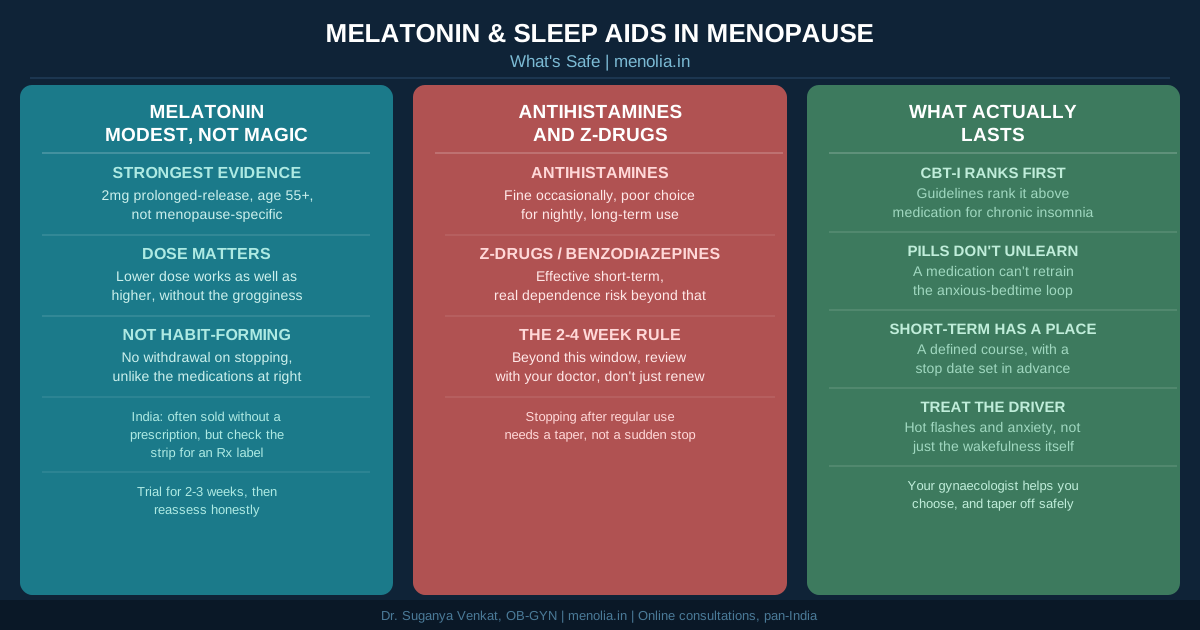
A 2021 meta-analysis of randomised controlled trials in menopausal women found no statistically significant overall improvement in sleep quality compared with placebo, though the estimate was imprecise and the authors called for larger trials before drawing a firm conclusion either way. Separately, the strongest evidence for melatonin and sleep comes from trials of prolonged-release melatonin in adults aged 55 and above with primary insomnia, not from perimenopausal women specifically. In one randomised trial of 170 adults in that age group, 2 mg prolonged-release melatonin taken for three weeks improved self-rated sleep quality and next-morning alertness compared with placebo. A separate trial found response rates of 26% with prolonged-release melatonin against 15% with placebo, with a modest reduction in the time it took to fall asleep.
What this means in practice: melatonin has real, if modest, evidence behind it for age-related insomnia in people over 55, particularly for early-morning waking and trouble settling the body clock. Its evidence specifically for perimenopausal sleep disruption, where hot flashes and night sweats are often the bigger driver, is much thinner. It is a reasonable thing to trial, not a proven fix for menopause-specific waking.
Not sure whether melatonin, an antihistamine, or something else fits what’s actually keeping you awake? Dr. Suganya reviews your sleep pattern, what’s disrupting it, and what’s reasonable to try, over a video consultation.
Sensible dosing and timing
If you decide to try melatonin, the dose that the evidence supports is lower than what most Indian pharmacy shelves stock. Prolonged-release melatonin trials used 2 mg, taken one to two hours before bedtime. Many over-the-counter melatonin products sold in India and internationally come in 3 mg, 5 mg, or even 10 mg strips, doses chosen for marketing, not for better sleep. Higher doses are not more effective and are more likely to leave you groggy the next morning. If you are trying it, a lower dose taken consistently, reassessed after two to three weeks with a simple sleep diary, is the sensible approach: continue only if it is genuinely helping, not because stopping feels risky.
Melatonin’s availability in India sits in a grey zone worth knowing about. Standalone melatonin tablets and gummies are widely sold without a prescription, but this is a practical reality rather than a formal approval category, and packaging can vary: some products carry a prescription-only label, and any combination product that pairs melatonin with a sedative like zolpidem is prescription-only because the sedative component is a controlled medicine. Check the strip. If it says “to be sold on the prescription of a Registered Medical Practitioner only,” treat it that way even if the pharmacist did not ask.
Melatonin is not habit-forming and does not appear to cause withdrawal on stopping, which is a meaningful safety advantage over the medications discussed below. It is not, however, free of interactions. Discuss it with your doctor first if you take anticoagulants, have epilepsy or an autoimmune condition, or take medicines that affect liver enzyme pathways, since melatonin is metabolised through one of those pathways and levels can shift accordingly.
Antihistamines: The Self-Medication Trap
Diphenhydramine and similar antihistamines show up in “sleep aid” and cold-and-flu combination products, and a fair number of women start using them for sleep simply because one was already in the house for allergies. This is worth pausing on, because it is the sleep aid least likely to be discussed with a doctor and, in this population specifically, one of the least suited to regular use.
Antihistamines of this class work by blocking a receptor called the muscarinic receptor, and that same blocking action is what causes their drowsiness. It also causes dry mouth, constipation, blurred vision, and next-day grogginess that tends to be worse than with purpose-built sleep medications, because the sedation is a side effect, not the intended action, and it does not wear off cleanly by morning. Regular use in older adults is specifically flagged in geriatric prescribing guidance because of this anticholinergic burden, which has been associated with next-day cognitive fog with repeated use. For occasional, one-off use, an antihistamine is unlikely to cause harm. For nightly use over weeks or months, which is how most women actually end up using the “leftover allergy tablet” strategy, it is not a good long-term sleep solution and tends to stop working as well as your body adjusts to it, tempting a higher dose rather than a different approach.
Z-Drugs and Benzodiazepines: Real Help, Real Dependence Risk
Zolpidem and similar “Z-drugs,” along with older benzodiazepine sleeping tablets, are genuinely effective for short-term insomnia, and there is no need to be afraid of a doctor prescribing one for a specific, time-limited reason: a bad stretch after surgery, an acute grief period, a few nights before a stressful event. The concern is not the medication itself. It is what happens when “a few nights” quietly becomes months, which is exactly the pattern the woman I mentioned at the start had drifted into without deciding to.
Both drug classes carry a real risk of tolerance (needing more for the same effect) and physical dependence with regular use, and current geriatric prescribing guidance recommends avoiding them in older adults specifically because of the combined risk of next-day sedation, cognitive impairment, and falls. Women are identified as a higher-risk group for this class of medication, and dependence can develop even at prescribed doses without anyone taking more than instructed. If you have used one nightly for more than two to four weeks, that is worth a conversation with your doctor about a taper, not a decision to stop on your own, since abrupt discontinuation after regular use can cause withdrawal symptoms including rebound insomnia that feels worse than the original problem.
The practical comparison: these medications work faster and more reliably than melatonin for a bad night. What they do not do is treat the underlying menopausal sleep disruption, and every week you rely on them without addressing what is actually driving the waking (hot flashes, anxiety, a shifted body clock) is a week the dependence risk quietly accumulates while the root cause goes unaddressed.
Already relying on a prescription sleeping tablet most nights? That is worth reviewing rather than continuing indefinitely. Dr. Suganya can work through a safe taper alongside a plan that actually targets what is keeping you awake. WhatsApp consultation at Rs 399.
Why CBT-I Outperforms Every Pill on This List, Long Term
This is the part that gets lost when the conversation stays focused on which tablet to take: Cognitive Behavioural Therapy for Insomnia (CBT-I) is the treatment current sleep guidelines rank above medication for chronic insomnia, including menopausal insomnia, and its benefit does not fade the way pharmacological effects typically do once you stop taking something. CBT-I works by retraining the association between your bed and sleep, and correcting the compensatory habits (extra time in bed, daytime napping, clock-watching) that keep insomnia going long after the original hormonal trigger has settled.
The reason this matters for the medication question specifically: none of melatonin, antihistamines, or Z-drugs address the behavioural loop that chronic insomnia builds around itself. A pill can get you through a bad stretch. It does not unlearn the anxious anticipation of a bad night that tends to develop after months of poor sleep, which is often what keeps insomnia going even once the hot flashes have eased. Our full guide to CBT for menopause covers what the therapy involves and how to access it in India, including options that do not require an in-person specialist.
When Short-Term Medication Use Is a Reasonable Choice
None of this is an argument against ever using a sleep aid. Short-term, purposeful use has a place:
- A defined stressful period (surgery recovery, acute bereavement, a specific event) where a two-to-four-week course, agreed with your doctor and with a stop date set in advance, can genuinely help you function.
- Melatonin as a low-dose trial for early-morning waking or a shifted body clock, reassessed honestly after a few weeks rather than continued by default.
- A bridge while CBT-I or hormone therapy takes effect, since both work over weeks, not overnight, and a short course of something faster-acting can make that waiting period more bearable, provided the plan from the start is to taper off once the underlying approach is working.
What separates reasonable short-term use from the pattern that becomes a problem usually comes down to two things: whether there was ever a plan to stop, and whether anyone besides you is tracking how long “short-term” has actually lasted.
Frequently Asked Questions
Is melatonin safe to take every night during menopause?
Low-dose melatonin (around 2 mg, taken one to two hours before bed) is not habit-forming and does not appear to cause withdrawal on stopping, which makes it safer for longer use than antihistamines or prescription sleeping tablets. That said, its evidence specifically for menopausal sleep disruption is limited, so it is best used as a monitored trial (two to three weeks, then reassess) rather than an indefinite nightly habit. Discuss it with your doctor first if you take anticoagulants or have epilepsy or an autoimmune condition.
What dose of melatonin works?
The strongest trial evidence uses 2 mg of prolonged-release melatonin, taken one to two hours before bedtime. Many products sold in India come in 3 mg, 5 mg, or 10 mg strengths, doses not supported by better outcomes in the research and more likely to cause next-day grogginess. Lower is the evidence-backed choice.
Can I take an antihistamine for sleep instead of melatonin?
Occasional use is unlikely to cause harm, but antihistamines like diphenhydramine sedate through a mechanism that also causes dry mouth, constipation, and next-day grogginess, and regular use is flagged in prescribing guidance for older adults because of cumulative next-day cognitive effects. It is not a good choice for nightly, long-term use, even though it is easy to reach for because one is often already in the house.
Are Z-drugs like zolpidem addictive?
They carry a real risk of tolerance and physical dependence with regular use, and current geriatric prescribing guidance recommends avoiding them in older adults because of the combined risk of sedation, cognitive impairment, and falls. Short-term, doctor-supervised use for a specific reason is reasonable. Regular use beyond two to four weeks should be reviewed with your doctor, and stopping after regular use should be tapered rather than sudden.
Why does my doctor keep mentioning CBT-I instead of just prescribing something?
Because current guidelines rank Cognitive Behavioural Therapy for Insomnia above medication for chronic insomnia, including menopausal insomnia. Unlike a pill, its benefit tends to hold after treatment ends, because it corrects the habits and anxious anticipation that keep insomnia going even after the original trigger (hormonal fluctuation, hot flashes) has settled. Medication can help in the short term; CBT-I is what tends to fix the pattern.
Is it safe to combine melatonin with HRT?
There is no known dangerous interaction between melatonin and hormone therapy, and many women use both, melatonin for sleep-timing and HRT for the vasomotor symptoms driving the waking. As with any combination, mention both to your doctor so your full picture, including any other medications, is accounted for.
How long is too long to be on a prescription sleeping tablet?
Most prescribing guidance points to two to four weeks as the window for short-term use. If you have been taking one nightly for longer than that, it is worth a conversation with your doctor, not because something has necessarily gone wrong, but because the plan for a proper taper and for actually treating what is disrupting your sleep may not have happened yet.
If a sleeping tablet has quietly become a nightly habit, or you are not sure which sleep aid actually fits what is keeping you awake, that is worth a proper look rather than continuing on guesswork. Message Dr. Suganya Venkat on WhatsApp to talk through your sleep pattern and safer options.