You spent your teens and twenties dealing with acne and assumed that chapter was firmly behind you. Then, somewhere in your early forties, you started noticing spots along your jawline and chin. Deep ones, the kind that sit under the skin for days, take ages to come to a head, and leave a dark mark behind even after they clear. You may have blamed your face wash, your diet, the stress of a particular month, and moved on. But if the pattern kept repeating, along the lower face, around the same times, and alongside other changes you were not expecting, the common thread is not a face wash. It is your hormones.
Perimenopausal and menopausal acne is real, it is common, and it is widely underrecognised because most conversations about menopause focus on hot flashes, sleep, and mood. But skin changes are among the earlier and more visible signs of this transition, and acne is one of them.
This post covers why this happens, how adult hormonal acne differs from teenage acne, what a gentle and evidence-appropriate management approach looks like for Indian skin, and when a hormonal workup is worth requesting.
The Hormonal Shift Behind It
The explanation comes down to the timing of hormonal change during perimenopause.
Oestrogen and androgens (including testosterone, though at lower levels in women than in men) are both present throughout a woman’s reproductive life. Oestrogen has a calming, balancing effect on the sebaceous glands, the tiny oil-producing glands attached to hair follicles across the face. Androgens have the opposite effect: they stimulate sebaceous glands to produce more oil.
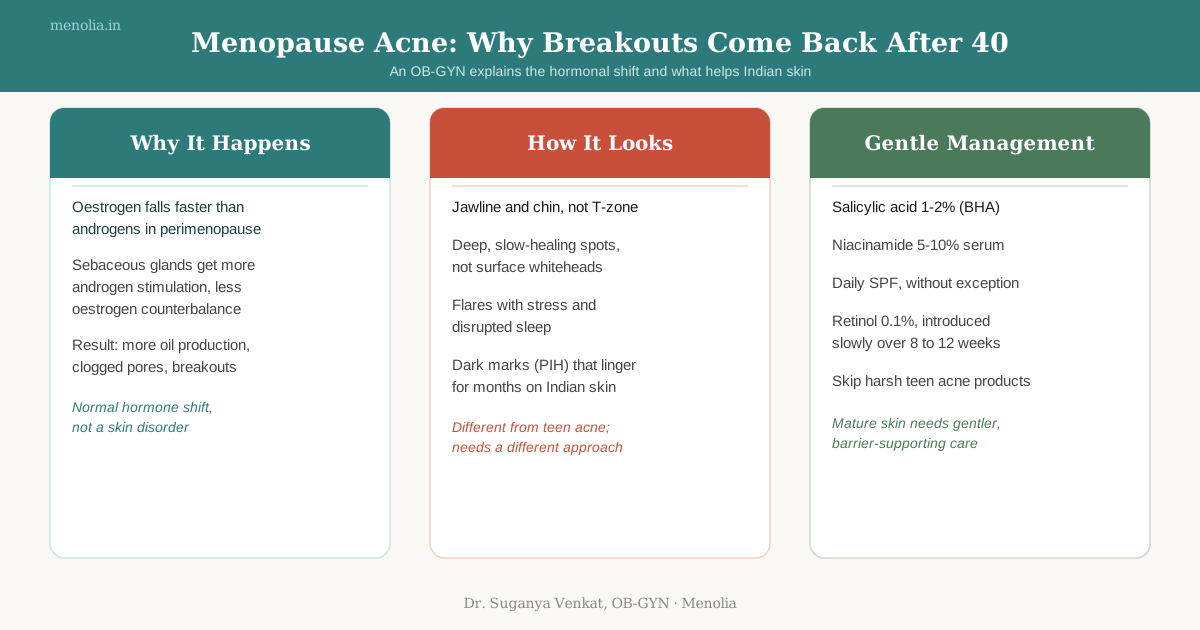
Through most of the reproductive years, oestrogen keeps this balance in check. As perimenopause begins, oestrogen levels start to fall. They fall faster and more variably than androgen levels, which decline much more gradually. The result is a shift in relative hormonal balance: not that androgens are suddenly high, but that their effect is now less opposed. The sebaceous glands, which carry androgen receptors, respond to this by increasing oil production (Zouboulis and Degitz, 2004, Experimental Dermatology).
More sebum, combined with the other skin changes that lower oestrogen brings (altered skin barrier, slightly different microbiome, fluctuating pore behaviour), can tip the balance toward clogged pores and inflammatory breakouts. This pattern is sometimes called adult hormonal acne, perimenopausal acne, or late-onset acne. Whatever it is called, the driver is the same: a relative shift in the oestrogen-to-androgen ratio.
It is worth saying clearly: this is a normal consequence of the hormonal transition. It does not mean your skin is disordered or that you are doing something wrong.
Why Adult Acne Looks and Behaves Differently
Understanding how menopausal acne differs from teenage acne matters, because the difference changes what helps and what makes things worse.
Where it appears. Hormonal adult acne tends to concentrate along the jawline, chin, and lower cheeks. Teenage acne driven by puberty-related hormonal surges is typically distributed across the T-zone: the forehead, nose, and central chin. If your breakouts are consistently appearing around the jaw and lower face, this pattern is a strong indicator of a hormonal driver.
How deep it goes. Adult hormonal spots are often papules or nodules sitting deeper under the skin rather than the surface whiteheads and blackheads more typical of teenage acne. They are slower to develop, slower to resolve, and more likely to feel like a firm lump under the skin before anything appears on the surface.
When they appear. Many women notice flares in the week before a period (if menstruation is still occurring), during periods of significant stress, or following a run of poor sleep. This cyclical or stress-linked timing is a useful clue that the acne is hormonally driven rather than a purely local skin problem.
The marks they leave. Adult skin takes longer to heal and longer to fade discolouration. What a teenager might clear in ten days can leave a visible mark on skin in its forties for three to six months or longer, particularly in Indian skin.
A Gentle Approach for Mature Skin
The most important reframe here is that your skin is not only dealing with acne. It is simultaneously thinning slightly from lower oestrogen, carrying less natural moisture, and managing a more fragile barrier than it did in your twenties. The harsh treatment protocols marketed for teenage acne, high-strength benzoyl peroxide, astringent toners with alcohol, abrasive scrubs, are calibrated for younger, oilier, more resilient skin. Used on menopausal skin, they strip and inflame rather than heal.
The goal is to manage the acne without damaging the skin barrier in the process.
A non-stripping cleanser. A gentle foaming or gel cleanser used morning and evening clears oil without disrupting the barrier. Avoid soap bars (too alkaline) and anything that leaves skin feeling tight after rinsing.
Salicylic acid at a low percentage. Salicylic acid (a beta-hydroxy acid, or BHA) is oil-soluble and able to penetrate inside pores to help clear the congestion that leads to breakouts. At 1 to 2%, used two to three times a week as a toner or serum, it is effective and reasonably well-tolerated by mature skin. Starting at 1% is sensible if your skin is sensitive. Daily use of high-percentage BHAs in Indian humidity can cause irritation.
Niacinamide at 5 to 10%. Niacinamide is one of the most practical actives for Indian skin dealing with adult acne. It reduces sebum production modestly, strengthens the skin barrier, reduces redness around breakouts, and fades post-inflammatory pigmentation, the dark marks that spots leave behind on darker skin tones. It is compatible with both salicylic acid and retinoids and is generally well-tolerated for daily use.
Daily sun protection. Sunscreen is not optional and not just for beach days. Post-inflammatory hyperpigmentation (PIH) is significantly more pronounced in Fitzpatrick type IV to VI skin, the range where most Indian women fall. Every unprotected sun exposure on a healing spot intensifies the mark and extends the time to fading (Sheth and Pandya, 2011, Journal of the American Academy of Dermatology). SPF 30 or above daily, including on overcast days and when working near a window, is the single most effective thing you can do to prevent the long-lasting marks that adult acne leaves.
Retinol, introduced slowly. Retinoids (starting with retinol at 0.1 to 0.25%, or prescription adapalene at a low concentration) improve cell turnover, reduce comedone formation, and gradually fade post-inflammatory marks. They are effective for adult acne but must be introduced slowly on mature skin. Start with retinol twice a week, applied on dry (not damp) skin, and build up over eight to twelve weeks. Starting too quickly with retinoids on thinning menopausal skin commonly causes a weeks-long cycle of peeling, redness, and barrier disruption that sets back the progress.
What to skip. Harsh physical scrubs, foaming washes with high-strength benzoyl peroxide, alcohol-based astringents, and any formulation marketed for teen acne. These are calibrated for skin with a different baseline.
The broader picture of how oestrogen loss affects skin texture, collagen, and moisture is covered in the menopause skin dryness guide, and the full range of facial skin changes (redness, puffiness, pigmentation) is in the menopause face changes guide.
If you are dealing with persistent jawline breakouts and would like to understand whether a hormonal assessment is relevant for your situation, WhatsApp Dr. Suganya for an online consultation. Video call, across India, Rs 399.
The Post-Inflammatory Pigmentation Challenge in Indian Skin
This deserves its own section because it changes the treatment priorities for many Indian women.
Indian skin (broadly Fitzpatrick type IV to VI) is more prone to post-inflammatory hyperpigmentation than lighter skin types. When inflammation occurs, including the low-grade inflammation of a healing acne spot, melanin-producing cells respond more intensely. The result is that the acne itself may be mild to moderate, but the dark marks it leaves can last months to over a year and feel more distressing than the active breakouts.
This shifts the clinical priority: for many women, preventing and fading the marks matters as much as treating the active spots.
The hierarchy becomes:
- Sun protection daily (prevents marks from deepening and slows formation of new ones)
- Niacinamide for both active acne and existing discolouration
- Salicylic acid to reduce new comedones and active breakouts
- Retinol introduced slowly for cell turnover and gradual mark fading
For women with persistent, deep marks, azelaic acid (available in some over-the-counter formulations in India) and alpha-arbutin serums are additional options that target pigmentation. For significant PIH that does not respond to topicals over several months, a dermatologist can advise on superficial chemical peels or prescription-strength actives.
Realistic timelines: topical treatment for adult acne is a three-to-six month process. The hormonal driver does not switch off, so the goal is managing flares, reducing their severity, and fading marks progressively. Consistency over months outperforms switching products every few weeks.
When a Hormonal Workup Is Worth Doing
Most perimenopausal acne is part of the normal hormonal transition and does not require blood tests. The management approach above is appropriate for the majority of cases.
There are situations, however, where speaking to a doctor about a more thorough hormonal assessment makes sense. Consider raising this if:
- Your acne is severe or cystic, with painful, deep nodules rather than moderate jawline breakouts
- You are also noticing significant, rapid-onset facial hair growth alongside the acne, and scalp hair thinning in a pattern suggesting diffuse androgen effect (this triad together, not any single element, warrants evaluation)
- The acne developed very suddenly or is getting significantly worse over a short period
- Breakouts are not responding at all after three to four months of consistent appropriate skincare
In these situations, a free testosterone and DHEAS (dehydroepiandrosterone sulphate) level can help rule out significant adrenal or ovarian androgen excess, which, while uncommon, is worth excluding when the picture is more severe. The large majority of women who request this test during perimenopause will have entirely normal results, and the reassurance is valuable.
The overlap between acne, facial hair growth, and the relative androgen shift of menopause is covered in more depth in the menopause facial hair guide.
What HRT Does (and Does Not Do) for Acne
HRT is not prescribed for acne. But its secondary effects on skin are worth understanding, particularly if you are already considering or taking it for other menopausal symptoms.
Some women notice an improvement in acne once they start HRT. When oestrogen levels rise, the relative androgen balance shifts back, sebum production calms down, and the hormonal driver of the breakouts is addressed from the source. This is a plausible and commonly reported effect.
Others notice an initial flare in the first six to eight weeks of HRT, as hormone levels adjust. This is generally a short-term response and tends to settle.
A smaller proportion of women find that certain progestogen types in combined HRT, particularly those with a more androgenic pharmacological profile, can worsen acne. If this occurs, it is worth discussing with the prescribing doctor whether a different progestogen type or a different route of administration might suit better. This is a known issue in menopause medicine, and there are formulation options to explore rather than simply stopping HRT.
For the full picture of what HRT involves, see the HRT in India guide. For what to expect in the adjustment weeks on HRT, see HRT side effects: what’s normal.
Other Skin Changes Happening at the Same Time
Menopausal acne rarely arrives in isolation. At the same stage, many women are also noticing drier skin overall, some redness, and new pigmentation from sun exposure accumulated over the decades. This can feel contradictory: how can skin be oily enough to break out while also being dry?
The answer is that different aspects of skin biology are responding to different parts of the hormonal shift. The sebaceous glands are androgen-responsive, so they get more active as oestrogen falls. The rest of the skin, including its collagen, water-holding capacity, and barrier function, is oestrogen-dependent, so it becomes drier and more fragile. Both things can be true simultaneously.
For the broader context of skin care during this transition, the menopause skin care guide and the menopause itchy skin guide cover the other skin shifts in detail.
Persistent adult acne during perimenopause can feel frustrating, particularly when the treatments you know from your twenties are not working. If you would like to understand what is driving your skin changes and whether any hormonal or clinical assessment is useful for your situation, WhatsApp Dr. Suganya to book an online consultation. Video call, pan-India.
Frequently Asked Questions
Is it normal to get acne during perimenopause? Yes, more common than most women expect. As oestrogen falls during perimenopause, its calming influence on the sebaceous glands reduces. Androgens, which stimulate oil production, are now relatively more dominant. The result is adult hormonal acne, typically along the jawline and chin. It is not a sign that something is wrong; it is a recognised hormonal pattern during this transition.
Why is my acne along my jawline and chin, not my forehead? This distribution is characteristic of adult hormonal acne. The sebaceous glands along the lower face and jaw are particularly sensitive to androgenic stimulation. Teenage acne tends to spread across the T-zone (forehead, nose, central face) because the hormonal driver and gland distribution are different. Consistent jawline and chin breakouts in your forties are a strong indicator of a hormonal rather than a purely topical or dietary cause.
Can I use the acne products I used in my twenties? Most formulations designed for teenage acne are too harsh for skin in its forties. High-strength benzoyl peroxide, alcohol-based toners, and abrasive scrubs can damage a skin barrier that is already more fragile from lower oestrogen. Low-percentage salicylic acid (1 to 2%), niacinamide, SPF, and slow retinol introduction work better for mature skin without disrupting the barrier.
Will HRT improve my acne? For some women, yes. As oestrogen rises with HRT, the relative androgenic effect on sebaceous glands reduces, and acne can improve. Some women experience a short initial flare in the adjustment period that then settles. A smaller group finds that certain progestogen types worsen breakouts; this is manageable by discussing a different formulation with the prescribing doctor.
Why do dark marks from acne last so long on my skin? Indian skin (Fitzpatrick type IV to VI) is more prone to post-inflammatory hyperpigmentation. The pigment-producing cells respond more intensely to inflammation, including the inflammation from healing acne. Daily SPF prevents existing marks from darkening further. Niacinamide and slow retinol use gradually fade them. The process takes months, not weeks.
Is severe acne after 40 ever a sign of something else? For most women, adult acne in perimenopause is part of the normal hormonal shift and does not require investigation. Severe, rapidly-worsening, or cystic acne, especially when accompanied by significant rapid-onset facial hair growth and scalp hair thinning together, is worth discussing with a doctor. A free testosterone and DHEAS test can rule out adrenal or ovarian androgen excess, though the large majority of women will have normal results.
What Indian-available ingredients actually help with menopausal acne marks? Niacinamide (5 to 10%), widely available in over-the-counter serums and moisturisers in India, addresses both active acne and post-inflammatory pigmentation. Azelaic acid, available in some pharmacy formulations, targets pigmentation and inflammation. Alpha-arbutin serums are another option. Combined with consistent daily SPF, these gradually fade marks over three to six months of regular use.