A cramping pain on the right side, below the ribs, often starting within an hour of a meal and sometimes radiating up to the right shoulder. Or a routine ultrasound that comes back with the line: “multiple small gallstones noted.” The doctor who reviews the scan with you rarely mentions hormones. And yet, in a woman in her late forties or early fifties, the hormonal context is often the most important thing to understand.
Gallstones in this age group are not a coincidence. They are, in many cases, the downstream consequence of changes in bile chemistry that track closely with the menopause transition and with the type of hormone therapy a woman is taking. This post covers the mechanism, the risk factors, what your HRT choice means for your gallbladder, and what to do if you already have stones or want to reduce your risk.
How the gallbladder normally works
The gallbladder sits beneath the liver on the right side of the abdomen. Its job is to concentrate and store bile, the digestive fluid the liver produces continuously. When you eat something with fat in it, the gallbladder contracts and releases bile into the small intestine, where it emulsifies dietary fats for absorption.
Bile is a mixture of water, bile salts, phospholipids, and cholesterol. The balance between these components keeps everything dissolved and flowing normally. When cholesterol in bile rises relative to bile salts, the bile becomes supersaturated. Cholesterol crystals begin to form. Over months to years, those crystals grow into gallstones.
This balance is not fixed. Several factors regulate it, and hormones are among them. Oestrogen is one of the key ones.
How oestrogen affects bile and the gallbladder
Oestrogen acts on the gallbladder through two pathways, and both point in the same direction.
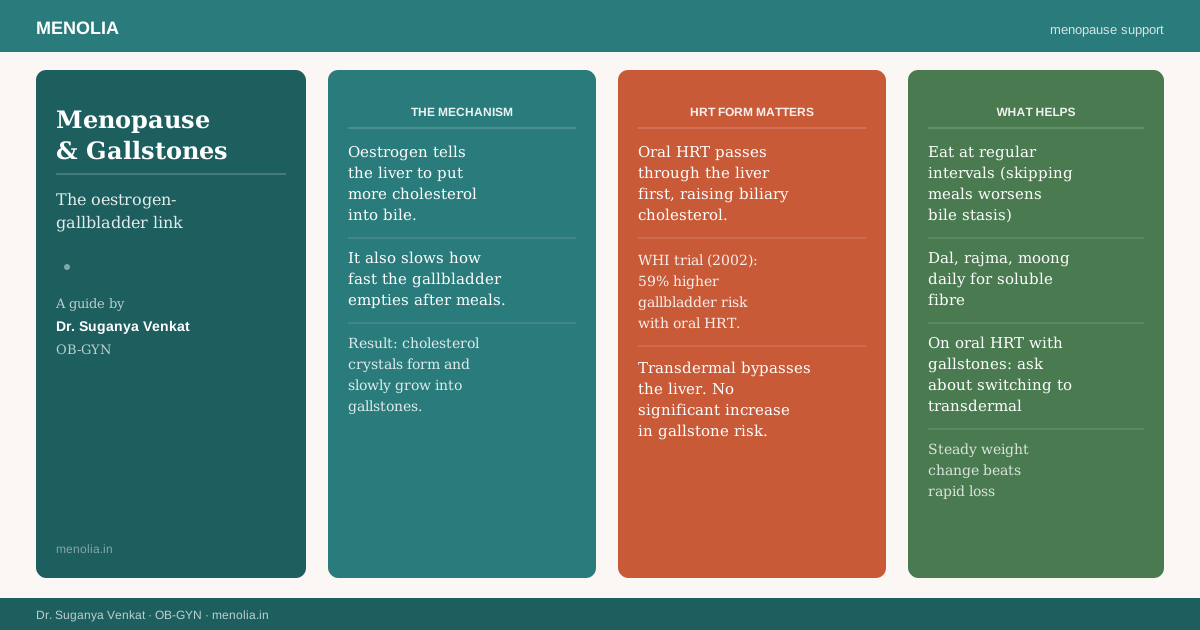
The first is at the liver. Oestrogen stimulates hepatic secretion of cholesterol into bile and mildly suppresses bile salt synthesis. The result is bile that contains more cholesterol relative to bile salts, which is the definition of lithogenic bile: bile prone to forming stones.
The second is at the gallbladder wall itself. Oestrogen receptors sit on gallbladder smooth muscle. When oestrogen acts on these receptors, it reduces gallbladder contractility. The gallbladder empties more slowly after meals. Bile sits in the gallbladder longer, giving cholesterol crystals more time to nucleate and grow.
These two effects together, richer-in-cholesterol bile plus slower emptying, explain why women develop gallstones roughly twice as often as men during their reproductive years, and why pregnancy (when oestrogen and progesterone are both very high) carries particular gallstone risk. The gallbladder is responding to hormonal input in a way that, over time, shifts the odds.
The menopause transition does not remove this risk. It changes it.
Gallstone risk during the menopause transition
Women in their forties and fifties have the highest lifetime cumulative exposure to oestrogen, which is precisely when gallstones accumulated over the reproductive years tend to become symptomatic. Several factors converge at the transition to add to this picture:
Weight changes. A significant proportion of women gain weight during perimenopause, particularly around the abdomen. Abdominal adiposity is independently associated with higher cholesterol secretion into bile and with insulin resistance, both of which shift bile composition toward greater lithogenicity. If you are managing blood sugar and metabolic changes through the transition, the gallbladder is part of the same metabolic story.
Rapid or large weight loss. This is an important nuance. While excess weight raises gallstone risk over the long term, losing weight too quickly in the short term also raises risk. When fat is mobilised rapidly, the liver receives a surge of fatty acids and secretes more cholesterol into bile. Women using GLP-1 medications or crash diets to lose perimenopause weight are at short-term increased gallstone risk. Slow, steady weight change is easier on the gallbladder than dramatic swings.
Genetics and diet. If your mother or an older sister has had gallstones, your baseline risk is higher. A diet high in refined carbohydrates and low in dietary fibre, patterns common in urban Indian households, is consistently linked to higher gallstone prevalence. Gallstones in India are more common than the public discourse suggests, and they are not predominantly a Western condition.
Oral HRT, transdermal HRT and your gallbladder
This is where the conversation becomes directly useful for women on or considering hormone therapy.
Oral oestrogen, taken as a tablet, undergoes first-pass hepatic metabolism. After absorption from the gut, it travels through the portal vein to the liver in high concentration. The liver’s response is to increase cholesterol secretion into bile, mimicking the lithogenic effect described above. This is the mechanism behind the gallbladder risk associated with oral HRT.
The Women’s Health Initiative, a large placebo-controlled trial following over 16,000 postmenopausal women, found that those assigned to combined oral conjugated equine oestrogen plus progestin had a 59 per cent higher rate of gallbladder disease requiring surgery compared to women taking placebo (Cirillo DJ et al. JAMA. 2005;293(3):330-339, the WHI gallbladder analysis).
Transdermal oestrogen, whether a patch, gel, or spray, bypasses this first-pass effect entirely. It is absorbed directly through the skin into the systemic circulation and reaches physiological tissues without first passing through the liver at high concentration. The biliary effect is substantially lower.
The Million Women Study, a prospective UK cohort of over a million postmenopausal women, looked at this distinction explicitly. Women taking oral HRT had approximately twice the risk of gallbladder disease requiring admission or surgery compared to non-users. Women taking transdermal HRT also had an increased risk, but a noticeably smaller one (relative risk around 1.17 for cholecystectomy, against roughly 1.74 with oral preparations) (Liu B et al. BMJ. 2008;337:a386). So the transdermal route reduces the risk rather than removing it, which is worth knowing if you already have gallstones.
This difference is one of the practical reasons transdermal oestrogen is preferred over oral oestrogen in women who already have gallstones, are at higher gallbladder risk, or have any liver-related concerns. If you are on oral HRT and have been diagnosed with gallstones or are having RUQ pain, discussing a switch to transdermal with your prescribing doctor is worthwhile. The estradiol patch options available in India provide a practical transdermal route, and switching does not reduce the cardiovascular or bone protection that HRT offers.
If you have been diagnosed with gallstones and are trying to understand how it connects to your menopause symptoms or HRT, message Dr. Suganya on WhatsApp. She consults online across India via video call and can help you think through what needs reviewing.
Recognising symptoms and knowing when to act
Many gallstones are found incidentally on ultrasound ordered for other reasons. In this case there is time for a considered plan. But a proportion of women will have symptomatic stones, and a smaller number will develop complications that need prompt attention.
Biliary colic is the characteristic symptom. The pain is felt in the right upper abdomen, often beginning within an hour of eating, particularly after something fatty. It can radiate to the right shoulder or to the centre of the upper back. It builds over minutes, holds at a peak, and typically eases over one to several hours. It is not continuous in the way that appendicitis pain tends to be.
Acute cholecystitis occurs when a stone lodges in the cystic duct and the gallbladder becomes inflamed. The pain is similar to biliary colic but does not settle. Fever develops, and pressing on the right upper abdomen produces persistent tenderness. This needs medical assessment, generally the same day.
Jaundice or darkened urine alongside abdominal pain suggests a stone has moved into the common bile duct and is blocking bile flow from the liver. The whites of the eyes and the skin may yellow. This, especially with fever, requires urgent assessment.
Severe epigastric pain radiating to the back, accompanied by nausea, can indicate gallstone pancreatitis. This is an emergency.
The practical guide: right upper abdominal pain that persists, or any combination of abdominal pain with fever or jaundice, needs the same day. Biliary colic that fully settles and leaves no fever or jaundice is less urgent but should lead to an ultrasound and a follow-up appointment within days.
Diet and weight: the levers that make a difference
For women with asymptomatic stones, or those at higher risk, dietary approaches can shift bile composition and reduce the pace of stone formation.
Meal regularity matters more than low fat. The gallbladder empties in response to fat in meals. Regular meals with moderate fat keep the gallbladder cycling properly, reducing bile stasis. Prolonged fasting or skipping meals allows bile to concentrate for extended periods, which promotes crystallisation. An ultra-low-fat diet counterintuitively worsens bile stasis because the gallbladder has nothing to respond to.
Soluble fibre. Fibre binds bile salts in the gut, reducing their reabsorption and prompting the liver to synthesise new bile salts from cholesterol. This lowers the cholesterol-to-bile-salt ratio in bile. Toor dal, rajma, moong, masoor, and chana are all excellent sources and already a staple in most Indian kitchens. Including dal or a legume-based dish once a day supports healthy bile salt turnover.
Reducing refined carbohydrates. High refined carbohydrate intake drives insulin secretion and promotes the hepatic changes that increase biliary cholesterol output. Replacing maida and refined white rice with ragi, jowar, or daliya, or reducing portion sizes of refined staples, makes a meaningful difference to the metabolic picture underlying gallstone risk.
Coffee. Observational data has consistently associated regular coffee consumption with lower gallstone risk, likely through effects on gallbladder motility and bile salt composition. South Indian filter coffee in moderate amounts is not something to cut out.
Steady weight management. As noted earlier, the goal is gradual, sustained change rather than rapid loss. The same approaches that support weight management during perimenopause generally support gallbladder health, particularly by reducing the refined carbohydrate load and increasing dietary fibre.
The cholesterol changes that come with the menopause transition and the fatty liver risk that also rises after 45 are connected to the same underlying metabolic shifts that affect bile. Diet approaches that support one tend to support the others.
When surgery is the right answer
Asymptomatic gallstones found incidentally are generally monitored rather than removed. Most people with silent stones never develop complications, and prophylactic cholecystectomy is not recommended as a routine.
Symptomatic stones are different. Once a gallstone has caused biliary colic, the chance of further episodes and the risk of complications over subsequent years are high enough to make removal the standard recommendation.
Laparoscopic cholecystectomy, keyhole surgery to remove the gallbladder, is a routine procedure at most district and tertiary hospitals in India. Three or four small incisions, typically a day’s admission, and a recovery period of one to two weeks before returning to normal activity. The gallbladder is not essential to digestion, and after recovery the vast majority of women eat normally without any specific dietary restriction.
Women on oral HRT scheduled for gallbladder surgery should discuss with their surgeon whether to pause HRT in the perioperative period, primarily because of thrombosis considerations with oral oestrogen. The decision depends on individual VTE risk and the type of procedure. This is a conversation between the operating surgeon and the prescribing doctor.
I am Dr. Suganya Venkat, an OB-GYN with over fifteen years of clinical experience, and in the consultations I run through Fertilia Health, navigating a gallstone diagnosis alongside the menopause transition is something women raise more often than they might expect. Understanding the hormonal context behind it helps you ask the right questions of your gastroenterologist and surgeon, and choose the form of HRT that fits your individual history.
Frequently asked questions
Can menopause cause gallstones? Menopause does not cause gallstones directly, but the transition clusters several risk factors together: weight changes, metabolic shifts, and for women on oral HRT, a direct biliary effect from hepatic first-pass metabolism. Most gallstones take years to form, and the perimenopausal window is often when stones that have been building slowly first become symptomatic or visible on ultrasound.
I have gallstones. Can I still take HRT? It depends on the form. Oral HRT is associated with increased gallbladder disease risk and complications and is generally avoided when there are existing symptomatic gallstones. Transdermal oestrogen, delivered through a patch, gel, or spray, bypasses the liver’s first-pass effect and does not significantly increase gallbladder disease risk. Your prescribing doctor should know about your gallstone history when recommending an HRT form. Asymptomatic silent stones are a different consideration and may not rule out any particular route, but they warrant disclosure.
What does gallstone pain feel like? The classic symptom is a cramping or griping pain on the right side of the abdomen, below the ribs, beginning within an hour of a meal and often radiating to the right shoulder or upper back. It builds over minutes, stays at a peak for a period, and then eases over one to several hours. It differs from heartburn, which is felt more centrally in the chest or upper abdomen, and from kidney pain, which tends to be more lateral and to radiate downward.
Does losing weight help or make gallstones worse? It depends on the pace. Slow, sustained weight loss over time reduces gallstone risk by lowering biliary cholesterol secretion. Rapid weight loss in the short term temporarily increases risk, because the liver releases mobilised fat as cholesterol into bile. Gradual, sustained weight change is preferable to dramatic restriction.
I have a fatty liver as well as gallstones. Are they connected? Both share underlying drivers: excess body weight, insulin resistance, and a diet high in refined carbohydrates. The menopause transition worsens both through similar hormonal and metabolic pathways. The menopause and fatty liver post covers the liver-specific picture in more detail.
My scan showed biliary sludge, not gallstones. Is that serious? Biliary sludge is a precursor state: a viscous mixture of cholesterol crystals, bile salts, and mucin that has not yet formed discrete stones. It can resolve on its own, remain stable, or progress. It is not treated differently from small asymptomatic stones. The dietary and lifestyle approaches described above apply equally, and monitoring by your treating doctor is the usual plan.
How do I know if my RUQ pain is the gallbladder and not something else? The classic features of biliary colic are the distinguishing clues: right upper quadrant location, onset within an hour of eating (especially fat), radiation to the right shoulder, pain that builds then eases, and no fever when the attack is simple. An ultrasound is the first and most reliable investigation. If there is fever, persistent pain, or jaundice, see a doctor the same day rather than waiting for a scheduled appointment.
If you are managing a gallstone diagnosis during the menopause transition and want to understand the hormonal context, or whether your HRT choice needs revisiting, message Dr. Suganya on WhatsApp. She consults online, pan-India, via video call.