You have always been a little careful about certain foods. Heavy evening meals meant a restless night. Coffee before breakfast was non-negotiable with the right timing, not a moment earlier. You knew your gut’s patterns and worked around them. Then, sometime in your mid-forties, the rules changed. Meals that had been safe for years suddenly caused cramping. Some weeks, everything seemed to slow to a near halt. Other weeks, urgency before 8 am. The pattern had shifted, and no change in your diet fully explained it.
If this sounds familiar, the connection you may not have been told about is hormonal. The gut and the reproductive hormones are closely linked in ways that most women only discover in perimenopause, when those links become hard to ignore.
This post explains what is happening in the gut during perimenopause, how irritable bowel syndrome (IBS) is different from the bloating and acid reflux that menopause also brings, and what you can do about it.
What Is IBS? (And How Is It Different from Just Bloating?)
IBS is a recognised clinical syndrome with specific diagnostic criteria, not a vague label for any digestive discomfort. The current standard (Rome IV criteria) defines IBS as recurrent abdominal pain occurring at least one day per week, associated with two or more of the following: a change in the frequency of your bowel movements, a change in the form or consistency of your stools, or pain that is related to opening your bowels.
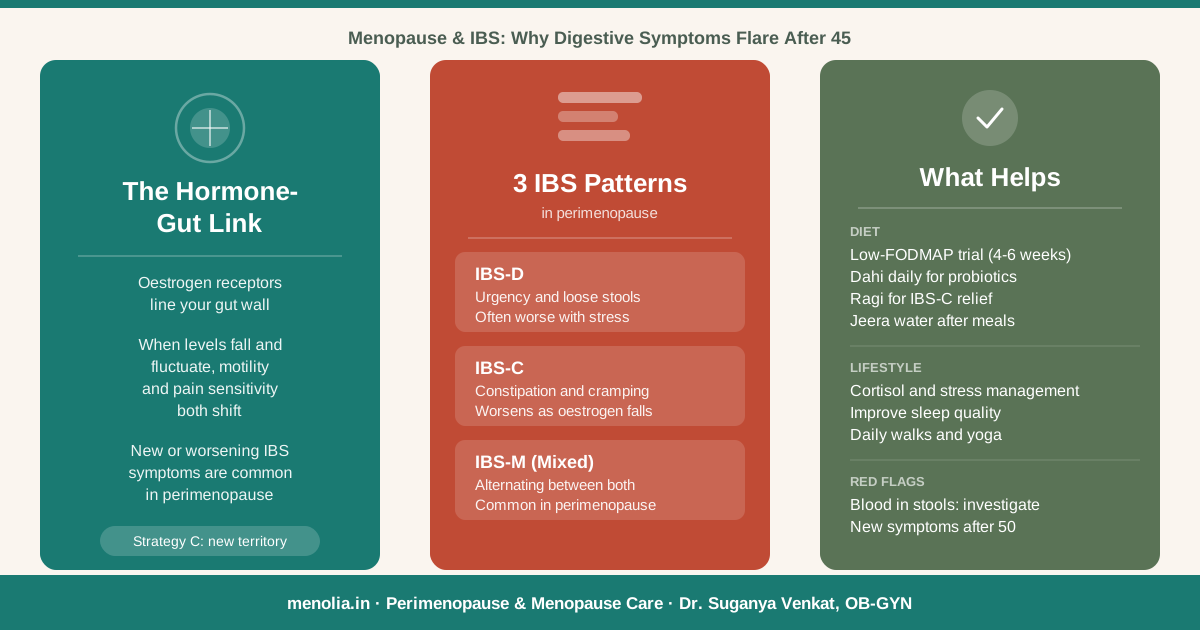
It falls into three main patterns:
- IBS-D (diarrhea-predominant): loose, urgent stools; cramping that may ease briefly after a bowel movement but often returns
- IBS-C (constipation-predominant): hard, infrequent stools; a feeling of incomplete evacuation; lower abdominal discomfort that is only partly relieved
- IBS-M (mixed): alternating between loose stools and constipation, sometimes week to week
What makes IBS distinct from bloating is the combination of pain and a change in bowel habit. Bloating is primarily gas and abdominal distension, often without a significant bowel pattern shift. Acid reflux and heartburn are upper gastrointestinal symptoms. All three can occur in perimenopause, but they have different drivers and respond to different approaches.
Women are about 1.5 to 2 times more likely than men to have IBS across the lifespan, and the condition tends to worsen during hormonal transitions (Chang L & Heitkemper MM, Gastroenterology, 2002, PMID 12404243). The overlap with perimenopause is not coincidence.
The Oestrogen-Gut Link
The gut and the hormonal system are not separate. Oestrogen receptors (both ERalpha and ERbeta subtypes) are found throughout the intestinal lining, including in the wall of the colon. Progesterone receptors are present in the gut’s smooth muscle. These receptors respond to circulating hormone levels, which is why gut function shifts across the menstrual cycle, in pregnancy, and in the perimenopausal transition.
Oestrogen influences the gut in several ways:
Gut motility. Oestrogen helps regulate the speed at which food and waste move through the intestine. When levels are steady, gut transit is more predictable. When they fluctuate or fall, transit can become either too fast (contributing to IBS-D) or too slow (contributing to IBS-C).
Visceral pain sensitivity. This is the gut’s threshold for registering discomfort. The relationship between oestrogen and visceral pain sensitivity is complex and not fully settled, but many women describe a gut that becomes more reactive to distension and gas as oestrogen falls. Women with IBS tend to show lower gut pain thresholds than people without it, and sex hormones are thought to modulate this visceral sensitivity (Mulak A et al., World J Gastroenterol, 2014, PMID 24627581).
The gut microbiome. Oestrogen influences the composition of gut bacteria. Studies comparing premenopausal and postmenopausal women show a reduction in microbiome diversity after menopause, including a decline in beneficial Lactobacillus species. A less diverse microbiome is associated with more pronounced IBS symptoms, more gas production from fermentation, and a more reactive gut lining.
Progesterone and transit speed. Progesterone generally slows gut transit. This is well recognised in pregnancy, where constipation is one of the most common early symptoms. In perimenopause, progesterone levels become erratic and then fall before oestrogen does. The loss of progesterone’s steadying effect contributes to the unpredictability many women describe in their gut in their mid-to-late 40s.
For a broader look at how menopause affects the gut, read our post on Menopause and Gut Health.
Why Perimenopause Makes Things Worse
The fluctuation is often as disruptive as the eventual decline. In the years before the final period, oestrogen levels swing significantly from cycle to cycle. The gut, which has responded to a broadly consistent hormonal environment for decades, is asked to adjust to constant shifts.
This hormonal unpredictability is amplified by the cortisol connection. Perimenopause is associated with a rise in cortisol as the stress-response axis becomes less well-regulated. The gut-brain axis means elevated cortisol directly triggers IBS symptoms: it accelerates gut motility in some women (worsening IBS-D urgency) and disrupts normal gut contractions in others (worsening IBS-C). Women who notice their gut symptoms track their stress levels closely are observing this axis at work.
Sleep disruption, another near-universal feature of perimenopause, independently worsens IBS. Poor sleep lowers the gut’s pain threshold the following day and reduces the integrity of the intestinal lining. If your sleep problems and your gut symptoms are both bad in the same weeks, they are feeding each other.
For women who had IBS before perimenopause, symptoms often intensify in the 40s. For some women, IBS-type symptoms appear for the first time in midlife, without any obvious dietary trigger. Both patterns are explained by the hormonal mechanism above.
If your gut symptoms are disrupting your work, your sleep, or your confidence about leaving the house, that is worth talking through. Reach Dr. Suganya Venkat on WhatsApp and she can help you work out whether this needs investigation or whether a practical change is the right first step (Rs 399 for a 30-minute video call, pan-India).
What Can You Do About It?
There is no single fix, but several approaches have genuine evidence behind them.
A Low-FODMAP Trial
Low-FODMAP is the dietary strategy with the strongest evidence base for IBS (Gibson PR & Shepherd SJ, Am J Gastroenterol, 2012, PMID 22488077). FODMAPs are fermentable carbohydrates that certain people’s guts ferment rapidly, producing gas and drawing water into the intestine.
Common high-FODMAP foods in an Indian context:
- Wheat-based foods (atta rotis, maida, bread, biscuits)
- Onion and garlic in large quantities (used as the base of most Indian cooking)
- Rajma, chhole, and urad dal in large servings
- Certain fruits: watermelon, apple, pear, mango in large portions
- Honey in more than small amounts
Common lower-FODMAP alternatives readily available in India:
- Rice and rice-based preparations (idli, dosa, plain rice, rice upma)
- Ragi (finger millet): also useful for IBS-C, with its good soluble fibre content
- Lauki (bottle gourd), carrots, beans, capsicum, cooked spinach
- Small servings of banana (particularly unripe banana)
- Plain curd (dahi), particularly well tolerated compared to milk
A low-FODMAP trial is typically done for 4 to 6 weeks, followed by gradual reintroduction of individual food groups to identify which specific FODMAPs trigger your symptoms. It is not intended as a permanent diet, and it works best with some guidance so you do not end up cutting out more than you need to.
Gut-Friendly Indian Foods
Dahi (curd). The live cultures in dahi (Lactobacillus bulgaricus, Streptococcus thermophilus) support the gut microbiome. One to two small bowls of plain, unsweetened dahi daily is one of the simplest and most sustainable gut-health interventions in an Indian diet.
Ragi (finger millet). For women with IBS-C, ragi is particularly useful. Its soluble fibre softens stool and supports regular motility. Ragi porridge, ragi roti, or ragi balls (mudde) are all good options and are easily available across South India.
Jeera water (cumin water). Cumin has traditional use as a digestive and carminative. A cup of warm jeera water in the morning or after meals is reasonable to try. Some women find it helps ease post-meal cramping and bloating.
Methi seeds (fenugreek). One to two teaspoons of methi seeds soaked overnight and taken with water in the morning provides mucilaginous soluble fibre that can ease IBS-C by softening stools and supporting motility.
Hing (asafoetida). A small pinch added to the tadka reduces gas and acts as a traditional gut regulator. It is particularly useful if your IBS pattern involves a lot of gas and flatulence alongside the bowel changes.
What to Reduce During a Flare
- Coffee and strong chai. Both increase gut motility and can worsen IBS-D urgency. Switching to plain warm water or gentle herbal teas during a flare period is helpful.
- Very oily or heavily spiced food. During active symptoms, these increase gut secretion and worsen cramping.
- Carbonated drinks. The gas load worsens abdominal distension.
- Large servings of raw vegetables. Well-cooked vegetables are usually better tolerated during a flare.
Sleep and Stress
If your gut symptoms are clearly worse during stressful periods, that is the gut-brain axis responding, not a coincidence. Addressing perimenopause-related sleep problems and building a consistent stress-management habit, whether through yoga, walking, breathing exercises, or simply more structured rest, reduces cortisol and improves gut symptoms over time. See the perimenopause diet guide for a broader framework on eating in a way that supports hormonal balance through this transition.
Red Flags: When to Get Investigated
IBS is a diagnosis of exclusion. Before accepting it as the full explanation for your gut symptoms, certain symptoms require proper investigation.
See your doctor if you notice any of the following:
- Blood in your stools (bright red or dark and tarry)
- Significant, unintended weight loss alongside your gut symptoms
- New gut symptoms that began after age 50 with no prior history
- Anaemia found on a blood test, or persistent unexplained fatigue
- Gut symptoms that wake you from sleep (true IBS rarely causes nocturnal symptoms)
- A family history of colorectal cancer or inflammatory bowel disease
- Stools that have changed in shape to narrow, pencil-like consistency over several weeks
The investigations your doctor will typically arrange include stool calprotectin (to exclude IBD), a full blood count, coeliac antibody testing, and thyroid function. Hypothyroidism is a common and very treatable cause of severe constipation in perimenopausal women, and it is easy to miss when the symptom is attributed to IBS. Read more on thyroid changes during menopause and why they are worth checking.
If your symptoms are new, worsening, or accompanied by any of the above, please do not wait on investigation.
If you would like help deciding whether what you are experiencing needs tests or whether a dietary and lifestyle approach is the right starting point, send Dr. Suganya Venkat a message on WhatsApp and she can guide you from there (Rs 399 for a 30-minute video call, pan-India).
Frequently Asked Questions
Can menopause cause IBS even if I never had gut problems before?
Yes. While women with pre-existing IBS often find symptoms worsen in perimenopause, new IBS-type symptoms can appear for the first time in the mid to late 40s. The falling and fluctuating oestrogen of perimenopause alters gut motility and visceral sensitivity in ways that can produce the full IBS picture even without a prior history. If this is new for you, a baseline investigation (blood count, calprotectin, thyroid, coeliac screen) is sensible before settling on lifestyle changes alone.
Is the diarrhea I am experiencing in perimenopause always IBS?
Not necessarily. Loose, frequent stools in perimenopause have several possible explanations: IBS-D is the most common, but others include bile acid malabsorption (bile production can change with age), an overactive thyroid, coeliac disease, and rarely inflammatory bowel disease. An IBS diagnosis is appropriately reached after ruling out these alternatives with a blood test and, where needed, a stool calprotectin level.
Does HRT help with IBS in menopause?
The evidence is limited and mixed. Some smaller studies suggest oestrogen therapy can reduce visceral sensitivity and support gut motility. However, there is no large trial that would support recommending HRT specifically for IBS. If you are on HRT for other menopause symptoms (hot flashes, bone health, mood) and your gut symptoms also seem better, that is plausible and worth mentioning to your prescriber. It is not a reason to start HRT on its own.
What foods should I avoid with IBS during menopause?
During a flare, the main ones to reduce are: coffee and strong chai, large portions of rajma or chhole, onion and garlic in large amounts, watermelon and other high-FODMAP fruits, maida-based snacks, heavily oiled food, and carbonated drinks. This list is not permanent. A supervised low-FODMAP reintroduction helps identify your personal triggers, because individual responses vary considerably.
How is IBS different from the bloating I keep reading about in menopause?
Bloating is primarily gas accumulation and abdominal distension, and can occur without any significant change in bowel habit. IBS involves the combination of abdominal pain and altered bowel habit (either frequency or consistency or both). Many women have both bloating and IBS-type symptoms, but the underlying drivers and the management differ. See our dedicated post on menopause bloating for its specific causes and remedies.
I alternate between constipation and diarrhea. Is that normal?
It fits the pattern of IBS-M (mixed type) and is common in perimenopause, because both oestrogen and progesterone are fluctuating. In some phases, lower progesterone means faster transit (loose stools). In others, low oestrogen combined with cortisol from stress slows things down (constipation). The pattern is disorienting but not in itself alarming. If it is severe or accompanied by any of the red-flag symptoms listed above, it is worth checking.
When should I get investigated rather than manage at home?
If you notice blood in stools, unintended weight loss, new symptoms after the age of 50, anaemia, nocturnal gut symptoms, or a family history of colorectal or inflammatory bowel disease, see your doctor before trying dietary changes. For a straightforward IBS pattern that tracks with your hormonal cycle or stress levels, a dietary and lifestyle approach is a reasonable first step. Even so, a baseline investigation (blood count, calprotectin, thyroid, coeliac screen) is never unnecessary if you have not had one.