There is a particular kind of tiredness in the legs that many women in their late 40s and 50s describe without quite being able to name it. Not soreness after exercise. Not the all-over puffiness that comes with fluid retention. Just a heaviness, a dull dragging ache that builds through the afternoon and is worst by evening. Sometimes there are visible veins on the calf or behind the knee that were not there before. Sometimes there is a faint burning along the shins when standing for a long time.
This is often chronic venous insufficiency (CVI), a weakening of the venous valves and walls in the legs that allows blood to pool rather than return efficiently to the heart. It is more common in women than in men, and it becomes noticeably more common during and after the menopause transition. The connection between hormonal change and venous health is real, underappreciated, and worth understanding.
For more on this, read our guide on Menopause Dry Eyes. This post covers why veins respond to the hormonal shift of menopause, what the symptoms feel like, who carries the greatest risk, what conservative measures genuinely help, and which signs should prompt a medical review.
The Oestrogen and Progesterone Connection to Venous Health
The venous system in the legs works against gravity. Blood travels from the feet upward to the heart through a network of veins equipped with one-way valves that prevent backflow. The efficiency of this system depends on three things: competent valves, adequate tone in the venous wall, and the calf-muscle pump (each step contracts the calf muscles and propels blood upward).
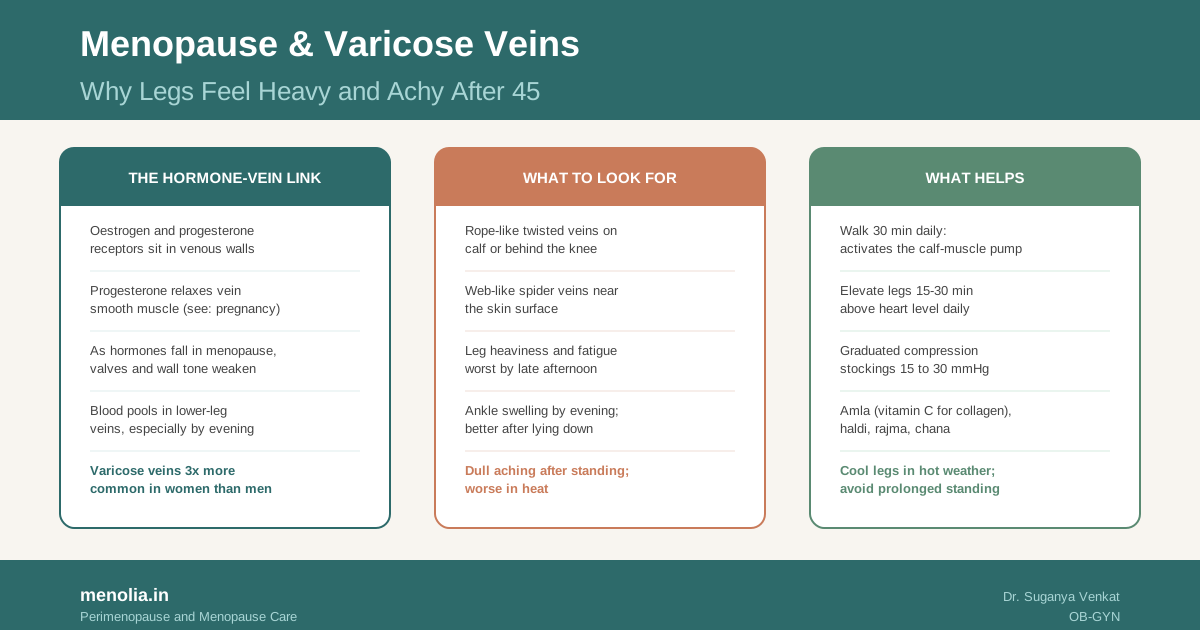
Both oestrogen and progesterone influence venous wall behaviour. Smooth muscle cells and endothelial cells in venous walls carry hormone receptors. Progesterone, in particular, promotes relaxation of smooth muscle, which is why many women notice leg heaviness or vein prominence in the second half of the menstrual cycle, when progesterone is highest, and dramatically so in pregnancy. The prevalence of varicose veins is substantially higher in women than in men, and pregnancy history is one of the most significant risk factors in large population studies (Beebe-Dimmer JL et al., Ann Epidemiol, 2005, PMID 15723761).
During the menopause transition, progesterone is the first hormone to become erratic and then decline. Oestrogen follows. This progressive hormonal withdrawal affects the connective tissue and smooth muscle support of the venous wall. Valves that were functioning adequately may become less competent. Blood that was previously returned efficiently begins to pool in the superficial veins of the lower leg, particularly toward evening when the effects of a full day of gravity have accumulated.
This is why varicose veins sometimes appear for the first time after 45, and why women who had mild varicose veins often find they become more symptomatic during or after perimenopause. The pattern is not coincidental.
What You Might Notice
The presentation of venous insufficiency in menopause varies. Some women notice visible veins first. Others notice symptoms long before any vein becomes visible.
Varicose veins are enlarged, twisted, rope-like veins visible just beneath the skin surface, most often on the calf, behind the knee, or on the inner thigh. They may ache, throb, itch, or feel tender after standing. The ache is dull and persistent, different from the sharp nocturnal cramp that characterises leg cramp syndrome (see Menopause Leg Cramps and Restless Legs).
Spider veins (telangiectasias) are smaller, web-like networks of red, blue or purple capillaries near the skin surface. They are usually more cosmetic than symptomatic, but can indicate underlying venous insufficiency in the deeper veins.
Chronic venous insufficiency symptoms without visible veins include: leg heaviness and fatigue worse by late afternoon; ankle swelling present by evening but largely resolved after lying down overnight; a dull burning or aching sensation along the lower leg after prolonged standing; and itching or skin discolouration around the ankle in more advanced cases.
One distinction worth knowing: the ankle swelling of venous insufficiency tends to be localised to the ankle and lower calf, often more pronounced on one side, and it worsens with heat and prolonged standing. This is different from the generalised puffiness of fluid retention, which tends to affect the feet, ankles, face, and hands more evenly and is driven by different mechanisms (see Menopause Water Retention: Why You Feel Puffy).
Who Is Most Affected
Varicose veins are not random. They tend to cluster in women who combine several risk factors.
Genetics is the strongest single predictor. If your mother or maternal aunts had prominent varicose veins, your likelihood is considerably higher.
Pregnancy history contributes substantially. Each pregnancy brings high progesterone levels, a growing uterus compressing the pelvic veins, and increased circulating blood volume, all of which strain the venous system. These effects accumulate over successive pregnancies.
Occupation and posture are significant. Teachers, nurses, kitchen workers, domestic workers, and others who spend much of the day on their feet carry a higher lifetime venous load. The cumulative effect of years of prolonged standing often shows up in the menopause years.
Weight matters through its effect on intra-abdominal and pelvic pressure, which impedes venous return from the legs.
The menopause transition itself acts as an amplifier on whatever baseline venous vulnerability already existed. Women who had mildly compromised valves and good compensatory mechanisms during their reproductive years may find those mechanisms less effective as oestrogen and progesterone withdraw.
Women in South India who cook while standing for extended periods daily, often in warm kitchens, carry both the occupational and thermal load that worsens venous pooling. The Tamil colloquial description “kaal pozhuppu” (leg heaviness) captures this symptom precisely, and it is something Dr. Suganya Venkat hears from many of the women who consult her at Fertilia for a video consultation.
If you are noticing leg heaviness, visible veins, or ankle swelling and want to understand what is happening in your body, you can reach Dr. Suganya by WhatsApp for a video consultation.
WhatsApp Dr. Suganya about leg symptoms in menopause
What Helps: The Conservative Approach
The goal of conservative management is to improve venous return, reduce pooling, and keep symptoms manageable. For most women, this is sufficient.
Walking and calf-muscle activation
Walking is the single most effective non-invasive measure for venous insufficiency. Each step engages the calf muscle, which acts as a pump propelling blood upward. Thirty minutes of walking daily, broken into shorter segments if needed, meaningfully reduces end-of-day leg heaviness and slows symptom progression.
Simple heel-raise exercises (rising up on tiptoes 20 times, repeated several times during a long working day) activate the same pump between walks. Indian movement patterns that fit naturally here include walking after meals, yoga practices that involve sustained leg engagement (Virabhadrasana I and II, Utkatasana), and the floor-level domestic postures common in Indian homes, which require more lower-limb muscle engagement than chair-based alternatives.
Leg elevation
Lying down with the legs elevated above the level of the heart for 15 to 30 minutes in the afternoon assists gravity in draining pooled blood from the lower leg. Propping the feet on a firm pillow or rolled blankets during afternoon rest is enough. This is most useful in the late afternoon, when pooling is at its peak.
Graduated compression stockings
Compression hosiery is among the most consistently supported conservative interventions for chronic venous insufficiency across clinical guidelines from vascular specialist bodies in Europe and North America. Graduated pressure (15 to 20 mmHg for mild to moderate symptoms; 20 to 30 mmHg for more pronounced varicose veins) improves venous return and reduces the aching and heaviness that build through the day.
In India, they are available at surgical and orthopaedic supply shops and online. Brands include Sigvaris, Jobst, Mediven, and Indian ranges by Tynor and Thrombex. Cotton-blend or open-toe versions manage the summer heat better than full nylon. The stockings should be put on in the morning before getting out of bed, when swelling is minimal, and removed in the evening when you elevate your legs.
Temperature and posture habits
Heat dilates veins and worsens pooling. Legs feel heaviest in hot weather or after a warm bath. Rinsing the lower legs with cool water after a shower, keeping loose cotton clothing around the lower legs, and ensuring adequate ventilation in the kitchen all reduce symptomatic burden. When sitting and resting, legs elevated on a footrest or folded blankets give more benefit than legs hanging straight down.
Nutrition that supports venous wall integrity
No food reverses varicose veins. But the venous wall depends on collagen synthesis and connective-tissue integrity, both of which are influenced by nutrition.
Vitamin C is an essential co-factor for collagen production. Amla (Indian gooseberry) is one of the most concentrated sources, and one amla daily (fresh, dried, or as amla powder in water) is a simple way to maintain adequate intake. Guava and lime water are also useful sources.
Til (sesame seeds), rajma, and chana provide plant-based protein that supports collagen and smooth-muscle repair. Haldi (turmeric) has an established anti-inflammatory profile useful for the low-grade inflammation in venous wall tissue. Dahi contributes antioxidant micronutrients.
Staying well hydrated keeps blood viscosity appropriate. Dehydration thickens the blood and slows venous return. Uncontrolled blood sugar and elevated blood pressure both affect vascular wall health over time (see Menopause and Blood Sugar and Menopause and Blood Pressure for those connected threads).
Red Flags That Need Prompt Medical Attention
Most varicose veins and venous heaviness in menopause are a nuisance rather than a danger. Certain signs, however, require the same day or next day review rather than a routine appointment.
Sudden, painful, warm swelling in one calf, particularly after air travel, a long car journey, surgery, or any period of reduced mobility, should be treated as a possible deep vein thrombosis (DVT) until proven otherwise. A DVT sits in the deep venous system, anatomically separate from superficial varicose veins, but it is a serious complication. Do not wait to see whether it settles.
A hard, cord-like, red, warm section of a vein running along the leg is likely superficial thrombophlebitis (clotting in a superficial varicose vein). This is rarely dangerous in isolation but needs review, particularly if the inflamed section is long or near the groin.
Skin changes around the ankle: brown staining (haemosiderin deposits), hard or thickened skin, or a feeling of the skin becoming leathery indicate lipodermatosclerosis, a sign of advanced chronic venous insufficiency that warrants a vascular referral.
An open sore near the ankle that does not heal within a few weeks is a venous ulcer. This needs specialist care without delay.
A varicose vein that bleeds: apply firm pressure with a clean cloth, lie down with the leg raised, and seek emergency care.
Leg pain that occurs during walking and eases completely with rest (claudication) follows a different pattern from venous heaviness and should prompt a cardiovascular assessment rather than a venous one. For a broader guide to symptoms requiring prompt attention, see Menopause Red Flags: When to See a Gynaecologist.
When to See a Vascular Specialist
A vascular surgeon or phlebologist can assess the deep and superficial venous systems using a duplex ultrasound, which maps which valves are incompetent and which veins are involved. This is available at most diagnostic centres in Indian cities and costs approximately Rs. 1,500 to 3,000.
Treatment options include sclerotherapy (chemical injection into smaller varicose or spider veins, typically Rs. 5,000 to 20,000 per session depending on extent) and endovenous laser ablation (EVLA) for larger varicose veins, the modern standard performed under local anaesthetic and available in most major Indian cities. Conventional vein stripping surgery is still done but has largely been replaced by laser treatment for the right candidates.
Medical intervention is elective for the majority of women. It becomes appropriate when symptoms significantly affect daily activity, when skin changes are progressing, or when ulceration or clotting has occurred.
In the experience of many women at Fertilia, leg heaviness in the menopause years is often attributed to “just getting older” or to joint problems, when the venous component is the actual driver and one that responds well to the straightforward measures described above. Dr. Suganya Venkat, OB-GYN with over 15 years of clinical experience, consults with women across India over video call through Fertilia, and this is a pattern she encounters often. For the joint and muscle layer of overlapping leg symptoms, see Menopause Body Aches: Why Everything Hurts After 45.
If the information here fits what you have been experiencing and you would like to talk it through, Dr. Suganya is available by WhatsApp for a video consultation.
Chat with Dr. Suganya on WhatsApp
Frequently Asked Questions
Why did I get varicose veins after 45 when I never had them before?
Oestrogen and progesterone have supported venous wall tone and connective tissue throughout the reproductive years. As these hormones decline during the menopause transition, that structural support reduces. Valves that were functioning adequately begin to show their limitations. Many women who had borderline venous function in their 30s and early 40s cross into symptomatic varicose veins during or after perimenopause. It is a predictable physiological change in tissue that depends on hormonal environment, not a sign that something has gone wrong.
Is it safe to exercise with varicose veins?
Yes, and exercise is one of the most beneficial things you can do. The calf-muscle pump activated by walking, swimming, and cycling is the primary mechanism for venous return from the lower leg. Avoid exercises that cause prolonged static strain without leg movement, but regular walking, yoga, swimming, and cycling all help. Wearing compression stockings during exercise further reduces symptom burden.
Will HRT affect my varicose veins?
Transdermal HRT (patches or gels) carries a much lower risk of venous effects than oral HRT, because it bypasses the first-pass liver effect on clotting factors. If you have significant varicose veins and are considering HRT, this is worth raising with your OB-GYN, who can guide you toward the most appropriate formulation. Transdermal oestrogen with micronised progesterone is the formulation with the lowest venous risk profile on current evidence.
My legs feel heavy by evening but I have no visible veins. Is this still venous?
It can be. Venous insufficiency symptoms often precede visible varicose veins by years. The valve dysfunction and blood pooling that cause heaviness can exist in veins that are not yet visibly enlarged. If the heaviness fits the pattern described above (worse by evening, relieved by lying down overnight, worsens with heat and prolonged standing, improves with elevation and compression stockings), a duplex ultrasound with a vascular specialist can confirm or exclude venous insufficiency as the cause.
Menopause mein pair bhaari kyun lagte hain? (Why do legs feel heavy in menopause?)
Oestrogen aur progesterone dono venous walls ko support karte hain. Menopause ke dauran jab ye hormones kum hone lagte hain, veins mein blood return weak ho jaata hai, especially shaam ke waqt. Yahi “pair mein bhaari pan” ya “paon ache” ka karan hai. Walking, pair ko upar uthana, aur compression stockings is problem mein kafi madad karte hain.
Can varicose veins in menopause cause DVT?
Varicose veins sit in the superficial venous system. DVT (deep vein thrombosis) occurs in the deep venous system. They are anatomically different. Superficial varicose veins do not directly cause DVT. However, superficial thrombophlebitis (clotting within a varicose vein) can occasionally extend into the deep system if it is located near the junction between the two systems. A sudden, hot, swollen calf after any period of immobility should always be assessed, regardless of whether varicose veins are present.
What is the difference between venous leg heaviness and fluid retention puffiness?
Venous insufficiency heaviness is localised to the lower leg and ankle, often more pronounced on one side, worse with standing and heat, and relieved by elevation and compression. Fluid retention puffiness tends to be more generalised (affecting feet, ankles, hands, and sometimes the face), less dependent on limb position, and driven by different mechanisms including hormonal effects on kidney fluid regulation. If you are unsure which is driving your symptoms, see Menopause Water Retention for the fluid retention picture, and consider a video consultation to discuss both together.