A woman wrote to me recently with a question I do not hear often enough. She had been diagnosed with PCOS at twenty-six. Irregular cycles, some facial hair, years of being told to lose weight and the periods would sort themselves out. She was now forty-three, her periods had started skipping months in a new way, and she wanted to know: was this her PCOS again, or was this something else starting?
It can be both at once, and untangling the two is exactly the kind of question that gets missed. Most PCOS content is written for women trying to conceive. Most perimenopause content assumes a woman arriving at this stage with a clean hormonal slate. Neither describes what actually happens to a woman who has lived with PCOS since her twenties and is now watching her body enter a second hormonal transition on top of the first one.
This post is for her, and for the many Menolia readers like her. Fertilia’s PCOS program has worked with women managing this condition through their reproductive years, and one thing that comes up again and again is that PCOS does not simply end at perimenopause. It changes shape.
Does PCOS Go Away at Menopause?
Not exactly, and this surprises most women. PCOS is a lifelong endocrine condition rooted in how your ovaries and metabolism interact, not something that switches off once your ovaries stop releasing eggs regularly.
What does change is the symptom picture, because two of the biggest PCOS drivers, irregular ovulation and relatively elevated androgens, interact differently with a body that is also losing oestrogen.
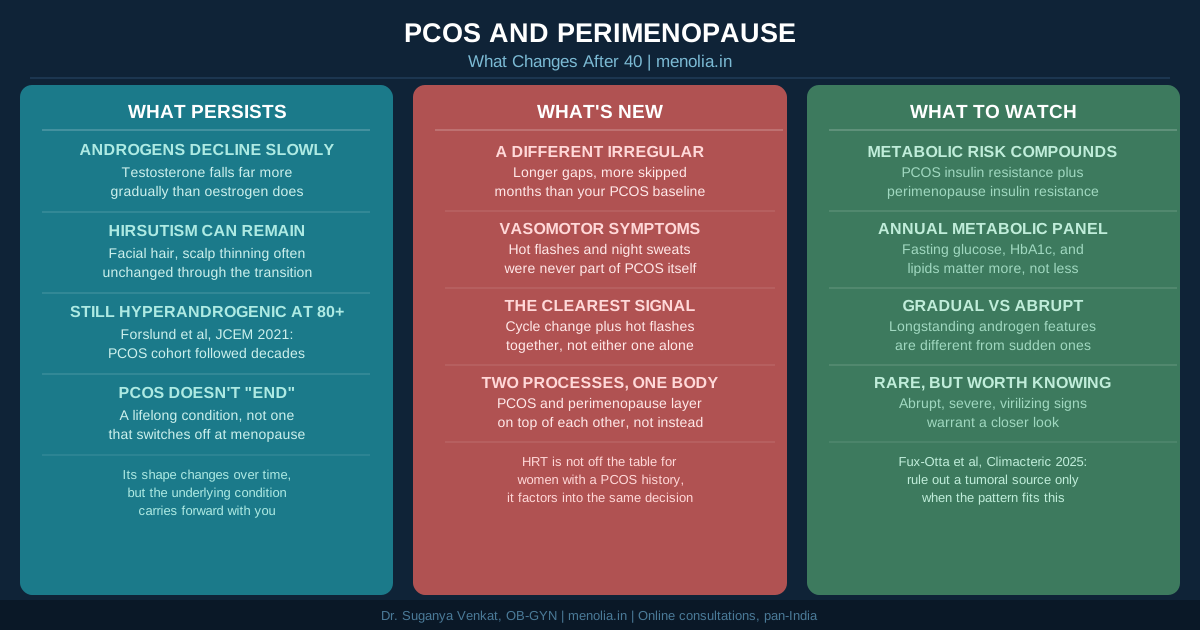
A long-term cohort study that followed women with PCOS from perimenopause into their seventies, eighties, and beyond (Forslund M et al., J Clin Endocrinol Metab, 2021, PMID 33205205) found that testosterone and free androgen index did decline with age in these women, as expected. But even at 72 to 91 years old, the women with PCOS remained clinically hyperandrogenic and were still more likely to have visible hirsutism than age-matched women without PCOS. The androgen excess softens over decades. It does not disappear on the timeline of a single menopause transition.
This is the piece that explains why a woman with PCOS often finds her forties confusing. Her cycles are becoming erratic, which she recognises, because irregular cycles were her baseline for twenty years. But now the erratic pattern is layered with early perimenopause changes, and the two can look identical from the inside.
What Changes: Cycles, Androgens, and Metabolism
Cycle changes are harder to read
If your cycles were already irregular from PCOS, perimenopause does not announce itself with the clean signal it gives a woman who had regular 28-day cycles for twenty years. Instead of a clear shift from “regular” to “occasionally skipping,” you are moving from “irregular in one pattern” to “irregular in a different pattern,” and the difference is subtle.
What tends to shift is not just whether a cycle happens, but its character: perimenopausal cycles in a woman with PCOS often become longer overall, with more skipped months in a row than her PCOS pattern typically produced, and often accompanied by new vasomotor symptoms, hot flashes and night sweats, that were never part of her PCOS picture. If you are noticing hot flashes, disrupted sleep, or mood shifts alongside the cycle changes, that combination is the clearer signal that perimenopause has begun on top of the PCOS pattern, not instead of it.
Androgen-related features can persist or feel unchanged
Facial hair, scalp thinning, and acne, the visible signs of androgen excess, do not necessarily improve as you move through perimenopause the way vasomotor symptoms suggest oestrogen is falling. This is because androgen levels decline far more gradually than oestrogen does. A woman managing chin hair or thinning hair at the temples in her PCOS years may find these features persist through perimenopause largely unchanged, even as hot flashes and irregular periods signal that oestrogen has clearly started its decline.
Menolia’s guides on facial hair after menopause and hair thinning during menopause cover the general menopausal mechanism. If you have PCOS, the same androgen pathway is simply starting from a higher baseline, so what other women notice for the first time at menopause, you may have been managing for years already.
Metabolic risk carries forward, and needs attention now
This is the part I want every woman with a PCOS history to take seriously, not with alarm, but with a clear plan. Insulin resistance was very likely already part of your PCOS picture, and a large longitudinal analysis drawing on 25 years of data from the Tehran Lipid and Glucose Study (Noroozzadeh M et al., Int J Endocrinol Metab, 2026, PMID 42170308) found that women with PCOS who had elevated insulin resistance markers in early adulthood went on to have a meaningfully higher likelihood of developing type 2 diabetes, hypertension, and metabolic syndrome. Encouragingly, the same analysis noted that the prevalence of some of these cardiometabolic disorders appeared to decline after age 40, which suggests the metabolic picture is not a one-way escalation, but it is also not a reason to stop watching it.
Falling oestrogen during perimenopause independently raises insulin resistance and shifts cholesterol in ways Menolia has covered for women without PCOS in our guides to menopause and blood sugar and menopause and cholesterol. For a woman with a PCOS history, these two effects, PCOS-related insulin resistance and perimenopause-related insulin resistance, layer on top of each other rather than replacing one another. This is exactly why an annual fasting glucose, HbA1c, and lipid panel matters more, not less, once you reach your forties with a PCOS history.
Had PCOS in your 20s or 30s and now noticing new changes in your 40s? Dr. Suganya reviews your full hormonal history, not just your current symptoms, over a video consultation to work out what is PCOS, what is perimenopause, and what needs a closer look.
Is HRT Safe if You Have a PCOS History?
This question comes up often, and it deserves a direct answer: a prior PCOS diagnosis is not a reason to avoid hormone replacement therapy. If perimenopause symptoms, hot flashes, sleep disruption, mood changes, are significant enough to consider HRT, your PCOS history does not rule it out.
What it does mean is that your gynaecologist will look at the whole picture together: your insulin resistance history, your cholesterol trend, your blood pressure, and your personal risk factors, the same considerations that go into any HRT decision, just informed by a longer hormonal history than most women bring to that conversation. Our full guide to HRT in India walks through how that decision gets made, the routes available, and what the evidence actually shows.
When to Revisit the Diagnosis
Most of the time, new symptoms in your forties for a woman with known PCOS are simply PCOS and perimenopause overlapping, and no new evaluation is needed beyond your regular checkups. But there is one specific pattern worth knowing, because it is the exception rather than the rule.
Clinical guidance on hyperandrogenism after menopause (Fux-Otta C et al., Climacteric, 2025, PMID 39540243) is clear that if androgen-related symptoms appear abruptly rather than gradually, are severe, or come with signs of virilization, a deepening voice, new and pronounced clitoral enlargement, alongside testosterone levels in the male range, this combination warrants ruling out a tumoral source of androgen production through blood testing and imaging. This is uncommon. It is not the pattern most women with a PCOS history will experience. But abrupt and severe is a meaningfully different presentation from the gradual, longstanding androgen features that are simply your PCOS continuing, and it is worth a direct conversation with your gynaecologist rather than assuming it is more of the same.
What This Looks Like in Practice
For most women I see with this history, the plan through perimenopause is not dramatically different from good PCOS management in general, just with a few additions layered in as the decade progresses:
- Keep the annual metabolic panel (fasting glucose, HbA1c, lipids) going, since two independent processes are now affecting insulin resistance
- Track your cycle pattern changes alongside any new vasomotor symptoms, since the combination is more informative than cycle changes alone
- Do not assume persistent facial hair or hair thinning is “just menopause” if it was already part of your PCOS picture, and do not assume it is new cause for alarm either
- Bring your full PCOS history to the HRT conversation if hot flashes or sleep disruption become significant
- Flag abrupt, severe, or virilizing androgen changes specifically, rather than gradual longstanding ones
At Menolia and Fertilia, Dr. Suganya Venkat works with women across this entire arc, from a PCOS diagnosis in their twenties through to managing perimenopause two decades later, and the continuity of that history is often what makes sense of symptoms that look confusing in isolation. If you had PCOS earlier in life, Fertilia’s PCOS program remains a resource even now, since the drivers it addresses, insulin resistance, inflammation, adrenal androgen excess, do not stop being relevant once you reach your forties.
Frequently Asked Questions
Does PCOS go away after menopause?
Not entirely. PCOS is a lifelong metabolic and hormonal condition, and while androgen levels do decline gradually with age, research following women with PCOS for decades has found many remain clinically hyperandrogenic and more likely to have hirsutism than women without PCOS, even well into their seventies and eighties. What changes is the symptom pattern, not the underlying condition.
How do I know if new symptoms in my 40s are PCOS or perimenopause?
The clearest signal is new vasomotor symptoms, hot flashes, night sweats, disrupted sleep, appearing alongside your cycle changes. If your periods are becoming more irregular in a new way and these symptoms are present too, perimenopause has likely started on top of your existing PCOS pattern. Androgen-related features like facial hair or hair thinning, on the other hand, often persist unchanged from your PCOS years rather than signalling something new.
Is HRT safe for women with a history of PCOS?
Yes, a prior PCOS diagnosis is not a reason to avoid HRT. Your gynaecologist will factor in your insulin resistance history, cholesterol trend, and other individual risk factors, the same considerations used for any HRT decision, informed by your longer hormonal history.
Does PCOS increase diabetes risk after 40?
PCOS is linked to elevated insulin resistance that can carry a heightened long-term risk of type 2 diabetes and metabolic syndrome. Falling oestrogen during perimenopause independently raises insulin resistance too, so the two effects can layer on each other. An annual fasting glucose, HbA1c, and lipid panel is a sensible habit to keep through your forties and beyond if you have a PCOS history.
Will my facial hair or hair thinning improve once I reach menopause?
Not necessarily. Androgen levels decline far more slowly than oestrogen does, so androgen-related features like facial hair or scalp thinning that were already part of your PCOS picture often persist through perimenopause and beyond largely unchanged, even as other symptoms shift.
When should I get new hormone testing if I have PCOS and I’m in my 40s?
Routine PCOS-related monitoring, metabolic panels and androgen levels if you are tracking them, can continue as it has. A fresh evaluation is warranted specifically if androgen symptoms appear abruptly rather than gradually, are severe, or come with signs like voice deepening or new significant clitoral enlargement. That combination is uncommon and different from ordinary persistent PCOS features.
Can I still use a PCOS program if I’m now in perimenopause?
Yes. The drivers a PCOS program addresses, insulin resistance, inflammation, adrenal androgen excess, remain relevant through perimenopause and beyond. Fertilia’s PCOS program works with women across this full arc, not only during the reproductive years.
If you have a PCOS history and you are trying to work out what your body is doing now, that conversation is worth having directly rather than guessing. Message Dr. Suganya Venkat on WhatsApp to talk it through.