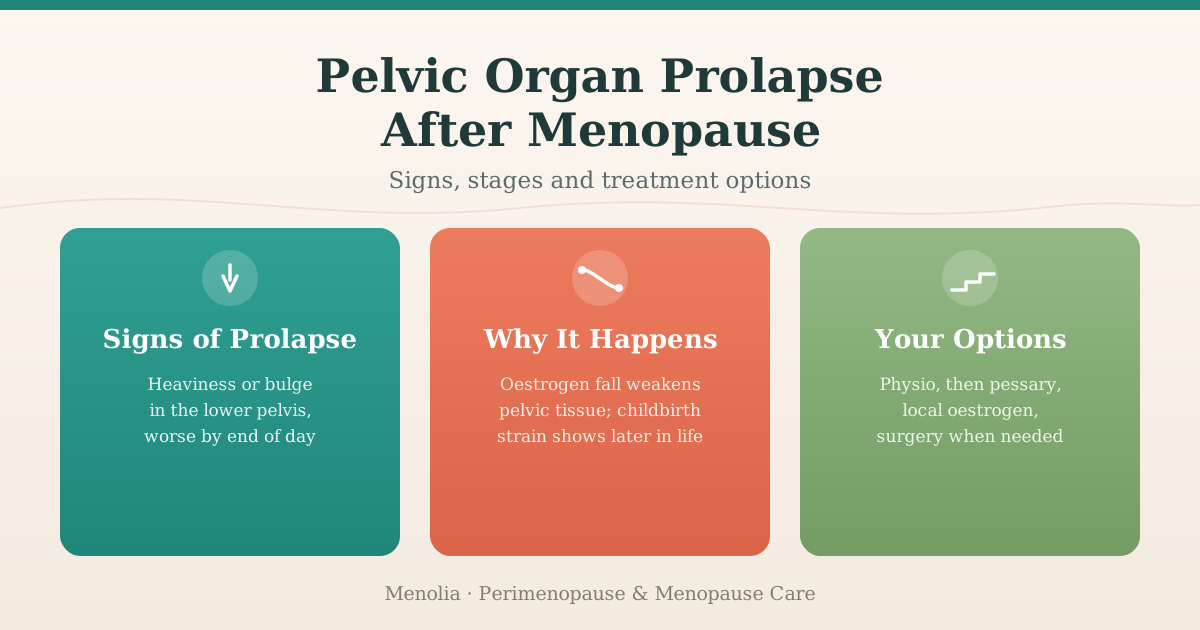
There is a sensation many women notice but have no name for. A heaviness deep in the pelvis that builds through the day and eases once they lie down. A sense that something is sitting where it should not be. Occasionally, by the end of a long afternoon on their feet, a small soft bulge that appears at the vaginal entrance and seems to retreat overnight.
Most women do not bring this to a doctor straight away. It is an awkward thing to describe, and it is not on the standard list of menopausal symptoms that anyone warned them about. Many women I see tell me they spent months noticing it before they searched for it, and longer still before they mentioned it to anyone.
What they are usually experiencing is pelvic organ prolapse. It is far more common in the years after the final period than the silence around it would suggest, far less frightening than most initially fear, and almost always manageable with the right approach.
What Pelvic Organ Prolapse Is
The pelvis is supported from below by a hammock of muscles, ligaments, and connective tissue called the pelvic floor. This floor holds three structures in place: the bladder at the front, the uterus in the middle, and the rectum at the back. When this support weakens, one or more of these organs can descend lower in the pelvis than they should, and in some cases reach toward or through the vaginal opening. That descent is called prolapse.
There are several types, depending on which structure has dropped:
Cystocele (front-wall prolapse): The front wall of the vagina weakens, and the bladder bulges downward into the vaginal canal. The most common complaints are a sense of pressure or fullness at the front, difficulty emptying the bladder completely, or needing to change position to urinate.
Rectocele (back-wall prolapse): The back wall weakens, and the rectum pushes forward. Women with a rectocele often describe needing to strain more than usual for a bowel movement, or feeling that the bowel has not fully emptied.
Uterine prolapse: The uterus descends into the vaginal canal. In milder forms only the cervix has dropped; in more advanced cases the uterus may be felt or seen at the vaginal entrance.
Vault prolapse: After a hysterectomy, the top of the vaginal canal, called the vault, can descend over time. The uterus, when present, provides some structural support from above; once it is removed, the vault can slowly prolapse.
Many women have a combination of these. Because the pelvic floor is one connected structure, weakness in one area often co-exists with changes in another.
Why the Menopause Years Make It More Common
Pelvic organ prolapse happens when the downward forces on the pelvic floor exceed what it can support. Two changes at menopause tip that balance.
Oestrogen withdrawal. Oestrogen receptors are present throughout the pelvic floor, in the vaginal walls, the pelvic muscles, and the connective tissue. Oestrogen keeps collagen fibres supple, maintains the elasticity of ligaments, and preserves the tone of vaginal tissue. When oestrogen falls at perimenopause and settles at a lower level after the final period, collagen in the pelvic floor begins to thin and lose tensile strength. The connective tissue that was keeping everything in place loses some of its resilience. This is also why genitourinary changes after menopause are so common across the board: the genitourinary syndrome of menopause involves the same tissue changes, just expressed in different symptoms.
Cumulative load from earlier life. The changes from oestrogen loss interact with wear that may have happened decades earlier. Vaginal childbirth, particularly with a long pushing phase, an instrumental delivery (forceps or ventouse), a large baby, or significant perineal tearing, places the pelvic floor under substantial stress. In the years of adequate oestrogen, the floor heals and holds well. When oestrogen support withdraws, that earlier stretch and strain can become clinically significant in a way it was not before.
Other factors that increase downward pressure over time include chronic constipation and straining at the toilet, persistent coughing from smoking or chest conditions, repetitive heavy lifting, and carrying extra abdominal weight.
A large population study by Nygaard and colleagues, published in JAMA in 2008, found symptomatic pelvic floor disorders in approximately one quarter of women in the United States, with rates rising in the 60 to 79 age group. Prolapse was among the most common findings. These numbers reflect a condition that is genuinely widespread, not a rare or unusual problem.
Understanding the Stages: What POP-Q Means in Plain Language
When a gynaecologist examines a prolapse, she uses a system called POP-Q, short for Pelvic Organ Prolapse Quantification, to describe how far the organs have descended. It is measured in centimetres relative to the vaginal opening. The stages are:
Stage 0: No prolapse. Everything is where it should be.
Stage 1: There is some descent, but the leading edge of the prolapse stays more than 1 cm above the vaginal opening. Most women with Stage 1 prolapse have no symptoms. It is often found during a routine pelvic examination.
Stage 2: The leading edge is within 1 cm of the opening, either slightly above or slightly below. Some women notice heaviness or pressure at this stage; others do not.
Stage 3: The prolapse extends more than 1 cm beyond the vaginal opening. The bulge is usually noticeable. Women with Stage 3 often describe seeing or feeling something at the entrance, particularly after a day of standing or walking.
Stage 4: The organ is as far down as it can descend, largely outside the vaginal opening. This is less common and is almost always symptomatic.
The stage on a report or scan is a starting point for discussion, not a verdict on what treatment is needed. Many women live comfortably with Stage 2 prolapse using pelvic floor physiotherapy and a few lifestyle changes. Surgery is not automatic at any stage. It becomes part of the conversation when symptoms are limiting daily life and simpler approaches have been properly tried.
If the description above matches what you have been noticing, and you have not yet spoken to anyone about it, please do reach out. You can WhatsApp Dr. Suganya directly at wa.me/919940270499 (Rs 399 online consultation). Many women find that a single conversation clears the fog of months of uncertainty.
The Treatment Ladder: From Physiotherapy to Surgery
Treatment for prolapse follows a stepwise approach. Most women start at the least invasive level and find it sufficient. There is no clinical reason to skip steps, and no urgency to proceed faster than feels right.
Pelvic floor physiotherapy
Pelvic floor muscle training, usually abbreviated to PFMT, is the recommended first-line treatment for symptomatic prolapse in women with Stage 1 to Stage 3 prolapse. A Cochrane systematic review found that women who complete a structured pelvic floor training programme report fewer prolapse symptoms and may show measurable improvement in prolapse stage compared to women who receive no treatment. The mechanism is straightforward: when the pelvic floor muscles are stronger and better coordinated, they actively support the pelvic organs during standing, walking, and any activity that creates downward pressure. The dynamic descent that produces the heaviness and the bulge is reduced.
Two points matter here. First, technique is everything. Many women who try pelvic floor exercises at home find they are inadvertently bearing down rather than lifting up. A physiotherapist trained in pelvic floor assessment will confirm by internal examination that you are contracting the right muscles in the right direction, and will guide you through a graded programme over 12 to 16 weeks. Second, this is different from general pelvic floor strengthening: the focus is not just on doing Kegels, but on building strength and endurance that translates to real support during daily activity.
For a fuller picture of how oestrogen withdrawal affects the pelvic floor muscles and what strengthening exercises involve, our guide to pelvic floor health after menopause covers the prevention and strengthening side. This post focuses on what to do when prolapse is already present.
Vaginal pessary
A pessary is a small device, usually made of medical-grade silicone, that is placed inside the vagina to provide structural support for the prolapsed tissue. It does not reverse the prolapse; it holds things in place so that symptoms reduce. The most commonly used type is the ring pessary, though shelf, cube, and Gellhorn designs exist for different anatomical situations and prolapse types.
Fitting a pessary takes one or two appointments with a gynaecologist. The right size and shape for your anatomy is identified over these visits. Once correctly fitted, most women cannot feel the pessary and can carry on with normal daily activities. Sexual intercourse is usually possible with a ring pessary in place.
Pessaries are suitable for a wide range of situations: women who prefer to avoid surgery, women for whom surgery carries additional risk, women using the pessary as a bridge while completing physiotherapy, and women who are satisfied with a non-surgical approach long-term. There is no medical reason against using a pessary for many years if it is comfortable and well-maintained. Most pessaries require cleaning and a clinic review every 3 to 6 months, at which point the gynaecologist also checks the vaginal walls for any small areas of friction.
Local oestrogen as an adjunct
Because oestrogen withdrawal contributed to the prolapse in the first place, adding local oestrogen at any point in the treatment ladder can be helpful. Vaginal oestrogen cream or gel is applied directly to the vaginal tissues. It has very low absorption into the bloodstream and is considered safe for most women, including many who cannot use systemic HRT. It improves tissue quality, reduces friction that can cause minor pessary irritation, and makes the vaginal walls more resilient. Some women also notice that local oestrogen alone reduces mild prolapse symptoms, by partially restoring the tissue tone that oestrogen loss had reduced.
Because the same tissue changes underlie both prolapse and bladder symptoms, women with prolapse also commonly experience urgency or bladder leaks. If this is the case for you, our guide to menopause bladder leaks explains the overlap and what helps.
Surgery
Surgical repair is considered when symptoms are significantly limiting quality of life, when physiotherapy has been properly completed and is not sufficient, when a pessary is not effective or acceptable, or when prolapse has progressed to Stage 3 or 4 with clear functional impact.
The type of surgery depends on which organs have prolapsed and the individual anatomy. Common procedures include:
- Anterior colporrhaphy for cystocele (front wall repair)
- Posterior colporrhaphy for rectocele (back wall repair)
- Vaginal hysterectomy with vault support for uterine prolapse where the uterus is not needed
- Sacrocolpopexy for vault prolapse after hysterectomy, using native tissue or synthetic mesh to support the vault
In India, laparoscopic approaches are available at tertiary centres and larger private hospitals. A gynaecologist will refer you to a urogynaecologist, a specialist who focuses specifically on pelvic floor disorders, when surgery is being planned. Research by Olsen and colleagues (American Journal of Obstetrics and Gynecology, 1997) estimated that approximately 1 in 9 women will undergo surgery for prolapse or urinary incontinence by the age of 80. Not all prolapse leads to surgery; the majority of women manage with physiotherapy and, where needed, a pessary. But for those who do proceed to surgery, outcomes in well-selected candidates are generally good.
What You Can Do Right Now
Whether you are watching, treating, or waiting for an appointment, a few practical changes reduce the ongoing downward pressure on the pelvic floor.
Address constipation. Straining during a bowel movement is one of the most direct daily pressures on the pelvic floor. A diet with adequate fibre and fluids makes a real difference. Ragi, jowar, bajra, whole dal, methi, and leafy sabzis are all good sources of dietary fibre. Regular water intake and a consistent toilet routine reduce the need to strain.
Lift safely. When you lift anything, exhale and consciously draw the pelvic floor upward as you do so. Avoid holding your breath and pushing down. This technique, once it becomes habit, significantly reduces the load on the pelvic floor during daily activity.
Keep moving, but adapt how. Exercise is important for weight, bone health, and overall wellbeing. For women with prolapse, walking, swimming, and yoga tend to be lower in pelvic floor impact. High-impact activities such as jumping and running can be reintroduced gradually once pelvic floor strength has been built under physiotherapy guidance. Stopping all exercise is not the advice.
Treat a persistent cough. An untreated chronic cough, from smoking, poorly controlled asthma, or long-standing chest problems, creates repeated bursts of downward pressure. Addressing the cough’s underlying cause protects the pelvic floor in a way that exercises alone cannot.
Do not delay the conversation. The longer prolapse symptoms go unaddressed, the more the pelvic floor compensates in ways that make rehab harder. An early appointment gives more options.
A prolapse does not have to change the way you live. Most women who seek help find the right combination of approaches and go on to live fully active lives. If you would like to talk through what you are experiencing and understand your options, reach Dr. Suganya Venkat on WhatsApp at wa.me/919940270499 (online consultation, Rs 399). She works with women across India over video call and can help you understand where to start.
Frequently Asked Questions
Can pelvic organ prolapse get better on its own? Prolapse does not reverse structurally without treatment. A mild Stage 1 or Stage 2 prolapse with minimal symptoms may remain stable for years if the contributing factors (constipation, chronic cough, abdominal weight) are addressed and pelvic floor habits are good. Pelvic floor physiotherapy can reduce symptoms and, in some cases, improve the POP-Q stage, but this requires committed, correctly performed training over several months. Without intervention, it is unlikely to improve on its own and can progress gradually over time.
What does pelvic organ prolapse feel like day to day? The most common description is a heaviness or dragging sensation in the lower pelvis, most noticeable after standing or walking for several hours, and better when lying down. Some women feel or see a small soft bulge at the vaginal entrance, particularly by the end of the day. Depending on which organs are involved, you may also notice difficulty fully emptying the bladder or bowel, a low backache, or a sense of pressure during sex. The symptoms tend to be most prominent late in the day.
Is prolapse connected to bladder leaks? Yes, they are closely related. Both arise from the same structural changes: pelvic floor weakening and oestrogen-driven tissue laxity after menopause. Bladder leaks (stress urinary incontinence) happen when a cough, sneeze, or sudden movement creates more pressure than the urethral sphincter can contain. A cystocele (bladder prolapse into the front vaginal wall) can also change the angle of the urethra in a way that either improves or worsens leaks, depending on the type. Many women with prolapse also have some degree of urinary symptoms. Treating one often improves the other.
Can I use a pessary long-term? Yes. Many women use pessaries for years with no problems, including some who use them throughout their lives. There is no medical contraindication to long-term pessary use as long as the device fits well, is comfortable, and is maintained with regular cleaning and check-ups every 3 to 6 months. Some women manage the device themselves; others prefer clinic-based maintenance. Both approaches are well-established.
When should I see a urogynaecologist rather than a general gynaecologist? A general gynaecologist can assess prolapse, advise on physiotherapy, and fit a pessary. A urogynaecologist, a specialist at the intersection of urology and gynaecology, is the right referral when prolapse is Stage 3 or 4, when significant bladder or bowel symptoms accompany the prolapse, when you are exploring surgical options, or when initial treatments have not provided sufficient relief. In India, urogynaecology services are available at major teaching hospitals and larger private centres in cities such as Chennai, Bengaluru, Mumbai, and Delhi.
Will my prolapse get worse as I get older? Without any intervention, mild to moderate prolapse can progress over time, particularly if the factors that drive it (constipation, chronic coughing, abdominal weight) continue. Physiotherapy and lifestyle changes can slow or halt progression. Local oestrogen helps maintain tissue quality and reduces the rate of deterioration. Surgery, for those who need it, addresses the structural problem directly and the results are generally durable. The key is not to wait until symptoms become severe before seeking help.
Can I have prolapse repair after a hysterectomy? Yes. Vault prolapse, the descent of the top of the vaginal canal after the uterus has been removed, is a recognised condition with established surgical approaches, including sacrocolpopexy. A previous hysterectomy does not exclude you from future prolapse repair. In fact, having had a hysterectomy is one of the risk factors for vault prolapse. A urogynaecologist can assess the anatomy and advise on the best approach for your specific situation.