For twenty years you had a system. The diary, the phone alarms, the list on the fridge, the cup of filter coffee before the hard task. Perhaps you were diagnosed with ADHD as an adult, after your child was assessed and you recognised yourself in every question on the form. Perhaps you were never diagnosed at all and simply built your own scaffolding without knowing why you needed it. Then, somewhere in your forties, the scaffolding started to give way. You read the same email three times. You walk into the kitchen and stand there. Tasks that a deadline used to push you through now refuse to start.
I’m Dr. Suganya Venkat, an OB-GYN, and in more than fifteen years of looking after women through their forties I have heard this description often enough to take it seriously every single time. There are clear reasons focus can get harder in perimenopause, and the change tends to be most noticeable for women who already live with ADHD.
This post covers why the hormonal transition affects attention, what research has found in women with ADHD going through perimenopause, how to think about the question “could this be ADHD?” if you have never been diagnosed, and what helps. If your concern is general forgetfulness and fog without any ADHD question, our guide to menopause brain fog covers that in detail.
Why Oestrogen Matters for Attention
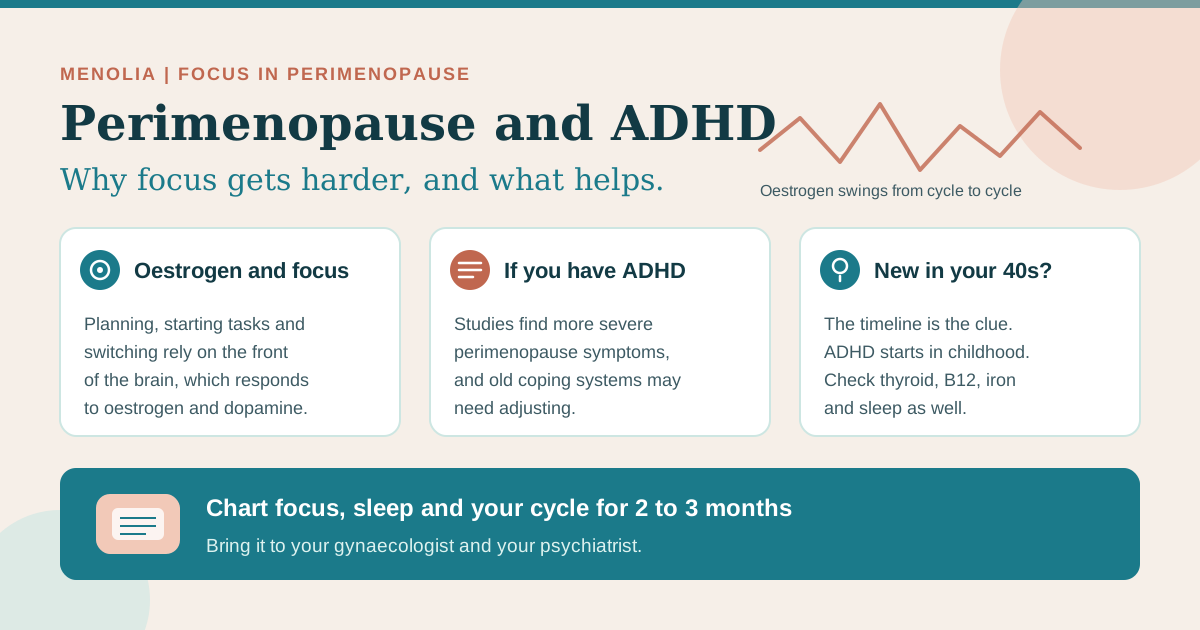
Paying attention, planning, starting a task, holding several things in mind while you work, switching smoothly from one job to the next: together these are called executive functions. They depend heavily on the prefrontal cortex, the front part of the brain.
A review by Shanmugan and Epperson notes that midlife decline in executive functioning is a frequent concern that brings menopausal women to the doctor, and argues that oestrogen’s effects on the prefrontal cortex, working together with neurotransmitter systems, stress and individual life history, may be key to understanding it (Shanmugan S et al., Hum Brain Mapp, 2014, PMID 23238908).
Dopamine is part of that picture. A 2025 review by a European research group on female ADHD examines how oestrogen and progesterone interact with dopamine pathways, and how periods of lower oestrogen may affect cognition (Kooij JJS et al., Front Glob Womens Health, 2025, PMID 40692967). Most ADHD medicines work by increasing dopamine and noradrenaline signalling in the brain. So the idea that falling or fluctuating oestrogen could make ADHD symptoms harder to manage is biologically plausible, and it fits what many women describe. It has not yet been proven step by step in women going through the transition, so treat it as a strong working explanation.
Why perimenopause feels so uneven
Oestrogen does not fall in a smooth line during perimenopause. It swings from cycle to cycle, sometimes high, sometimes low. That unpredictability is what many women notice most: some weeks feel almost normal, and others feel like wading through mud for no obvious reason.
There is also reassuring evidence on how long this lasts. The Study of Women’s Health Across the Nation (SWAN) tested 2,362 women repeatedly over four years. Premenopausal women improved each time they repeated the tests, as people usually do with practice, but women in late perimenopause did not improve on processing speed, and women in early and late perimenopause did not improve on delayed verbal memory. After menopause, that ability to improve with practice returned to premenopausal levels, which the authors read as a sign that the cognitive difficulties of the transition may be time-limited (Greendale GA et al., Neurology, 2009, PMID 19470968). That study looked at women in general, not specifically at women with ADHD, but it explains why so many women feel their minds slip during these years.
What Research Shows for Women With ADHD
Research on ADHD in perimenopause is still young, but the studies that exist point in the same direction.
- More severe perimenopausal symptoms. In a population-based cohort study, women who reported an ADHD diagnosis (535 women) had higher total perimenopausal symptom scores than women without ADHD (4,857 women): 18.0 versus 13.0 on the Menopause Rating Scale. Severe perimenopausal symptoms were more common in women with ADHD overall (54.2% versus 30.1%). The gap in total symptom scores was most pronounced in women aged 35 to 39 (19.0 versus 12.5). The authors suggest this may indicate an earlier onset of perimenopause in women with ADHD (Jakobsdóttir Smári U et al., Eur Psychiatry, 2025, PMID 40903825).
- Women notice their ADHD changing. In an online survey of 600 women with an ADHD diagnosis, most participants perceived a worsening of their ADHD symptoms during menopause (97.5%) and during the postpartum period (70.4%). Among premenopausal women not on hormonal therapy, 88.6% noticed their symptoms changing across the menstrual cycle, most often worsening in the second half of the cycle (Osianlis E et al., J Psychiatr Res, 2026, PMID 41330200). This is self-reported data from women who chose to take part, so it tells us what women experience rather than how often it happens in everyone with ADHD.
- Mood travels with it. In a study of 209 consecutive women with ADHD, rates of premenstrual dysphoric disorder (PMDD) symptoms and postpartum depression symptoms were high, and scores on a menopause symptom scale were high for anxiety, low mood, sexual difficulties, hot flushes and physical complaints (Dorani F et al., J Psychiatr Res, 2021, PMID 33302160).
- In their own words. A qualitative study interviewed 19 women with ADHD in Ireland about perimenopause. Its title borrows one participant’s phrase, “Hormones rule me”, and the women described emotional and cognitive changes arriving suddenly, along with a strong wish for care that considers ADHD and perimenopause together (Kini-Seery C et al., Women’s Health, 2026, PMID 42466994).
Put plainly: if your premenstrual week was always your hardest week for focus, perimenopause can stretch that pattern out and make it less predictable. Anxiety and low mood often arrive alongside it. None of this reflects a lack of effort or discipline on your part. The ground under your coping strategies has shifted, and the strategies need adjusting to match.
If mood swings and irritability are a large part of what you are noticing, why perimenopause changes your mood explains that side of the picture.
Never Diagnosed? Could This Be ADHD?
Many women in their forties start to wonder whether they have had ADHD all along. It is a fair question. A 2026 review by Wynchank and Kooij describes ADHD in women as frequently underdiagnosed and undertreated, particularly in midlife, when the hormonal changes of perimenopause can exacerbate or unmask underlying symptoms. The same review points out that ADHD and perimenopause share many symptoms, which makes the diagnosis more complicated at this age (Wynchank D et al., Drugs Aging, 2026, PMID 42018215).
The most useful question is when it started. ADHD is a neurodevelopmental condition. The diagnostic criteria psychiatrists use, the DSM-5 (American Psychiatric Association, Diagnostic and Statistical Manual of Mental Disorders, 5th edition, 2013), require several symptoms to have been present before the age of 12. So a psychiatrist assessing you will ask a lot about your childhood: school reports, whether teachers called you dreamy or talkative, whether you lost things constantly, whether you always finished assignments at the last minute, and how much effort it has taken all your life to keep up.
| Pattern | Points more towards lifelong ADHD | Points more towards a perimenopause change |
|---|---|---|
| When it began | Traceable back to school years, often managed with heavy effort | Clearly new in your late thirties or forties |
| How it behaves | Present across settings for decades, home and work alike | Comes and goes with the cycle, worse in some weeks |
| What comes with it | Lifelong restlessness, impulsivity, time blindness | Hot flushes, night sweats, broken sleep, changing periods |
| Response to good sleep | Some improvement, but the core difficulty stays | Often clearly better after a run of good nights |
The table is a starting point for a conversation with a doctor, not a self-diagnosis tool. Many women have features from both columns, because a lifelong mild tendency can become impossible to manage once perimenopause is layered on top.
Midlife focus problems can also appear without ADHD
New difficulties with attention and organisation at menopause are recognised in their own right. In a small research trial, 32 healthy perimenopausal and early postmenopausal women with new, midlife-onset executive function difficulties were studied, and anyone with a lifetime history of ADHD was excluded (Epperson CN et al., Psychopharmacology, 2015, PMID 26063677). That trial tested a stimulant medicine and is not a standard treatment for menopausal brain fog. I mention it because it shows researchers treat midlife-onset attention difficulty as a real, measurable problem, even in women who have never had ADHD.
Other causes worth checking first
Before anyone decides this is ADHD or hormones, a few common and treatable causes deserve a look, because each can mimic poor focus closely:
- Thyroid problems, which become more common in midlife. Our post on thyroid changes during menopause explains how they overlap with menopause symptoms.
- Low vitamin B12 or iron deficiency anaemia, both common among Indian women and both simple blood tests.
- Poor sleep from any cause, including night sweats and snoring. Snoring and daytime sleepiness that are new in your forties are worth mentioning; our post on sleep apnoea after 45 covers why.
- Low mood or anxiety, which slow thinking down and make it hard to start tasks.
- Medicines that cause drowsiness, such as some antihistamines and sleep aids.
Struggling to focus and not sure whether it is hormones, ADHD or something else? Bring a note of when it started, how your periods and sleep have changed, and any recent blood reports, and we can work through it together over a video call, alongside your own doctor. Message Dr. Suganya on WhatsApp for a Rs 399 video consultation.
Who Does What: Your Gynaecologist and Your Psychiatrist
Care works best when each doctor looks after the part they know well and the two talk to each other.
A psychiatrist makes or confirms an ADHD diagnosis and manages ADHD medicines, whether stimulant or non-stimulant. If you already take ADHD medicine and it feels less effective, please do not change the dose yourself. Wynchank and Kooij note that evidence on ADHD medicines in perimenopausal and postmenopausal women is limited, with no randomised trials specific to this group, and their guidance stresses individualised dosing, cardiovascular monitoring such as blood pressure checks, and collaborative care (Wynchank D et al., Drugs Aging, 2026, PMID 42018215).
A gynaecologist looks at the hormonal side: where you are in the transition, how your periods are changing, whether hot flushes and night sweats are breaking your sleep, and whether hormone therapy is a sensible option for those symptoms.
Does HRT help ADHD symptoms?
Hormone therapy is not an ADHD treatment. The same review discusses menopausal hormone therapy as a possible add-on for mood, sleep and cognitive symptoms in women with ADHD, and lists controlled trials of combining it with ADHD medicine as a research priority, which tells you the evidence is not there yet (Wynchank D et al., Drugs Aging, 2026, PMID 42018215).
Where HRT can help is indirect. If night sweats wake you four times a night, treating them gives your brain a fair chance the next morning. Whether HRT suits you depends on your symptoms, your age, your health history and your own preferences, and our guide to HRT in India walks through that decision. If you are already on an antidepressant, read HRT and antidepressants before your appointment.
Whatever you are taking, make sure every doctor you see has the full list of your medicines, including ADHD medicine, HRT, antidepressants and any supplements.
What Helps Day to Day
These steps help whether the cause turns out to be ADHD, perimenopause, or both.
- Chart it for two or three months. Each evening, note the day of your cycle, how you slept, any hot flushes, and a focus score from 1 to 5. A simple phone note is enough. This is the single most useful thing you can bring to either doctor, because it shows whether your worst days line up with your cycle.
- Protect sleep first. Broken sleep makes every attention problem worse. Our post on perimenopause sleep problems covers what helps when you are still having periods.
- Watch the timing of tea and coffee. A strong filter coffee or a third cup of chai late in the afternoon can quietly cost you sleep. Try keeping caffeine to the morning and early afternoon.
- Move hard thinking to your best hours. Most women know when their head is clearest. Put the report, the bank work and the difficult phone call there, and keep routine jobs for the foggy hours.
- Write down more than you used to. One calendar instead of three, alarms for medicines and appointments, a visible list for the day, and a fixed spot by the door for keys, spectacles and phone. Needing more external reminders now does not mean you are getting worse at your job or your home.
- Do one thing at a time. Switching between tasks costs more when executive function is stretched. Close extra tabs and finish one job before starting the next where you can.
- Share the mental load at home. Many women in their forties are managing ageing parents, children’s exams and a job at the same time. Telling your family what you are going through, and handing over some of the remembering, is a practical step, and it is not a weakness.
- Keep moving. A regular walk, yoga, or any movement you enjoy supports sleep and mood, both of which feed directly into focus.
When to Talk to a Doctor
Please speak to a doctor if:
- Focus problems are affecting your work, your safety while driving, or your ability to take medicines correctly
- Low mood, anxiety or irritability are building alongside the focus problems (our post on perimenopause anxiety treatment covers the options)
- You have ADHD and your usual medicine or strategies no longer seem to work
- Other people are noticing changes in your memory, or you are getting lost in familiar places. These are less typical of hormonal fog and are worth checking; our guide to memory loss in menopause explains the differences
If you ever have thoughts of harming yourself, please reach out to a doctor or someone you trust the same day.
Frequently Asked Questions
Can perimenopause cause ADHD?
No. ADHD is a neurodevelopmental condition, and the diagnostic criteria require symptoms to have been present before the age of 12. What perimenopause can do is make existing ADHD more noticeable, bring out symptoms that you had been managing for years, or cause new focus and organisation difficulties in women who do not have ADHD.
Why are my ADHD medicines not working as well in my forties?
Hormonal fluctuation, poor sleep, low mood and anxiety can all make ADHD symptoms harder to control, even on the same dose. In one online survey of women with ADHD, most participants (97.5%) perceived their symptoms worsening during menopause. Talk to your psychiatrist rather than changing the dose yourself, and bring a few weeks of symptom notes with you.
Is it brain fog or ADHD?
The timeline is the biggest clue. Brain fog from perimenopause tends to start in your late thirties or forties, comes and goes, and often improves with better sleep. ADHD has roots in childhood and has been present, in some form, for most of your life. Many women have both, which is why a careful history matters more than any single test.
Will HRT help my ADHD symptoms?
HRT is not an ADHD treatment, and controlled trials testing it for ADHD symptoms have not been done yet. It can help indirectly by easing hot flushes and night sweats that break your sleep. Whether HRT suits you depends on your symptoms and health history, so discuss it with your gynaecologist.
Does focus get better after menopause?
For women in general, the SWAN study found that the learning dip seen in perimenopause rebounded to premenopausal levels after menopause, which suggests the transition-related difficulty may be time-limited. How ADHD symptoms behave in the years after menopause has not been well studied yet.
Should I see a gynaecologist or a psychiatrist?
Often both. A psychiatrist assesses and treats ADHD itself. A gynaecologist looks at the hormonal transition, sleep and hot flushes, and whether hormone therapy is an option. Care works best when the two are aware of each other’s plans.
Can I be assessed for ADHD for the first time at 45?
Yes. Adult ADHD assessments are done by psychiatrists, and many women are diagnosed for the first time in midlife. You will be asked about your childhood, so old school reports, or a parent or sibling who remembers you as a child, can help.
Losing your focus in your forties can feel frightening, especially when systems that worked for decades stop working. There is usually a reason, and there is usually a lot that can be done once the picture is clear. If you would like help sorting out the hormonal side, I see women across India online.
Chat with Dr. Suganya on WhatsApp
Related reading: Menopause Brain Fog: Why It Happens & Fixes · Perimenopause Mood Changes