A woman came to a consultation last year with a specific request: she wanted something for vaginal dryness and pain during sex that was not vaginal oestrogen cream. She had a strong family history of breast cancer and, even though her own risk did not rule oestrogen out, she wanted to know what else existed. She had read the word “DHEA” somewhere and wanted to know whether it was real, or another wellness-industry supplement dressed up in a medical name.
It is real, and it is not the same DHEA sold as an anti-ageing supplement in a bottle. Vaginal DHEA, known by its generic name prasterone, is a prescription treatment for genitourinary syndrome of menopause with its own clinical trial evidence. This post explains what it actually is, how it differs from vaginal oestrogen, what the trials show, and the honest picture on getting it in India.
What This Post Covers
- What vaginal DHEA (prasterone) is, and how it is different from an oral DHEA supplement
- The mechanism: how it works inside vaginal tissue without raising blood hormone levels the way a pill would
- What the clinical trials actually show for dryness and painful sex
- Who it may suit, including the breast cancer conversation
- The honest availability and cost picture in India
- Where it sits next to vaginal oestrogen and vaginal moisturisers
Vaginal DHEA Is Not the Same as the DHEA Supplement Aisle
DHEA, or dehydroepiandrosterone, is a hormone your adrenal glands make throughout life, and levels fall steadily with age. Walk into any pharmacy or search online and you will find oral DHEA capsules marketed for energy, muscle mass, mood, and general anti-ageing. The evidence behind those oral supplements for menopausal symptoms is weak and inconsistent, and Menolia does not recommend them.
Vaginal DHEA is a different product used a different way. It is prasterone, the pharmaceutical name for DHEA formulated as a vaginal insert, used once daily. It was studied specifically for genitourinary syndrome of menopause (GSM), the cluster of vaginal dryness, burning, and painful sex that follows the drop in oestrogen after menopause. If you want the full picture of GSM and why these symptoms cluster together, that guide covers it in depth.
The distinction matters because a woman who tries an oral DHEA capsule for vaginal dryness and finds it does nothing has not tested vaginal DHEA at all. They are different products studied for different things.
How It Works: Intracrine Action, Not a Systemic Hormone
Vaginal oestrogen cream delivers oestrogen directly. Vaginal DHEA delivers a hormone precursor, and the vaginal tissue itself does the rest of the work.
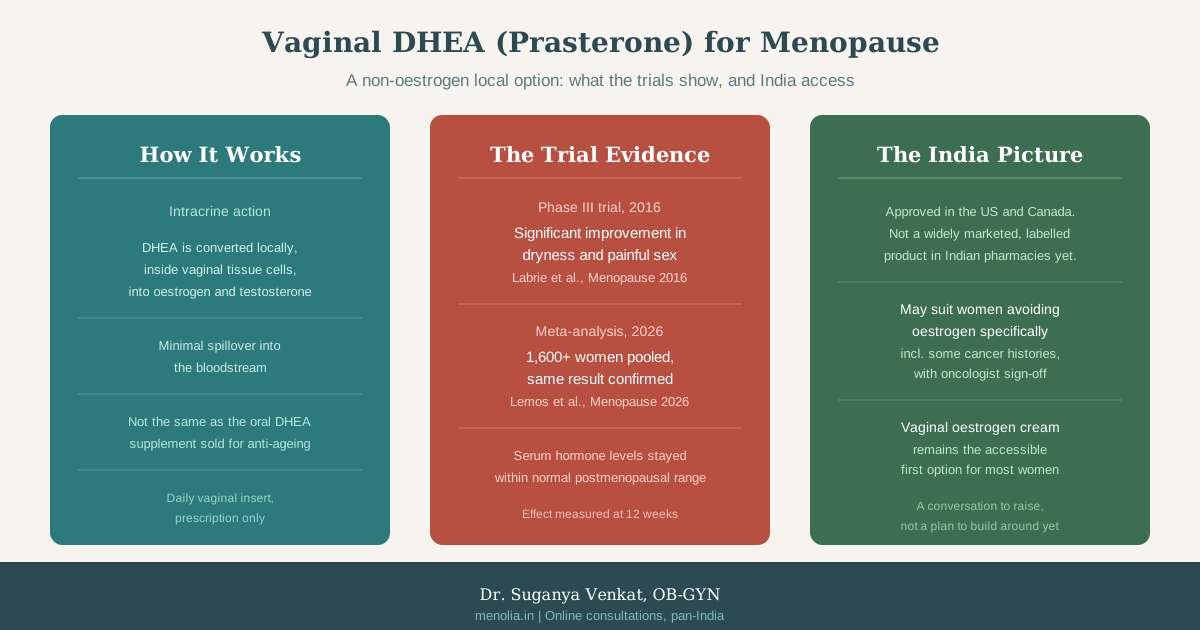
Once inserted, DHEA is taken up by the vaginal cells and converted locally, inside those cells, into small amounts of both oestrogen and testosterone. This local conversion process is called intracrine action: the hormone is made and used within the same cell, and very little escapes into the bloodstream to circulate through the rest of the body. This is different from vaginal oestrogen cream, where a small but measurable amount of oestrogen is absorbed into circulation, particularly in the first weeks of use while the tissue is still thin.
For a woman specifically looking to avoid raising her circulating oestrogen level, whether because of a personal preference or a medical history that makes that question significant, this mechanism is the reason vaginal DHEA gets raised as an alternative worth knowing about.
What the Trials Show
The pivotal trial behind prasterone’s approval was a randomised, double-blind, placebo-controlled phase III study of intravaginal DHEA in postmenopausal women with moderate to severe painful sex from vaginal atrophy. It found that daily 0.50% DHEA inserted vaginally for twelve weeks significantly improved pain during sex and vaginal dryness compared with placebo, alongside measurable improvement in the vaginal tissue itself on examination, and circulating hormone levels stayed within the normal postmenopausal range throughout (Labrie F et al., Menopause, 2016, PMID 26731686).
A 2026 systematic review and meta-analysis pooling this trial with the other available randomised trials, covering more than 1,600 postmenopausal women in total, confirmed the same result: intravaginal DHEA produced statistically significant improvement in both vaginal dryness and painful sex compared with placebo, with no major safety concerns and only mild, infrequent side effects across the pooled trials (Lemos MJ et al., Menopause, 2026, PMID 41589851).
This is a genuine, replicated evidence base, not a single study or a manufacturer claim. It is also honestly scoped: the improvement is measured in symptom-severity scores, not a cure, and like vaginal oestrogen, it needs to be continued to keep the benefit, since it treats an ongoing hormone deficiency rather than reversing it permanently.
Who Vaginal DHEA May Suit
Vaginal DHEA is not a first-choice treatment for every woman with GSM. Vaginal oestrogen cream and vaginal moisturisers remain the more established, more widely available first steps for most women, and that fuller treatment ladder is covered in the vaginal oestrogen guide. Vaginal DHEA becomes a relevant conversation for a smaller group:
Women who prefer to avoid oestrogen-based local treatment specifically, for personal reasons, even without a medical contraindication.
Women with a history of hormone-sensitive cancer, in coordination with their oncologist. This is where the evidence needs the most careful reading. A 2023 systematic review looking specifically at hormonal treatments for vulvovaginal atrophy in breast cancer survivors identified one study using prasterone, and that study found no elevation of serum oestradiol concentration in the women who used it, in contrast to the vaginal oestrogen and testosterone arms, where some rise in circulating oestrogen was seen (Comini ACM et al., Clin Breast Cancer, 2023, PMID 37806915). That is one supportive study, not a large or definitive safety trial in this specific population, and the review’s own conclusion is that safety data for all local hormonal treatments in breast cancer survivors, prasterone included, remains limited. This is not a green light to self-select prasterone after a breast cancer diagnosis. It is a reason to bring prasterone into the conversation your oncologist and gynaecologist have together, alongside non-hormonal options, rather than assuming oestrogen is the only local hormone treatment on the table.
Women whose GSM symptoms have not responded adequately to non-hormonal moisturisers and who want another option before or alongside vaginal oestrogen.
This is a collaborative decision with your existing doctor, not a treatment to source and start on your own. If oestrogen therapy has already been ruled out for you for a specific medical reason, that reason needs to be weighed against what is known and not known about DHEA’s local conversion, and your prescribing doctor is the right person to weigh it.
If vaginal dryness or pain during sex is affecting you and you want to talk through which local treatment, oestrogen, DHEA, or a non-hormonal approach, actually fits your situation, that conversation is worth having directly.
Ask Dr. Suganya on WhatsApp about vaginal DHEA
The Honest Picture on India Availability and Cost
This is where the picture is genuinely limited, and it is worth being direct about it rather than implying easy access. Prasterone, sold internationally under the brand name Intrarosa, has regulatory approval in the United States and Canada for moderate to severe painful sex due to menopause. It is not currently a widely marketed, labelled product in Indian pharmacies the way Premarin vaginal cream or Evalon estriol cream are.
This does not mean no Indian gynaecologist has ever discussed it. Compounding pharmacies and specific import channels exist for some hormone preparations, and availability shifts over time. But for most women in India today, vaginal DHEA is not something you can walk into a pharmacy and buy, and any Indian price quoted online without a verified local pharmacy listing behind it should be treated with caution. If this changes, this post will be updated with the confirmed detail.
The practical implication: for most women in India right now, vaginal oestrogen cream or estriol cream remain the more accessible local hormonal options, and vaginal moisturisers and lubricants remain fully available non-hormonal support in the meantime. Vaginal DHEA is worth knowing exists and worth raising with your gynaecologist, particularly if you are travelling internationally, have access through a specific pharmacy, or your doctor has a specific import pathway, but it should not be the plan you build around before confirming access.
Where This Fits Next to Vaginal Oestrogen and Moisturisers
GSM management works in layers, and the full four-level framework, from non-hormonal support through to systemic hormone therapy, is laid out in the GSM guide. Vaginal DHEA sits at the same level as vaginal oestrogen cream: both are local hormonal treatments, used daily or several times a week, aimed at rebuilding the vaginal tissue itself rather than just easing friction in the moment.
Vaginal moisturisers, used regularly regardless of sexual activity, and lubricants, used at the time of sex, work alongside either hormonal option, not instead of one. Many women use a moisturiser as their day-to-day comfort layer while a local hormone treatment, whichever one their doctor prescribes, does the slower work of restoring the tissue over weeks and months.
For women managing GSM symptoms after cancer treatment specifically, the fuller picture on symptoms and options after cancer treatment is covered separately, since the treatment history itself shapes which options are appropriate.
Practical Takeaways
- Vaginal DHEA (prasterone) is a prescription vaginal insert studied specifically for painful sex and dryness from GSM, distinct from the oral DHEA supplement sold for general anti-ageing. Confusing the two means testing the wrong product.
- It works through intracrine action: DHEA is converted to oestrogen and testosterone inside vaginal tissue cells, with minimal spillover into the bloodstream.
- Two separate bodies of trial evidence, a pivotal phase III trial and a 2026 meta-analysis of over 1,600 women, both show significant improvement in dryness and painful sex compared with placebo.
- It is a reasonable option to discuss for women who want to avoid oestrogen-based local treatment specifically, including some women with a history of hormone-sensitive cancer, always in coordination with their oncologist.
- Vaginal DHEA is not currently a widely available, labelled product in Indian pharmacies. Vaginal oestrogen cream, estriol cream, and non-hormonal moisturisers remain the more accessible options for most Indian women today.
Frequently Asked Questions
Is vaginal DHEA the same as the DHEA supplement pills sold for anti-ageing? No. Oral DHEA supplements are swallowed capsules with weak, inconsistent evidence for menopausal symptoms. Vaginal DHEA, or prasterone, is a prescription vaginal insert studied specifically for genitourinary syndrome of menopause, used once daily, with a different mechanism and a genuine clinical trial evidence base behind it.
Does vaginal DHEA raise my oestrogen levels the way HRT does? No, not meaningfully. DHEA is converted to oestrogen and testosterone locally, inside the vaginal tissue cells, in a process called intracrine action. Very little escapes into general circulation, and trial data shows circulating hormone levels stay within the normal postmenopausal range during use. This is different from systemic HRT, which is designed to raise hormone levels throughout the body.
Can I use vaginal DHEA if I have had breast cancer? This needs to be a decision made with your oncologist and gynaecologist together, not decided alone. One systematic review found the single available study of prasterone in breast cancer survivors showed no rise in serum oestradiol, which is a genuinely reassuring signal, but the same review concluded that overall safety data in this population remains limited across all local hormonal options, DHEA included. Bring this specific evidence to that conversation rather than assuming either a yes or a no in advance.
Can I buy vaginal DHEA (prasterone or Intrarosa) in India? Not as a widely marketed, labelled pharmacy product at this time. It has regulatory approval in the United States and Canada, but it is not something most Indian pharmacies stock. If your gynaecologist has a specific access pathway, that is worth discussing directly with her, but do not assume it is available before checking.
How is vaginal DHEA different from vaginal oestrogen cream? Both are local hormonal treatments for GSM, used at the vaginal tissue level rather than systemically. Vaginal oestrogen delivers oestrogen directly. Vaginal DHEA delivers a precursor hormone that the vaginal tissue converts locally into oestrogen and testosterone. For most Indian women today, vaginal oestrogen cream is the more accessible and more established option, and DHEA is a secondary conversation for specific situations.
How long does vaginal DHEA take to work? In the pivotal trial, meaningful improvement in vaginal dryness and painful sex was measured at twelve weeks of daily use. As with vaginal oestrogen, the benefit needs ongoing use to be maintained, since it is supporting tissue that has an underlying hormone deficiency, not reversing the deficiency itself.
Is vaginal DHEA a hormone replacement therapy? It is a local hormone treatment, but it is not the same category as systemic HRT (tablets, patches, or gels that raise hormone levels throughout the body). Vaginal DHEA acts within the vaginal tissue itself with minimal systemic absorption, which is closer in category to vaginal oestrogen cream than to a systemic HRT regimen.
I am Dr. Suganya Venkat, an OB-GYN with fifteen years of clinical experience, and questions about alternatives to oestrogen for vaginal symptoms come up often at Menolia, especially from women navigating a cancer history or a strong personal preference. Vaginal DHEA is a real, evidence-backed option worth knowing about, even where access in India is still limited. If dryness or painful sex is affecting your daily life, a conversation with a menopause-aware doctor is the right next step, whichever treatment ends up being right for you.
Message Dr. Suganya on WhatsApp about vaginal DHEA and your options