Treatment for breast cancer and other hormone-related cancers can trigger menopause, sometimes suddenly, sometimes gradually, and often at an age and life stage where a woman did not expect to be navigating this. Hot flashes arrive without warning. Sleep becomes difficult. Vaginal dryness causes discomfort. Joints ache. And the question underneath all of it is often the same: is this normal, is it permanent, and what can I do about it?
These are reasonable questions. The symptoms are real and, in some cases, severe. And the fact that systemic oestrogen is usually off the table in this context does not mean nothing can be done. This post covers what is actually happening with each type of treatment, what to expect from your oncology team, and what the evidence supports alongside that care.
The three situations are meaningfully different from one another, which is why they are addressed separately below.
How each treatment brings on menopause
Chemotherapy and the ovaries
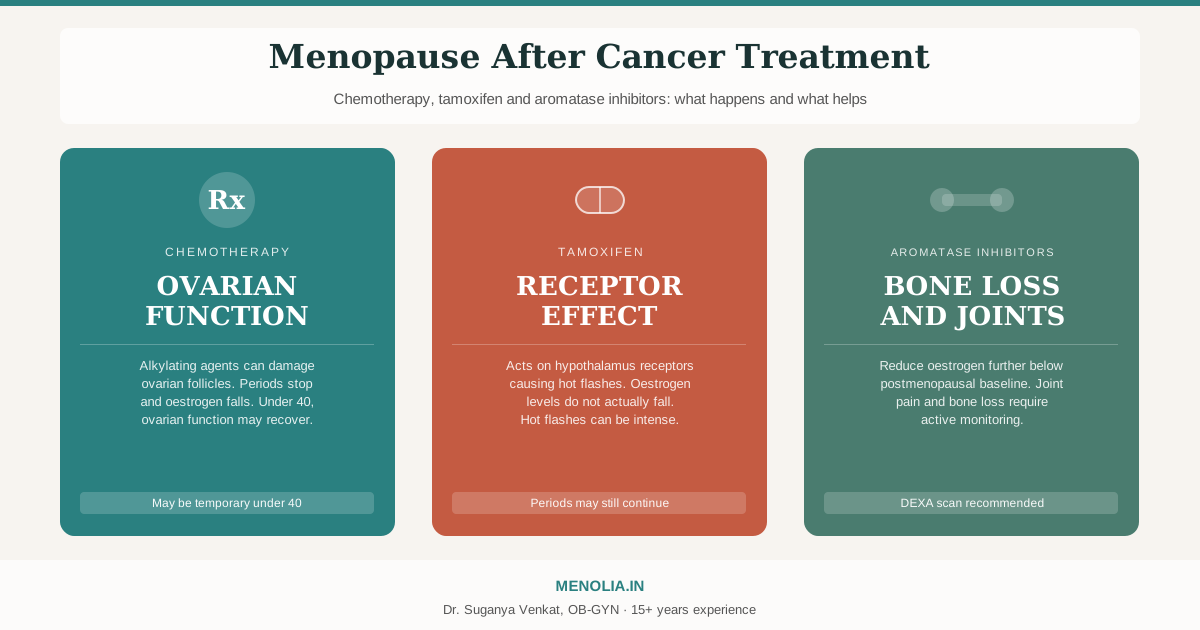
Some chemotherapy drugs, particularly those in the alkylating agent class, have a direct toxic effect on ovarian follicles. Cyclophosphamide is the most studied example. When enough follicles are damaged, the ovaries can no longer sustain normal oestrogen production. Periods stop, FSH rises, and the symptoms of oestrogen withdrawal begin, often quickly and with some intensity.
How permanent this is depends heavily on age at the time of treatment. Women under 35 to 40 have a larger follicle reserve and are more likely to see ovarian function recover in the months or years after treatment ends. In younger women, periods can return. Women over 40, particularly those approaching the age at which menopause would have arrived naturally, are more likely to experience permanent cessation of ovarian function.
A practical point that follows from this: if your periods have stopped after chemotherapy, do not assume you cannot conceive. Ovarian function can recover, sometimes unexpectedly. If pregnancy is not the goal, contraception remains appropriate even when periods are absent.
Tamoxifen and vasomotor symptoms
Tamoxifen works differently, and understanding this distinction helps clarify what kind of help is appropriate.
Tamoxifen is a selective oestrogen receptor modulator. It occupies oestrogen receptors and blocks them in some tissues (including breast tissue, which is the goal) while activating them in others. In the hypothalamus, the brain’s temperature-regulating centre, tamoxifen interferes with the oestrogen signals that normally keep the vasomotor system stable. Hot flashes and night sweats follow.
Crucially, tamoxifen does not remove oestrogen from circulation or suppress ovarian function in premenopausal women. Periods may continue, and serum oestrogen levels do not necessarily fall. The menopausal symptoms come from how tamoxifen acts on receptors, not from a drop in oestrogen itself. This distinction matters for what treatment options make sense.
Hot flashes on tamoxifen tend to be more frequent and more intense than in natural menopause. Studies consistently find that tamoxifen ranks among the highest for vasomotor symptom burden across treatment types.
Aromatase inhibitors and bone
Aromatase inhibitors (letrozole, anastrozole, exemestane) are used in postmenopausal women, or in premenopausal women receiving ovarian suppression alongside them, for oestrogen-receptor-positive breast cancer.
They block the enzyme aromatase, which converts androgens into oestrogen in peripheral tissues such as fat, muscle, and skin. In postmenopausal women, this peripheral conversion is the primary remaining source of oestrogen. Blocking it produces a sharp further reduction on top of an already-low postmenopausal baseline.
The consequences of this very low oestrogen environment include hot flashes and night sweats (often intense), joint pain and morning stiffness (a condition called aromatase inhibitor-associated musculoskeletal syndrome, affecting an estimated half to two-thirds of women on these medications), vaginal dryness and urinary symptoms, and accelerated bone loss. None of these are signs that the cancer is progressing. They are the expected effects of a medication working as intended.
Managing vasomotor symptoms without oestrogen
The question of systemic oestrogen therapy (HRT) in this setting is addressed below. For now, the key point is that effective non-hormonal options exist.
Venlafaxine (an SNRI antidepressant used at low dose) has the strongest evidence base for reducing hot flashes in women who cannot use oestrogen. Multiple randomised trials in cancer patients have found it reduces hot flash frequency by roughly 40 to 60 percent. It works within days to weeks, not months. It requires a prescription.
One note if you are taking tamoxifen: certain antidepressants, particularly paroxetine and fluoxetine, inhibit the enzyme CYP2D6 that activates tamoxifen into its active form. This interaction can potentially reduce tamoxifen’s effectiveness. Venlafaxine is a weaker inhibitor of this enzyme and is the preferred choice when tamoxifen is also being taken. Your prescribing team will be aware of this, but it is worth raising the question directly when discussing hot flash treatment.
Gabapentin is another option, particularly useful when night sweats are disrupting sleep. It has a mild sedating effect that can help with the nocturnal symptom burden.
Cognitive behavioural therapy for menopause is recommended by NICE alongside physical treatments for vasomotor symptoms. It does not eliminate hot flashes, but consistently reduces how intrusive and distressing they feel. In the cancer treatment context, where anxiety about recurrence understandably runs high, this matters: anxious arousal amplifies the intensity of vasomotor experiences, and CBT addresses that layer specifically. The full explanation of how CBT for menopause works covers what the sessions involve and what the evidence shows.
The complete guide to non-hormonal hot flash treatment covers all the options, how they compare, and what to discuss with your doctor.
If you are navigating menopausal symptoms from cancer treatment and want to understand what is appropriate alongside your oncology care, a video consultation can help clarify what options apply in your specific situation.
Speak with Dr. Suganya Venkat on WhatsApp to arrange a video call at Menolia.
The HRT question in cancer treatment
I want to be direct about this, because it is the question women most want answered.
For women with hormone-receptor-positive breast cancer, systemic HRT is generally not recommended. The rationale is that oestrogen can potentially stimulate cancer cells that carry oestrogen receptors, and oncologists consistently apply this caution. This is not an oversight or an unnecessarily conservative position. It is a considered, evidence-based call in a situation where the stakes are high, and it is the right one.
This is covered in the context of breast cancer and HRT risk in more detail. For this post, the relevant point is simply: the oncologist’s position is the correct one for the cancer care side of this, and the space we are working in is what is possible alongside it.
For women with hormone-receptor-negative cancers, the position is more nuanced and your oncologist is the right person to have that specific conversation with.
Vaginal oestrogen is a separate matter. Local vaginal oestrogen has very low systemic absorption, and some oncologists will discuss it for women with severe vaginal and urinary symptoms, particularly after active treatment is complete. This is not a universal recommendation, and it is a case-by-case conversation between a woman and her oncologist. It is worth raising directly if vaginal symptoms are significantly affecting quality of life, because not all women are told that this conversation is one they can have.
For the broader picture of vaginal and urinary changes after menopause, the guide to genitourinary syndrome of menopause covers what is happening and what helps, including non-hormonal options that are appropriate in any cancer context without the need for oncology sign-off.
Protecting bone while on aromatase inhibitors
Bone loss is one of the most clinically significant long-term effects of aromatase inhibitor treatment. The ATAC trial, one of the foundational studies comparing anastrozole to tamoxifen for breast cancer, documented significantly greater bone mineral density loss in the aromatase inhibitor group. This finding has been replicated across all three AIs and is now a recognised management priority.
The approach to bone protection involves four components.
Calcium and food sources. The target is generally around 1,000 to 1,200 milligrams of calcium daily through food and supplements combined. The Indian diet provides good options here. Ragi (finger millet) is one of the richest dietary calcium sources available, with roughly 344 milligrams per 100 grams, more than milk. Sesame seeds (til), drumstick leaves (murungakeerai/moringa), dahi, rajma, and chana all contribute meaningfully. Building these into regular meals is the most sustainable way to maintain intake.
Vitamin D. Deficiency is widespread among Indian women, with studies estimating that more than 70 percent of urban women have levels below the optimal range. Vitamin D is essential for calcium absorption, and getting this baseline right is particularly important when bone loss is an active concern. Your doctor can test your vitamin D level and advise on supplementation accordingly.
Weight-bearing exercise. Walking, resistance training, yoga with standing poses, and similar activities place the kind of load on bones that stimulates maintenance of density. This is the exercise category that matters for bone, not cardiovascular-only options like swimming.
DEXA monitoring. A bone density scan at the start of aromatase inhibitor treatment establishes a baseline. Repeat scans during treatment track whether density is holding. If significant loss is found, your oncology team may discuss bisphosphonates such as alendronate (taken orally) or zoledronate (given as an infusion), which have good evidence for maintaining bone density in this setting and some evidence for reducing the risk of bone metastases.
The comprehensive plan is covered in the osteoporosis prevention guide.
How this differs from surgical menopause
It is worth drawing this distinction clearly, because the two situations are sometimes conflated and the management options differ.
Surgical menopause (the bilateral removal of both ovaries) produces an immediate and complete drop in oestrogen, typically over hours to days. The abruptness is the defining feature, and it is why NICE and other guidelines recommend systemic HRT for women who have surgical menopause before the natural menopause age, in the absence of a contraindication like hormone-receptor-positive cancer.
Treatment-induced menopause from chemotherapy is more gradual in most cases, and in younger women, it may not be permanent. Tamoxifen does not suppress oestrogen at all; it creates vasomotor symptoms through a receptor mechanism. Aromatase inhibitors act on an already-postmenopausal hormonal environment and reduce oestrogen further, rather than causing an abrupt transition from a premenopausal state.
The practical consequence is that the management landscape differs. Women with surgical menopause before their natural menopause age are generally offered systemic HRT as the primary intervention. Women with cancer treatment-induced menopause work primarily with non-hormonal options, with vaginal oestrogen as a case-by-case oncologist conversation and systemic HRT usually off the table. Knowing which category you are in clarifies what is available and what to ask for.
What this looks like in practice
I am Dr. Suganya Venkat, and at Menolia I see women at this intersection regularly, specifically women who are managing cancer treatment effects alongside the hormonal changes that treatment has caused. The question they most often raise is some version of: my oncology team manages the cancer, but who helps me with everything else?
The answer is that the two conversations can happen in parallel. Your oncology team holds the cancer treatment decisions. A menopause consultation can cover quality of life: the practical management of hot flashes, the monitoring approach for bone, the vaginal and urinary symptoms, the sleep disruption, the cognitive effects, and the emotional weight of navigating all of this at the same time. These are not separate problems; they are interconnected aspects of the same experience, and they respond to attention.
None of this involves second-guessing your oncology team’s decisions. It involves working within the constraints they have rightly established and making the most of what is genuinely available.
FAQ
Does chemotherapy always cause menopause?
Not always, and the outcome varies significantly by age and regimen. Alkylating agents such as cyclophosphamide carry a higher risk of causing premature ovarian insufficiency than taxane-based regimens. Women under 35 to 40 have greater ovarian reserve and are more likely to see periods return after treatment ends. Women over 40, particularly those approaching the natural menopause age of 46 to 48 in India, are more likely to experience permanent cessation of ovarian function. Your oncology team can give you a realistic picture based on your age and the specific drugs involved.
Can I take HRT after breast cancer treatment?
For hormone-receptor-positive breast cancer, systemic HRT is generally not recommended because oestrogen can potentially stimulate cancer cells that carry oestrogen receptors. This is a decision that belongs to your oncologist, and for most women with this cancer type, the answer will be no. For hormone-receptor-negative breast cancer, or in other cancer contexts, the position may be different, and your oncologist is the right person to clarify what applies to your specific situation. Vaginal oestrogen (applied locally) is a separate, case-by-case conversation worth raising with your oncologist if vaginal symptoms are severe.
What helps with hot flashes when I cannot take oestrogen?
Venlafaxine, an SNRI antidepressant taken at low dose, has the most robust evidence base for reducing hot flash frequency and severity in women who cannot use oestrogen. Multiple trials in cancer patients have found it reduces hot flash frequency by around 40 to 60 percent. Gabapentin is a useful alternative, particularly for nocturnal symptoms. Cognitive behavioural therapy for menopause is also recommended by NICE and consistently reduces the distress associated with vasomotor symptoms. Your GP or oncologist can prescribe the first two; CBT can be accessed through an NHS referral or a private therapist. The non-hormonal hot flash treatment guide covers each option in detail.
Kya chemotherapy se menopause hota hai?
Kuch chemotherapy dawaiyan, khaaskar alkylating agents jaise cyclophosphamide, ovaries ko seedha nuksaan pahuncha sakti hain, jis wajah se periods band ho sakte hain aur menopause ke symptoms shuru ho sakte hain. 35-40 saal se kam umar ki mahilaon mein treatment ke baad ovarian function kaafi baar wapas aa jaata hai aur periods phir se aa sakte hain. 40 saal se zyada umar ki mahilaon mein yeh zyada permanent hone ki sambhavna hoti hai. Apni oncology team se apni specific situation ke baare mein baat karein, kyunki yeh umar aur chemo ke prakar par bahut depend karta hai.
Do aromatase inhibitors cause joint pain, and is there anything that helps?
Joint pain and morning stiffness are among the most commonly reported side effects of aromatase inhibitors, and they have a specific clinical name: aromatase inhibitor-associated musculoskeletal syndrome. This is not cancer spreading to the joints. It is the effect of a very low oestrogen environment on joint tissues. Regular movement helps, as does a gentle warm-up before physical activity. Anti-inflammatory pain relief can be used for acute episodes. If joint symptoms are severe enough to make staying on the medication difficult, discuss this with your oncology team: switching to a different aromatase inhibitor or to tamoxifen is sometimes considered, and the decision is theirs to make in the context of your cancer care.
How do I protect my bones on aromatase inhibitors?
Bone protection on AIs involves adequate calcium from food and supplements (around 1,000 to 1,200 mg daily, with ragi, til, moringa, dahi, and rajma as useful dietary sources), vitamin D supplementation (deficiency is widespread in India), weight-bearing exercise (walking, resistance training), and regular DEXA monitoring starting before or early in treatment. If bone density loss is significant, your oncology team may discuss bisphosphonates. The osteoporosis prevention guide covers each element in detail.
How is this different from the hot flashes mentioned in the cancer warning signs post?
The hot flashes caused by cancer treatment are a side effect of the medication, not a warning sign of cancer progression or of cancer causing the hot flashes directly. The post on hot flashes as a possible cancer sign covers the specific pattern (drenching night sweats with unexplained weight loss, fever, or lymph node changes) that genuinely warrants investigation in a woman not on cancer treatment. If you are already receiving treatment and your hot flashes are a known side effect, that is a different situation, and the relevant question is how to manage the symptoms, not whether they signal something new to investigate.