A patient told me last month that she had started keeping two versions of herself at work: the one who answered emails calmly before 11am, and the one who, by 3pm, was reading the same paragraph four times and hoping nobody asked her a direct question. She assumed this was simply what 48 looks like now. What she had not been told, and what most women are not told, is that several of the symptoms doing the most damage to her working day are also among the most treatable things she will experience in perimenopause.
That gap, between how disruptive a symptom is and how well it responds to treatment, is the reason this post exists. Managing menopause at work covers the coping strategies: the desk fan, the layered clothing, the note-taking habits, and when to consider talking to HR. This post does a different job. It goes symptom by symptom through what actually degrades work capacity, and states plainly which of those symptoms are highly treatable, which improve with time, and which need a proper workup rather than another six months of pushing through.
Why this distinction matters
A survey by Abbott India and Ipsos of over 1,200 respondents across seven Indian cities found that 81% agreed menopause can affect a woman’s work life, alongside 79% who said women are not comfortable discussing menopause with family, friends, or colleagues (Abbott India, “Quality of Life” survey, abbott.in, accessed August 2026). Those two numbers sitting next to each other explain a lot: the impact is widely recognised, but the silence around it means most women never learn which parts of what they are experiencing can actually be fixed.
At Fertilia and Menolia, Dr. Suganya Venkat sees this pattern often in video consultations: women who have quietly restructured their careers, declined promotions, or started leaving meetings early to manage symptoms they assumed were simply something to endure. Some of what they are managing is genuinely hard to shift quickly. A meaningful part of it responds well to treatment that most women have never been offered, because nobody connected the dots between the symptom and the fix.
Hot flashes and night sweats: highly treatable
Hot flashes are probably the symptom most visibly disruptive in a professional setting: the sudden heat in a meeting, the sweat along the hairline mid-presentation, the night sweats that mean you arrive at work already behind on sleep. They are also, of the symptoms on this list, among the ones medicine treats best.
The median total duration of frequent hot flashes and night sweats is 7.4 years across the menopause transition, and they persist for a median of 4.5 years after the final menstrual period, according to a large community-based study that followed women for over a decade (Avis NE et al., JAMA Internal Medicine, 2015, PMID: 25686030). That is a long stretch to manage on cotton kurtas and a desk fan alone if the flashes are frequent or severe.
Hormone therapy is the best-studied treatment here. A Cochrane review of randomised trials found oral oestrogen therapy reduced hot flash frequency by around 75% compared with placebo, with a similar reduction in severity (MacLennan AH et al., Cochrane Database of Systematic Reviews, 2004, PMID: 15495039). For women who cannot or prefer not to use hormone therapy, non-hormonal prescription options including certain SSRIs, SNRIs, and gabapentin have their own randomised evidence base, covered in detail in Non-Hormonal Hot Flash Treatment. The fuller tiered approach, from lifestyle changes through to when hormone therapy is appropriate, is in Hot Flash Treatment: From Lifestyle to HRT, and the case for and against starting hormone therapy in an Indian context is in HRT in India: What an OB-GYN Actually Recommends.
The point worth sitting with: a woman stepping out of meetings six or seven times a day to manage a flash is managing a symptom with a well-established, evidence-backed treatment pathway that she may simply never have discussed with a doctor.
Sleep that breaks at 3am: treatable, often missed
Fatigue at work rarely gets traced back to its actual cause. Many women assume they are simply tired from work, when what is actually happening is a specific pattern of sleep disruption: falling asleep without much trouble, then waking around 3 or 4am, often with a night sweat, and struggling to drop back off. This is different from the sleep-onset insomnia of a racing mind at bedtime, and it responds to different treatment.
The best-tested treatment for this pattern is a specific talk therapy. A randomised trial delivered telephone-based cognitive behavioural therapy for insomnia (CBT-I) to perimenopausal and postmenopausal women with hot flashes and night sweats, and found it significantly improved insomnia symptoms, an effect that held up over follow-up (McCurry SM et al., JAMA Internal Medicine, 2016, PMID: 27213646). CBT-I addresses the thoughts and behaviours that keep the 3am wake-up entrenched, rather than only sedating through it.
This matters at work because sleep debt compounds everything else on this list. A woman who wakes three times a night has less resilience for brain fog, less patience for a difficult colleague, and less capacity to push through a hot flash mid-presentation. Fixing the sleep often makes several other symptoms feel more manageable, even before they are addressed directly.
Brain fog: usually transient, and covered in depth elsewhere
Difficulty finding a word mid-sentence, forgetting why you walked into a meeting room, losing the thread of a conversation: brain fog is often the symptom that worries women most, because it feels like a threat to professional competence rather than a physical inconvenience.
The reassurance worth repeating here: this pattern is well documented as linked to hormonal fluctuation during the transition, not a sign of declining ability, and for most women it eases with time. Rather than repeating that ground, the full explanation of why it happens and what actually helps is in Menopause Brain Fog: Why It Happens & Fixes. What belongs in this triage is simply where brain fog sits on the treatability spectrum: usually transient, meaningfully helped by protecting sleep and structuring tasks around your sharper hours, and rarely something that needs medication on its own.
Joint pain: often missed as a menopause symptom at all
New stiffness in the hands, knees, or shoulders, especially first thing in the morning, is one of the least-recognised menopause symptoms, in part because women (and sometimes their doctors) attribute it to age or overuse rather than to the hormonal transition itself.
A systematic review and meta-analysis found that musculoskeletal pain affects a substantial proportion of women during the menopausal transition, with joint pain being one of the more commonly reported symptoms across the studies pooled (Lu CB et al., Neural Plasticity, 2020, PMID: 33299396). Oestrogen has anti-inflammatory properties in joint tissue, and its decline is one plausible driver of the pattern.
At work, this shows up as difficulty sitting through long meetings, stiffness after a day at a keyboard, and pain in the hands and wrists that makes typing genuinely uncomfortable rather than merely tiring. It is worth naming explicitly to a doctor rather than filing away as ordinary ageing: movement, targeted stretching, and, when appropriate, hormone therapy can all play a role, and the first step is simply recognising the connection.
Heavy or unpredictable bleeding: very treatable, and rarely raised
Few symptoms disrupt a working day as completely as bleeding you cannot predict or control. Flooding through to your clothes in the middle of a client meeting, or planning your commute around where the nearest bathroom is, is exhausting in a way that is hard to explain to anyone who has not lived it.
This is also one of the most treatable symptoms on this list, and the one women seem least likely to bring up, often assuming heavy perimenopausal bleeding is simply something to wait out. It usually is not. Abnormal & Heavy Bleeding in Perimenopause covers the full range of options, including the hormonal IUS (commonly known by the brand name Mirena), which is recommended internationally as a first-line treatment for heavy menstrual bleeding and can make periods dramatically lighter within a few months. For bleeding that has not responded to simpler measures, Endometrial Ablation: Who It Helps & Cost in India explains a day-procedure option that ends heavy bleeding for most women who qualify, without major surgery.
The message worth repeating to yourself if this is you: rearranging your work calendar around unpredictable bleeding is one of the more solvable problems in this entire list, once you raise it.
Anxiety and low mood: treatable, and distinct from an ordinary bad patch
Fluctuating oestrogen affects serotonin and GABA, the brain’s calming neurotransmitters, and this can produce a form of anxiety that feels different from your usual stress response: a disproportionate sense of dread before a routine meeting, or irritability that surprises you as much as it surprises the people around you. The risk of significant depressive symptoms rises during the menopausal transition itself, and possibly after it, although other things happening in a woman’s life contribute too, based on findings from a large cohort that followed women through the transition for over a decade (Bromberger JT, Kravitz HM, Obstetrics and Gynecology Clinics of North America, 2011, PMID: 21961723). Irritability and a flatter emotional range are what many women describe to me in that window.
The useful distinction to make, and the one worth raising with a doctor rather than deciding alone, is between hormonally driven anxiety and a mood change that has crossed into something needing its own treatment, such as clinical depression. Perimenopause Anxiety Treatment: What an OB-GYN Recommends walks through the options, which range from hormone therapy and lifestyle changes to CBT and, when appropriate, medication. Breathing exercises help in the moment, but real treatment options exist for the underlying pattern, and most women never ask about them because they assume “I’m just stressed” is the whole explanation.
Talk to Dr. Suganya about which of your symptoms are affecting work
Genitourinary symptoms and recurrent UTIs: highly treatable, and rarely mentioned
This is, in Dr. Suganya Venkat’s experience, the symptom cluster women are least likely to bring up in a consultation, and the one where treatment makes the most visible difference once started. Falling oestrogen thins the tissue lining the urethra and vagina, which changes how easily bacteria reach the bladder. The result for many women is recurrent UTIs, sometimes several in a year, along with vaginal dryness and bladder leaks that are rarely connected back to the actual cause.
A Cochrane review of randomised trials found that vaginal (topical) oestrogen therapy significantly reduced the number of urinary tract infections in postmenopausal women with a history of recurrent UTIs, compared with placebo (Perrotta C et al., Cochrane Database of Systematic Reviews, 2008, PMID: 18425910). This is a genitourinary-tissue effect delivered locally, distinct from systemic hormone therapy for hot flashes, and it is one of the more reliably effective treatments in this entire list.
At work, this cluster shows up as the discomfort of another course of antibiotics, the disruption of an unplanned sick day, and the low-grade distraction of bladder symptoms during a long meeting with no easy bathroom break. Menopause & UTIs: Why They Keep Coming Back and Genitourinary Syndrome of Menopause cover the fuller picture. The point to take from this triage: recurring UTIs after 45 are a medical pattern with a known cause and an effective, low-risk treatment, not a hygiene failing or bad luck.
The pattern across all of these
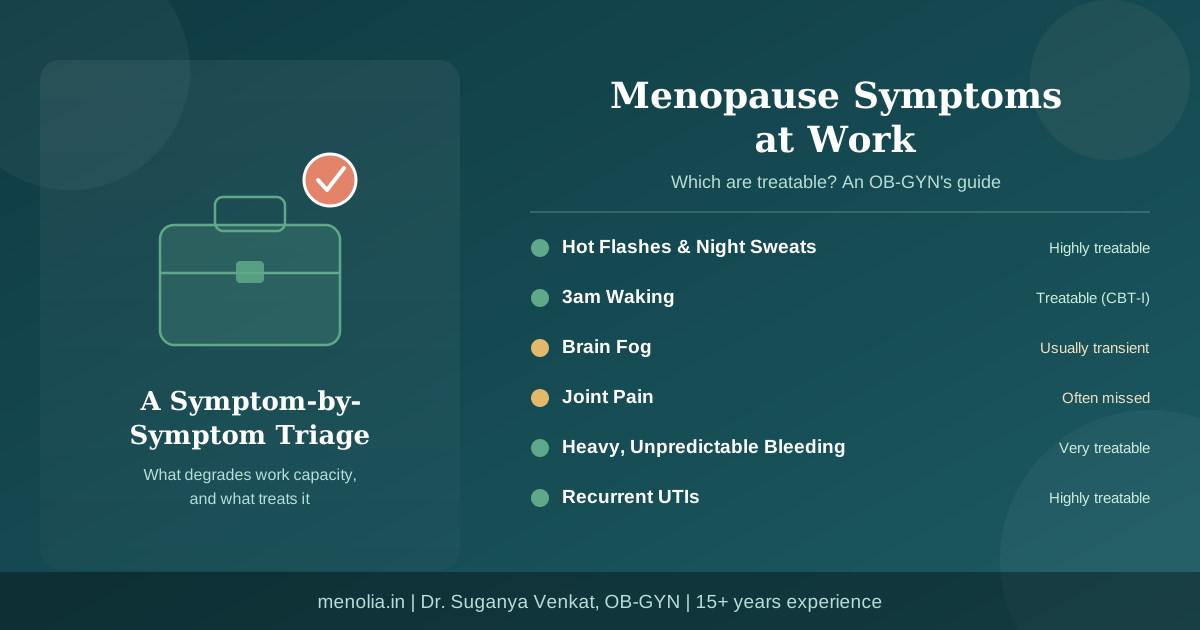
Look back at this list and a pattern emerges. Hot flashes: highly treatable. Sleep disruption: treatable with a specific, evidence-backed therapy most women have never heard of. Heavy bleeding: often very treatable, and usually not raised. Genitourinary symptoms: among the most reliably treatable symptoms in menopause medicine, and the ones women are most reluctant to mention. Joint pain: frequently unrecognised as a menopause symptom at all. Brain fog: usually transient and manageable while it resolves on its own.
The symptoms doing the most damage to a working day are not, on the whole, the symptoms medicine understands least. They are frequently the ones women have simply never been told are treatable, or have not felt able to raise because the culture around discussing menopause openly is still thin, as that 79% figure above suggests. Fertilia and Menolia exist specifically to close that gap: to make it ordinary to name a symptom out loud and get a straightforward answer about what can be done.
What to do with this list
- Write down which symptoms are actually costing you at work, separate from which ones are simply unpleasant. A hot flash you can step out for is different from bleeding you cannot predict or a sleep pattern leaving you unable to concentrate by midday.
- Bring the specific pattern to your doctor, not just “I think it’s menopause.” Naming the 3am wake-up, the joint stiffness, or the frequency of UTIs gives a doctor something concrete to work with.
- Ask specifically whether a symptom is treatable, rather than assuming it has to be endured. As this list shows, several of the most disruptive symptoms have real evidence behind treating them.
- Expect a conversation, not a single prescription. Most of what helps here (hormone therapy, CBT-I, vaginal oestrogen, a hormonal IUS) needs a proper discussion of your history and what fits your situation, not a one-size answer.
Frequently Asked Questions
Which menopause symptom affects work performance the most?
It varies by woman, but hot flashes, disrupted sleep, and brain fog are the three most commonly reported as affecting concentration, confidence, and stamina through a working day. Heavy bleeding and recurrent UTIs cause less continuous disruption but can be more acutely derailing on the days they occur.
Are hot flashes at work actually treatable, or do I just have to manage them?
They are genuinely treatable, not just manageable. Hormone therapy reduces hot flash frequency by around 75% in clinical trials, and several non-hormonal prescription options exist for women who cannot or prefer not to use hormones. Lifestyle changes help at the margins but rarely eliminate frequent, severe flashes on their own.
Why do I wake up at 3am even though I fall asleep easily?
This is a recognised perimenopausal sleep pattern, distinct from difficulty falling asleep, and it is often linked to night sweats and hormonal fluctuation. Cognitive behavioural therapy for insomnia (CBT-I) has randomised trial evidence for improving insomnia in women with hot flashes and night sweats in perimenopausal and postmenopausal women, more so than sleep hygiene changes alone.
Is joint pain really a menopause symptom, or is it just age?
It can genuinely be a menopause symptom. Research shows musculoskeletal pain, including new joint stiffness, affects a substantial share of women during the menopausal transition, likely linked to oestrogen’s anti-inflammatory effects in joint tissue. It is worth mentioning to your doctor rather than assuming it is simply ageing.
Why do I keep getting UTIs even though I’m careful about hygiene?
Recurrent UTIs after 45 are usually driven by falling oestrogen thinning the tissue that normally helps protect against bacteria reaching the bladder, not by hygiene. Vaginal oestrogen has strong trial evidence for reducing how often these infections recur, and it is a conversation worth having with your doctor rather than cycling through repeated antibiotic courses.
Should I tell my manager which menopause symptoms I’m dealing with?
That is entirely your choice, and you are not obligated to disclose anything. Managing Menopause at Work covers how to frame a conversation with HR or a manager if you choose to have one, including focusing on the specific accommodation you need rather than the diagnosis itself.
Menopause ke kaunse lakshan kaam par sabse zyada asar dalte hain?
Garmi ke jhatke (hot flashes), neend mein rukavat, aur dhundhla dimag (brain fog) aksar kaam par sabse zyada asar dalte hain. Inme se zyadatar ka ilaj sambhav hai, isliye inhe sirf sehna zaroori nahi hai, apne doctor se baat karna behtar hai.
You do not have to guess which of your symptoms are simply part of this transition and which ones have a real fix. That is exactly the kind of conversation Dr. Suganya Venkat has with women at Menolia every week, matching what you are experiencing to what actually treats it.
Start a conversation with Dr. Suganya on WhatsApp
References
- Abbott India, “Quality of Life” survey with Ipsos. abbott.in, accessed August 2026.
- Avis NE et al. (2015). Duration of menopausal vasomotor symptoms over the menopause transition. JAMA Internal Medicine. 175(4):531-539. PMID: 25686030.
- MacLennan AH et al. (2004). Oral oestrogen and combined oestrogen/progestogen therapy versus placebo for hot flushes. Cochrane Database of Systematic Reviews. PMID: 15495039.
- McCurry SM et al. (2016). Telephone-Based Cognitive Behavioral Therapy for Insomnia in Perimenopausal and Postmenopausal Women With Vasomotor Symptoms. JAMA Internal Medicine. 176(7):913-920. PMID: 27213646.
- Lu CB et al. (2020). Musculoskeletal Pain during the Menopausal Transition: A Systematic Review and Meta-Analysis. Neural Plasticity. PMID: 33299396.
- Bromberger JT, Kravitz HM (2011). Mood and menopause: findings from the Study of Women’s Health Across the Nation (SWAN). Obstetrics and Gynecology Clinics of North America. 38(3):609-625. PMID: 21961723.
- Perrotta C et al. (2008). Oestrogens for preventing recurrent urinary tract infection in postmenopausal women. Cochrane Database of Systematic Reviews. PMID: 18425910.