A woman came to me recently after spending several months in a wellness community online. She had been told that “bioidentical” hormones were the natural, safer alternative to what conventional doctors prescribe, that the mainstream medical system was behind the times, and that a saliva test plus a custom compounded cream was the only approach truly tailored to her body.
She was also experiencing moderate-to-severe hot flashes, broken sleep, and mood changes that were affecting her work.
What she needed was clarity, not a side to take. The word “bioidentical” had been used to describe two entirely different things, and the difference between them is clinically significant.
What “Bioidentical” Means in Medicine
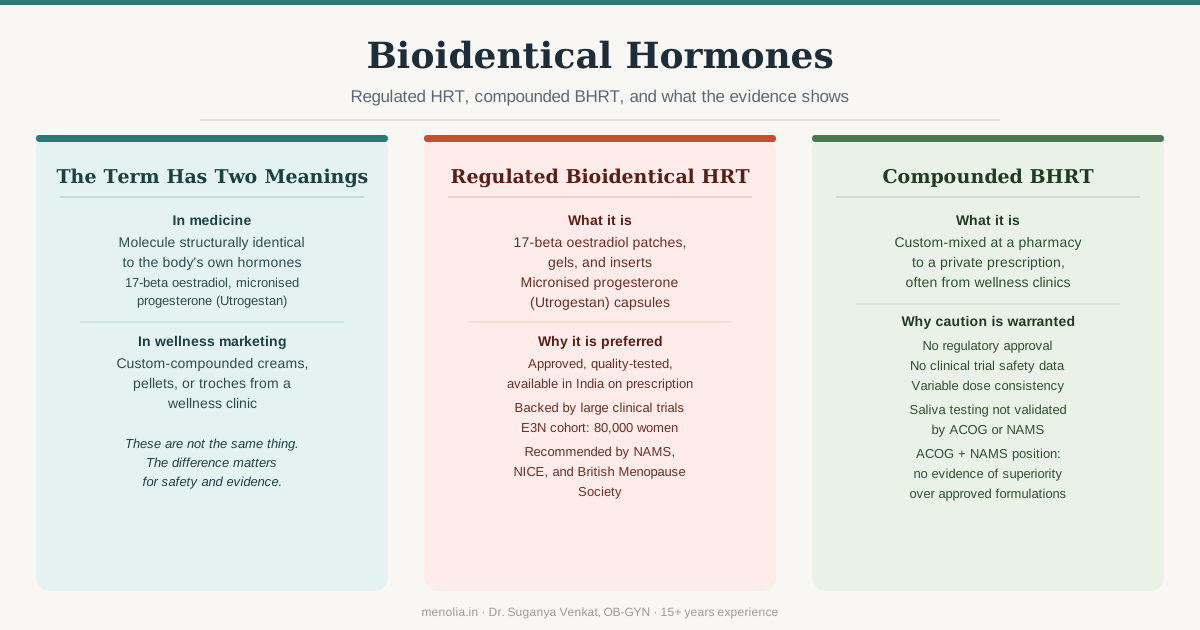
In pharmacology, “bioidentical” refers to a hormone molecule that is structurally identical to the hormone the human body produces. That is the full definition.
By this standard, the two main hormones used in modern regulated hormone therapy are bioidentical. 17-beta oestradiol is structurally identical to the oestradiol your ovaries produced. Micronised progesterone is structurally identical to the progesterone produced by your corpus luteum after ovulation. Both are manufactured at pharmaceutical grade, approved by the US Food and Drug Administration, the European Medicines Agency, and available in India by prescription from established manufacturers.
When your gynaecologist prescribes an oestradiol patch (Estradot, Climara), an oestradiol gel (Oestrogel), or micronised progesterone capsules (Utrogestan), they are prescribing bioidentical hormones. The molecule is the same as what your body used to make. There is no separate, better category waiting outside the standard medical system.
What the wellness and compounding industry did was take this legitimate scientific term and attach it to a different product category: custom-prepared preparations that are not mass-manufactured, not standardised, and not regulated as pharmaceutical products. The molecules in a compounded cream may also be bioidentical in the structural sense. But the word “bioidentical” has come to function as a marketing distinction, implying that compounded preparations are safer or more natural than their approved counterparts. That claim is not supported by the evidence.
The Micronised Progesterone Advantage
There is a genuine reason why micronised progesterone has become the preferred progestogen in modern HRT, and it is worth understanding clearly.
The large French E3N cohort study (Fournier et al., Breast Cancer Research and Treatment, 2008, PMID 17333341) followed more than 80,000 postmenopausal women over a median of eight years. It found that combined oestrogen therapy with synthetic progestins was associated with a modestly elevated breast cancer risk above oestrogen-only therapy. Combined oestrogen therapy with micronised progesterone did not show the same elevation.
This finding has been replicated in subsequent studies and forms the basis for current guidance from the North American Menopause Society (NAMS), NICE in the United Kingdom, and the British Menopause Society. All of these recommend micronised progesterone over synthetic progestins where possible.
What this means practically: modern regulated HRT, using transdermal oestradiol and micronised progesterone, already represents the formulation the evidence supports. It is not inferior to anything. The approved system already uses what the evidence says is the better progestogen.
What the Compounding Industry Offers
Compounded bioidentical hormone therapy, often shortened to cBHRT or BHRT in wellness spaces, refers to custom-prepared hormone preparations made by a compounding pharmacy to an individual prescription. These are not mass-manufactured pharmaceutical products. They are mixed to order, most often based on saliva hormone tests or blood tests from a private wellness clinic, and supplied as creams, troches (oral dissolvable lozenges), subdermal pellets, or other delivery forms.
The marketing around these preparations emphasises personalisation, natural origins, and the idea that standard medical HRT carries risks that compounded preparations avoid.
Each of these claims requires examination.
On personalisation. The argument is that custom dosing based on your specific hormone levels produces better outcomes. But hormone levels in women during the menopause transition fluctuate substantially from day to day and within a single day. A snapshot from a saliva or blood test is not a stable baseline from which to dose reliably. Standard HRT protocols are not based on matching circulating hormone levels to a target; they are based on symptom relief at the lowest effective dose with appropriate follow-up. The personalisation claim is not supported by the clinical trial evidence.
On natural origins. The 17-beta oestradiol in a pharmaceutical patch and in a compounded cream is synthesised by the same processes and is chemically identical. Being compounded at a pharmacy does not make a preparation more natural in any clinically meaningful sense.
On avoiding the risks of standard HRT. Compounded preparations have not been through the randomised controlled trial process. The safety profile of standard HRT formulations is known because large studies with hundreds of thousands of women have characterised it. The safety profile of specific compounded formulations is not known in the same way, because those studies do not exist. This is not an argument against compounded hormones per se, but it does mean the claim that they carry lower risk is an assertion without a supporting evidence base, not a finding.
If you are trying to understand which HRT formulation suits your history, and whether approved bioidentical options are an option for you, WhatsApp Dr. Suganya Venkat for an online consultation. She works with women across India, fully via video call.
Why Compounded BHRT Raises Clinical Concerns
The concerns among professional bodies are specific, not ideological.
Dose consistency. Pharmaceutical-grade products go through batch testing, quality assurance, and stability testing before leaving a facility. Compounding pharmacies work under different regulatory standards. Dose consistency between preparations, and across applications of the same preparation, can vary. For hormones where the therapeutic window is narrow and the effects of overdosing are meaningful, this has clinical implications.
Saliva testing is not validated for HRT dosing. The ACOG Committee Opinion on Bioidentical Hormones (2012, reaffirmed 2021) states explicitly that hormone testing via saliva is not a validated clinical tool for HRT monitoring. NAMS and the Endocrine Society hold the same position. Saliva measures free hormone fractions in one sample, taken at one point in time. Hormone levels fluctuate substantially with the time of day, food, hydration, and oral activity. Using this test to set hormone doses introduces significant error into the dosing decision.
No clinical trial data for specific formulations. The oestradiol in a compounded cream and in a patch are the same molecule. But the combination of hormones in a custom compounded preparation, at specific compounded doses, via specific delivery routes, has not been studied in randomised controlled trials. Professional bodies including ACOG and NAMS note that women choosing compounded preparations may forgo evidence-based therapies on the basis of claims that have not been substantiated.
Pellet implants. Subcutaneous hormone pellets are among the more concerning compounded delivery methods. They are inserted under the skin and release hormones slowly over several months. If side effects develop from supraphysiological hormone levels, the dose cannot be adjusted or removed until the pellet dissolves naturally. NAMS does not recommend pellet implants. Their use exposes women to a period of potentially elevated hormone levels with no ability to intervene.
For more on this, read our guide on HRT Side Effects.
What Regulated Bioidentical HRT Looks Like in India
For women in India considering or currently taking HRT, the regulated bioidentical options are as follows.
For oestrogen, the preferred route when possible is transdermal, which avoids first-pass liver metabolism and does not carry the venous thromboembolism risk increase associated with oral oestrogen tablets. Estradot (Novartis) and Climara (Bayer) are patches applied twice weekly and once weekly respectively. Oestrogel (Besins Healthcare) is a gel applied daily to the thigh or forearm. All deliver 17-beta oestradiol. They are available at most metro pharmacies with a prescription from a gynaecologist.
For the progestogen component, for women who have a uterus, micronised progesterone is available in India as Utrogestan (Besins Healthcare) in 100 mg and 200 mg capsules. It is the bioidentical progesterone form with the most favourable breast profile per the E3N cohort data, and it can be used either orally or vaginally. A full guide to the available HRT formulations in India is in HRT in India: What an OB-GYN Actually Recommends.
For vaginal symptoms specifically, the local oestrogen creams and pessaries described in the vaginal oestrogen guide on this site are also bioidentical preparations, either oestradiol or oestriol, and they remain the gold-standard treatment for genitourinary syndrome of menopause.
What to Ask When You Hear the Word “Bioidentical”
When the word comes up, whether in a wellness clinic, online, or in a conversation with a practitioner who is not your gynaecologist, these questions help clarify what is actually being offered.
Is this preparation approved by a regulatory authority such as CDSCO, FDA, or EMA? Regulated pharmaceutical products have met defined standards for manufacturing, dose consistency, and safety. Compounded preparations have not gone through this process.
What clinical trial data supports this specific formulation at this dose and delivery route? General evidence that oestradiol is beneficial in menopause is not the same as evidence that this particular compounded combination, at these doses, is safe and effective.
Who will monitor my response and how? Standard HRT monitoring uses symptom assessment and clinical review, with blood tests for specific conditions. If a saliva test is being offered as the monitoring tool, that is worth discussing with your own gynaecologist before proceeding.
Is the prescribing clinician working within a regulated medical setting, with the training to recognise and manage hormonal complications?
For a fuller picture of HRT in the menopause transition, including the safety data, risk context, and who benefits, see HRT in India: What an OB-GYN Actually Recommends. For the breast cancer risk question in particular, HRT and Breast Cancer Risk: What the Numbers Show works through the absolute numbers that the relative risk figures rarely make clear. For women who cannot take hormonal therapy, the non-hormonal treatment options guide covers the prescription evidence-based alternatives.
Frequently Asked Questions
Are the hormones my gynaecologist prescribes bioidentical?
Yes, if they are prescribing modern formulations. 17-beta oestradiol (in patches, gels, and some oral tablets) and micronised progesterone (Utrogestan) are structurally identical to the hormones your ovaries produced. They are bioidentical in the technical sense of the word. The prescription HRT available from a qualified gynaecologist in India already uses these molecules.
Does micronised progesterone carry a lower breast cancer risk than synthetic progestins?
The E3N cohort study (Fournier et al., 2008, PMID 17333341, n=80,000+) found that combined oestrogen plus micronised progesterone did not carry the same modest breast cancer risk elevation as combined oestrogen plus synthetic progestins. This is why current guidance from NAMS, NICE, and the British Menopause Society recommends micronised progesterone where a progestogen is needed. It is not zero risk, but it appears to have a more favourable breast profile based on the available evidence.
What is wrong with saliva testing for hormones?
Saliva testing measures free hormone fractions in a single sample taken at one point in time. Hormone levels vary substantially through the day and with food, hydration, and oral activity. Major professional bodies including ACOG, NAMS, and the Endocrine Society have stated that saliva tests are not validated for clinical decision-making around HRT dosing. The results do not reliably reflect total bioavailable hormone levels, and using them to set doses introduces meaningful errors.
Are compounded hormone preparations available in India?
Some metro-city wellness clinics and specialised pharmacies do offer custom hormone preparations in India, typically as creams or in other compounded forms. The same concerns apply here as elsewhere: these are not regulated pharmaceutical products in the way approved HRT formulations are, dose consistency varies, and the clinical trial safety data for specific compounded combinations does not exist in the same form as for approved medications.
What is the difference between a compounded cream and a pharmaceutical patch?
The hormone molecule delivered may be the same (17-beta oestradiol in both cases). The differences are in manufacturing standards, dose consistency, regulatory oversight, and the evidence base. Pharmaceutical patches have been through batch testing, quality assurance, and large clinical trials. A compounded cream has not been through this process. Additionally, topical progesterone creams have variable and often poor absorption, meaning they may not provide adequate endometrial protection for women on oestrogen.
What are subcutaneous hormone pellets and why are they concerning?
Hormone pellets are inserted under the skin by a practitioner and release hormones slowly over several months. They are used in some BHRT settings. The concern is that if side effects develop from elevated hormone levels, there is no way to reduce or remove the dose until the pellet dissolves naturally. This means a woman may be exposed to supraphysiological hormone levels for weeks or months without a means of intervention. NAMS does not recommend pellet implants. They have no regulatory approval from established bodies.
My wellness provider says compounded BHRT is safer because it is personalised to my levels. Is this true?
Personalisation in this context refers to dosing based on a saliva or blood test snapshot. Hormone levels in the menopause transition fluctuate considerably, and a single test does not provide a stable baseline from which to dose reliably. Standard HRT protocols are based on symptom relief at the lowest effective dose, with clinical follow-up, rather than on targeting a specific circulating level. ACOG’s position on compounded BHRT (Clinical Consensus No. 6, 2023, which replaced Committee Opinion 532) states that there is no evidence these preparations are safer or more effective than approved therapies, and that claims of superior personalisation have not been validated.
If you have questions about HRT options in India, including which formulations are available and what suits your health history, WhatsApp Dr. Suganya Venkat for an online consultation. The conversation starts with your specific situation, not a standard recommendation.