A woman on hormone replacement therapy for six weeks noticed a few days of light spotting and stopped her HRT the same evening, convinced something had gone wrong. She had waited two years to start it, finally feeling like herself again after months of disrupted sleep and hot flashes that would not let up, and the spotting felt like proof she should never have started.
When she messaged me, the first thing I told her was that what she was describing, in the timeframe she was describing it, is one of the most ordinary things that happens when a woman starts HRT. It did not mean anything had gone wrong, and it did not mean she needed to stop.
Breakthrough bleeding, unscheduled spotting or bleeding outside the pattern your HRT regimen is supposed to produce, is common enough in the first few months on hormone therapy that it deserves its own explanation, separate from the general side-effects conversation. This post covers why it happens, what counts as expected versus what needs a closer look, the everyday things that can trigger it beyond the hormones themselves, and exactly when to pick up the phone rather than wait it out.
Why Bleeding Happens When You Start HRT
Your uterine lining, the endometrium, has spent years responding to a fairly predictable monthly rhythm of oestrogen and progesterone. When you start HRT, you are introducing a new hormonal pattern, and the lining takes time to adjust to it.
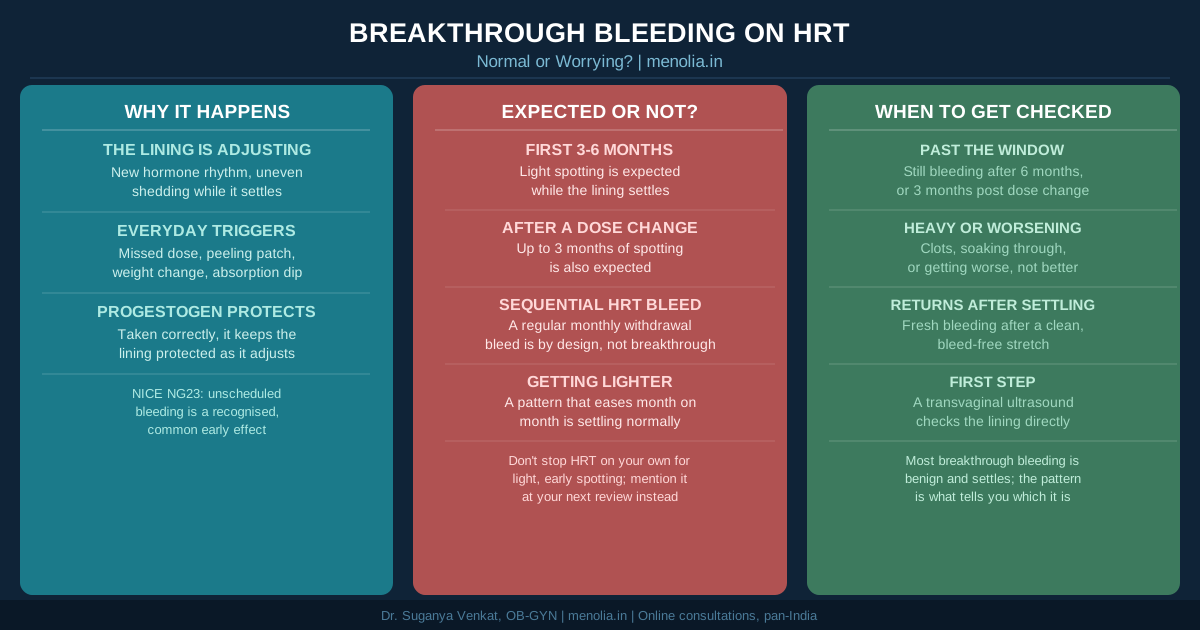
If you still have your uterus, your HRT will include both oestrogen and a progestogen (a natural or synthetic form of progesterone). The progestogen’s job is to keep the lining thin and stable so that oestrogen alone does not cause it to build up unchecked. During the first few months, while your body is finding its new equilibrium, the lining can shed irregularly rather than smoothly, which shows up as spotting or light bleeding at times you were not expecting it.
This settling-in period is expected, not a sign that the treatment is wrong for you or that the dose needs to change immediately. Current UK guidance (NICE NG23, nice.org.uk) describes unscheduled bleeding as a recognised, common effect in the first six months after starting systemic HRT, and again for up to three months after any change in dose or formulation.
What Counts as Expected
Here is the distinction that matters most, and the one that gets lost when women describe this to each other informally.
Expected, and does not need urgent action:
- Light spotting or breakthrough bleeding in the first three to six months after starting HRT
- Spotting for up to three months after your doctor changes your dose, brand, or formulation
- A gradual settling of the pattern over that window, becoming lighter and less frequent as the months pass
Worth a call to your doctor, not an emergency, but don’t wait it out:
- Bleeding that is still happening, or starts fresh, after six months on an unchanged regimen
- Bleeding that continues beyond three months after a dose or formulation change
- Bleeding that is heavy, prolonged (soaking through pads, passing clots, lasting well over a week), or getting worse rather than better
- Any bleeding that returns after a genuinely bleed-free stretch, especially if you are on a continuous combined regimen that is meant to produce no bleeding at all once settled
If you are on sequential HRT, where you take progestogen for part of the month, a regular, predictable withdrawal bleed at the end of that progestogen phase is expected by design, not the “breakthrough” bleeding this post is about. What counts as breakthrough is bleeding in addition to that expected monthly bleed, or outside the pattern your specific regimen is meant to follow.
Not sure if your bleeding fits the expected pattern or not? Dr. Suganya reviews your exact regimen, timing, and bleeding pattern over a video consultation rather than a generic rule.
What Else Triggers It, Beyond “Your Body Is Adjusting”
Once you are past the general settling-in explanation, a few specific, everyday factors are worth knowing, because they are often what is actually behind a particular bleeding episode.
A missed or delayed dose. If you use a patch that has lifted at the edges, forget a tablet, or run late applying a gel, the drop in hormone level can trigger spotting a day or two later. This is especially true for the progestogen component in someone with a uterus, since inconsistent progestogen exposure is one of the more common reasons the lining sheds unpredictably.
Absorption issues. With oral tablets, a stomach bug, vomiting, or diarrhoea can reduce how much hormone actually reaches your bloodstream. With a patch, poor adhesion (heat, sweating, swimming, or simply a patch that is starting to peel) can do the same thing. Neither means the HRT has failed, but it does mean your levels dipped for a stretch.
A significant weight change. Meaningful weight gain or loss can shift how your body processes and stores oestrogen, since fat tissue itself produces some oestrogen. This does not usually need to change your HRT plan on its own, but it is worth mentioning at your next review if bleeding coincides with a noticeable weight change.
Interactions with other medicines. Certain other medicines can lower the effective level of oral HRT in your system, which can trigger spotting. If you have started any new prescription recently, mention it at your next HRT review so your doctor can check for an interaction.
Something other than the HRT itself. Not every bleeding episode on HRT is caused by the HRT. Vaginal dryness and thinning of the vaginal lining (common at this stage of life regardless of HRT), a cervical polyp, or minor irritation after intercourse can all cause spotting that has nothing to do with your hormone regimen. If bleeding happens specifically after sex, that is worth flagging separately.
A missed possibility worth naming honestly: if you are earlier in the menopause transition and still have occasional natural ovulation alongside your HRT, that can also produce bleeding that is really your own cycle rather than a side effect of the treatment. Your doctor can usually tell the difference from your history and, if needed, an ultrasound.
Why the Endometrial-Protection Rule Matters Here
If you take progestogen correctly and consistently, as prescribed, the endometrium is protected from the unopposed build-up that raises long-term risk. This is the piece of reassurance most women have not been told clearly: taking your progestogen as directed is what keeps the lining safe, and knowing that your regimen is being taken correctly is usually the first, most useful thing your doctor checks when breakthrough bleeding comes up. It is rarely about whether HRT itself is “working,” and much more often about the pattern and consistency of how it is being taken.
Bleeding on HRT that has gone past three to six months, or has come back after settling? Dr. Suganya works through your specific regimen and timeline over a WhatsApp-booked video consultation, at Rs 399, and tells you exactly what to check next.
When to Investigate Rather Than Wait
There is a smaller set of situations where the right move is a proper look, usually a transvaginal ultrasound, sometimes an endometrial biopsy, rather than watching and waiting a further few months.
Bleeding that persists well beyond the expected window. Six months on an unchanged regimen, or three months after a dose or formulation change, is the general marker current UK guidance uses. Beyond that, the working assumption shifts from “still settling” to “this needs a look.”
A heavy or increasingly heavy pattern. Soaking through protection quickly, passing clots, or bleeding that is getting worse month to month rather than better is not typical of ordinary settling-in spotting.
Bleeding that returns after a genuine bleed-free stretch. If you were on continuous combined HRT (meant to be bleed-free once settled) and had several clean months, then bleeding starts again out of nowhere, that pattern needs assessment rather than watching.
Any bleeding accompanied by pelvic pain, bleeding after intercourse specifically, or a general sense that something feels different from your usual pattern.
If you have additional risk factors, such as a higher body weight, diabetes, or a personal or family history of endometrial changes, your doctor may want to look sooner rather than waiting out the full window, simply to be thorough. This is a precaution, not an alarm.
A transvaginal ultrasound checks the thickness and appearance of your endometrial lining and is usually the first, straightforward step. If anything about the scan needs a closer look, a pipelle biopsy (a brief, in-clinic sample of the lining) or hysteroscopy follows. Our complete guide to what your endometrial thickness scan means walks through what the numbers on that kind of report actually mean, which is useful reading once you have one in hand.
One important distinction, since the terminology overlaps: this post is about bleeding while you are actively on HRT. If you are not on HRT at all and experience any bleeding twelve months or more after your last natural period, that is a different situation covered in our guide to post-menopausal bleeding, and it always warrants prompt assessment regardless of how light it seems.
What to Do If You Notice Breakthrough Bleeding
In the first three to six months of a new regimen or within three months of a dose change: note when it started, how heavy it is, and whether it is settling over successive weeks. Mention it at your next scheduled HRT review even if it has already stopped. You generally do not need to stop your HRT on your own for light, early spotting.
If it is heavy, prolonged, or paired with pain: contact your doctor promptly rather than waiting for your next routine appointment.
If it has gone on past the expected window, or returned after settling: book a review specifically for this, rather than folding it into an unrelated appointment, so your doctor has time to take a proper history and arrange a scan if needed.
Do not stop HRT abruptly on your own out of worry, the way the woman at the start of this post nearly did. Stopping suddenly does not answer the question of why the bleeding happened, and restarting later means going through the settling-in period again. A conversation with your doctor, even a brief one, usually resolves more than stopping does.
At Menolia, Dr. Suganya Venkat has this exact conversation with women across India nearly every week, often in the first three months of a new HRT prescription, when the uncertainty is highest and the instinct to panic or quit is strongest. Most of the time, walking through the timeline and the pattern together is enough to tell whether this is ordinary adjustment or something that needs a closer look, and either answer is more useful than guessing alone.
If you are earlier in your HRT decision and want the full picture on benefits, risks, and getting started, our complete guide to HRT in India is the place to begin. For the wider range of side effects beyond bleeding, our guide to HRT side effects: what’s normal and when to worry covers the rest of what the first few months can bring.
Frequently Asked Questions
Is it normal to bleed or spot in the first few months of HRT?
Yes. Light spotting or breakthrough bleeding in the first three to six months after starting HRT, or for up to three months after a dose or formulation change, is a recognised and common part of the endometrium adjusting to the new hormonal pattern. It usually settles on its own as the months pass.
How long does breakthrough bleeding on HRT usually last?
For most women it settles within three to six months of starting or of a dose change, becoming lighter and less frequent as it goes. Bleeding that is still happening after that window, or that gets heavier rather than lighter, is the pattern worth having reviewed.
What’s the difference between breakthrough bleeding and a normal withdrawal bleed on sequential HRT?
If you are on sequential HRT, a predictable bleed at the end of each progestogen phase is expected by design, similar to a period. Breakthrough bleeding refers to bleeding in addition to that expected pattern, or bleeding at unpredictable times outside it.
Can a missed dose or a peeling patch cause spotting?
Yes. A delayed tablet, a patch that has lifted, or a gel applied late can all cause a temporary dip in hormone levels that shows up as spotting a day or two later. This is one of the more common everyday triggers and does not usually mean anything is wrong with the HRT itself.
Should I stop my HRT if I notice spotting?
Not on your own, and not immediately, for light spotting within the first few months. Stopping abruptly does not explain why the bleeding happened, and restarting later means going through the settling-in period again. Note the pattern and raise it with your doctor, who can tell you whether it needs a closer look or just more time.
When should I get an ultrasound for bleeding on HRT?
If bleeding continues beyond six months on an unchanged regimen, beyond three months after a dose change, is heavy or prolonged, or returns after a genuinely bleed-free stretch on continuous combined HRT, a transvaginal ultrasound is the usual next step to check the endometrial lining.
Is breakthrough bleeding on HRT the same as post-menopausal bleeding?
No. Breakthrough bleeding refers to unscheduled bleeding while you are actively taking HRT. Post-menopausal bleeding refers to any bleeding twelve months or more after your last natural period in a woman who is not on HRT, and it always needs prompt medical assessment. If that describes your situation, read our guide to post-menopausal bleeding instead.
If bleeding on HRT has you wondering whether to push through, adjust something, or stop altogether, that is worth a real conversation rather than a guess. Message Dr. Suganya Venkat on WhatsApp to talk through your timeline and pattern.