A woman in her late forties wrote to me after a consultation with her family physician left her more confused than before. She has had migraine with aura since her twenties, a distinctive shimmering zigzag in her vision about twenty minutes before the headache begins. Her physician, reasonably cautious, told her that hormones were off the table because of her migraines. She had read online that hormone pills carry a stroke risk in women like her, so she believed him and stopped asking. Then her hot flashes and disrupted sleep got bad enough that she brought the question back to me.
Her physician was not wrong about hormones and migraine with aura being a genuine safety issue. He was answering the wrong question. The stroke-risk warning that applies to women with migraine with aura is about the combined oral contraceptive pill, not about menopausal hormone therapy. They contain oestrogen, and that is where the similarity ends. The doses, the routes into your bloodstream, and the risk profiles are different enough that a contraindication to one does not automatically apply to the other, and very few women, or their doctors, are told this clearly.
This post untangles that confusion: why migraine with aura rules out the combined pill but not HRT, which route and regimen make the most sense for a woman with migraine, what to do if aura shows up after you start HRT, and why perimenopause itself tends to make migraines worse regardless of what you decide about hormone therapy.
Why the Pill Rule Does Not Carry Over to HRT
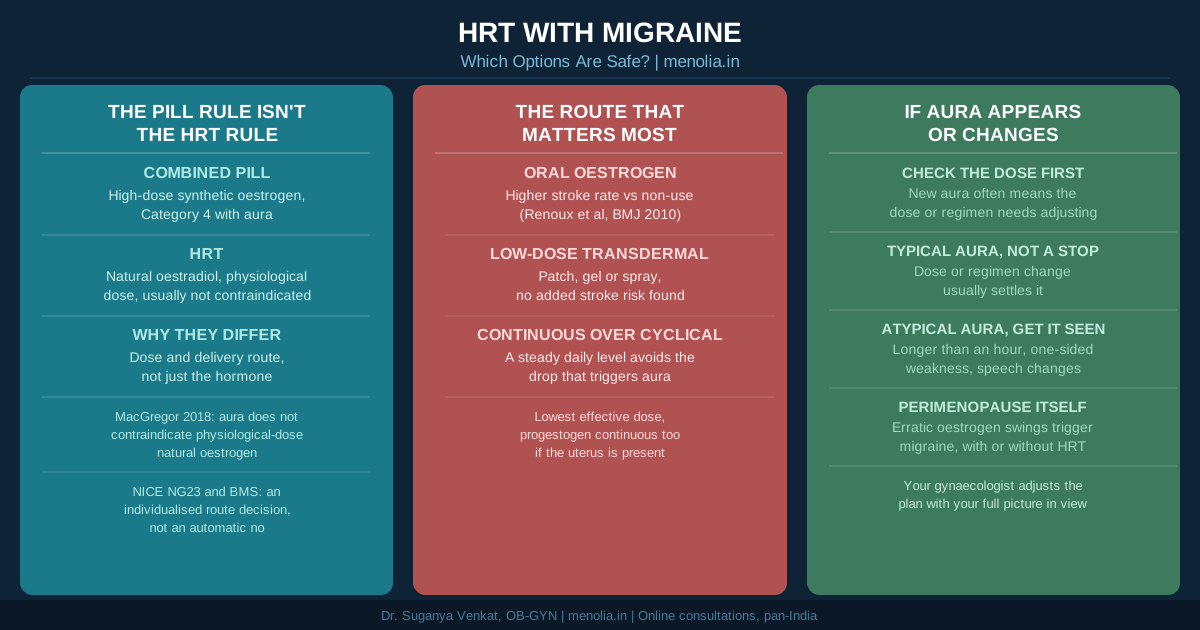
The advice you may have heard, that migraine with aura and oestrogen “don’t mix,” comes from contraceptive guidance. The World Health Organization’s Medical Eligibility Criteria for Contraceptive Use (who.int, WHO MEC) and the equivalent US guidance (US MEC, adopted by ACOG) classify combined hormonal contraceptives (the pill, the patch, the vaginal ring) as Category 4 for women with migraine with aura, meaning they carry an unacceptable health risk and should not be used. This is because of an increased risk of ischaemic stroke, a risk that rises further when a woman with migraine with aura also smokes or is over 35.
That warning is real, and it is specific to a particular kind of oestrogen exposure: the combined pill uses a synthetic oestrogen (ethinylestradiol) at a dose several times higher than what your ovaries produced even in your reproductive years, delivered orally in a way that affects clotting factors more than the oestrogen your body made naturally.
Told HRT is off the table because of your migraines? That advice usually needs a second look. Dr. Suganya reviews your migraine pattern, including whether you get aura, before recommending a route.
HRT is a different exposure entirely. It uses natural, body-identical oestradiol at doses designed to restore something closer to a normal physiological level, not to override your natural hormones the way contraception does. A landmark review by MacGregor, who has published extensively on hormones and headache, put this plainly: migraine aura does not contraindicate the use of physiological doses of natural oestrogen, in contrast to the contraceptive doses of ethinylestradiol that are the concern in the pill guidance (MacGregor EA, Post Reproductive Health, 2018). The two situations look similar on the surface, same hormone, same worry about aura, but the dose and the delivery are different enough that current NICE and British Menopause Society guidance treats migraine, including migraine with aura, as something that needs an individualised route decision, not an automatic no.
The Route That Matters Most: Transdermal Over Oral
If migraine with aura does not rule out HRT, what does change is which route makes sense. This is where the real decision lives.
Oral oestrogen is processed through the liver before it reaches the rest of your body, a step called first-pass metabolism. This first pass affects clotting factors in ways that transdermal oestrogen does not, and it is part of why a large nested case-control study found that current users of oral HRT had a higher stroke rate than non-users, with the increase present at both low and high oral doses (Renoux C et al., BMJ, 2010).
Transdermal oestrogen, delivered through a patch, gel, or spray, bypasses the liver almost entirely, entering the bloodstream directly through the skin. The same 2010 study found that low-dose transdermal HRT did not increase stroke risk compared with women not using HRT at all. Higher-dose transdermal preparations showed some increase, which is one more reason the lowest effective dose is the starting point, not an afterthought.
For a woman with migraine, particularly migraine with aura, this makes transdermal the sensible default route, in the same way it is the preferred route for women with hypertension or a personal or family history of blood clots. Our guide to the estradiol patch in India covers cost, brands, and practical use if this is the route your doctor recommends.
Why the Regimen Matters as Much as the Route
Route is half the picture. The other half is how steady the oestrogen level stays from day to day, because migraine, and migraine aura specifically, is triggered less by the presence of oestrogen and more by a sudden drop or fluctuation in it.
This is the same mechanism behind menstrual migraines in your reproductive years and the reason perimenopausal migraines often get worse before menopause is complete: your oestrogen level is swinging, not just changing direction. A continuous combined regimen, where oestrogen is taken every day without a hormone-free break, tends to suit migraine sufferers better than a cyclical or sequential regimen, which builds in a deliberate week of lower hormone exposure and can reproduce the same withdrawal trigger that caused menstrual migraines in the first place.
Already on HRT and noticing your migraines have changed? Dr. Suganya works through your regimen, dose, and pattern over a video consultation and adjusts what needs adjusting. WhatsApp consultation at Rs 399.
In practice, this usually means: transdermal oestrogen, at the lowest dose that controls symptoms, given continuously rather than cyclically, with the appropriate progestogen added if you still have your uterus (usually taken continuously as well, for the same reason). A daily patch changed twice a week, or a daily gel application, tends to hold a steadier level than a regimen with built-in breaks.
If Aura Appears or Changes After You Start HRT
Occasionally a woman who has never had aura develops it after starting HRT, or a woman with existing migraine finds her aura symptoms change once she is on hormone therapy. This is worth taking seriously without panicking about it.
The first question is dose, not whether to stop entirely. Migraine aura appearing or worsening on HRT is frequently a sign that the oestrogen dose is higher than it needs to be, or that the delivery is not steady enough. Reducing the dose, switching from a cyclical to a continuous regimen, or moving to a lower-dose transdermal preparation often resolves new or worsened aura without needing to abandon HRT altogether.
New aura that is different from your usual pattern deserves a proper look before you assume it is hormonal. Aura that lasts longer than an hour, comes with weakness on one side of the body, affects your speech, or is genuinely new in a woman who has never had migraine with aura before should be evaluated rather than managed at home, because these features are not typical of straightforward migraine aura and need to be distinguished from other causes.
If dose and regimen adjustments do not settle it, non-hormonal migraine management, alongside stopping or pausing HRT, is a reasonable next step, worked through with your gynaecologist. This is not a failure of the approach. It is the same iterative process your doctor would use with any medication that needs fine-tuning to your body.
Perimenopause Itself Often Worsens Migraine, With or Without HRT
It is worth separating two things that get conflated: migraines getting worse during perimenopause, and migraines getting worse because of HRT. These are usually not the same event.
Perimenopause is a period of erratic, unpredictable oestrogen swings as your ovaries wind down, often more extreme than the oestrogen changes of a normal menstrual cycle. This is precisely the kind of fluctuation that triggers migraine, and it explains why many women notice their migraines becoming more frequent or more severe in their late forties, several years before their final period, regardless of whether they are using HRT. Our detailed guide to menopause headaches and migraines covers this mechanism and the lifestyle factors that compound it, sleep disruption, dehydration, and stress among them, if you want the fuller picture of what is happening hormonally.
The reassuring part of this timeline is what usually happens next: once you are fully through the transition and your hormone levels settle at a new, stable, lower baseline, the withdrawal-type trigger that drives most hormonal migraine tends to ease. Steady, well-managed HRT at this stage, using the transdermal, continuous approach described above, is often part of what keeps that baseline stable rather than a competing risk to weigh against it.
What This Looks Like in Practice
For most women who write to me with migraine, including migraine with aura, and questions about HRT, the path looks like this: confirm the migraine pattern and rule out any features that need a neurology opinion first, start with transdermal oestrogen at the lowest effective dose, use a continuous rather than cyclical regimen, add continuous progestogen if the uterus is present, and review at four to six weeks to see how the migraine pattern has responded, not just whether menopausal symptoms have improved.
At Fertilia and Menolia, Dr. Suganya Venkat sees this exact confusion often in video consultations across India, women who assumed migraine with aura closed the door on HRT because that is what the contraceptive pill guidance says, without anyone explaining that hormone therapy is a different exposure. The more useful question to bring to your gynaecologist is which route and regimen suit your specific migraine pattern, not whether HRT is possible at all.
If blood pressure is also part of your picture, our guide to HRT with high blood pressure covers the same transdermal-first logic applied to a different comorbidity. And if you are earlier in the decision and want the complete picture on benefits, risks, and who HRT suits, our complete HRT guide is the place to start.
Frequently Asked Questions
Can I take HRT if I have migraine with aura?
In most cases, yes. Migraine with aura is a firm contraindication to the combined contraceptive pill because of the high-dose synthetic oestrogen it contains, but current NICE and British Menopause Society guidance treats HRT, which uses much lower, physiological doses of natural oestrogen, as something to individualise rather than automatically rule out. Transdermal oestrogen, given continuously, is the usual starting point.
Why is HRT treated differently from the contraceptive pill for migraine with aura?
The oestrogen dose and route are different. The combined pill uses synthetic ethinylestradiol at several times the dose your body produced naturally, taken orally, which affects clotting factors and stroke risk more significantly. HRT uses natural oestradiol at doses meant to restore a normal physiological level, and transdermal delivery bypasses the liver processing step that drives much of the pill’s added risk.
Is transdermal HRT safer than oral HRT if I have migraine?
Yes, particularly for stroke risk in women with migraine. A large case-control study found that oral HRT was associated with a higher stroke rate than non-use, while low-dose transdermal HRT was not. This is why transdermal preparations, patch, gel, or spray, are generally the preferred starting route for women with migraine, especially migraine with aura.
What should I do if I develop aura after starting HRT?
Tell your doctor rather than stopping on your own. New or worsening aura on HRT is often a sign that the dose is higher than needed or that the regimen has too much fluctuation, and adjusting the dose or switching from a cyclical to a continuous regimen frequently resolves it. Aura that is unusually long, comes with one-sided weakness or speech difficulty, or is entirely new to you should be evaluated properly rather than assumed to be routine.
Does perimenopause make migraines worse even without HRT?
Often, yes. The erratic oestrogen swings of perimenopause are a well-recognised migraine trigger on their own, separate from any decision about hormone therapy. Many women notice their migraines worsening in the years before their final period regardless of whether they use HRT, and this tends to ease once hormone levels settle after menopause is complete.
Should I take continuous or cyclical HRT if I have migraine?
Continuous combined HRT, taken every day without a hormone-free week, generally suits migraine sufferers better than a cyclical regimen. The steadier hormone level avoids the drop that a cyclical break can reproduce, which is the same kind of fluctuation that triggers menstrual migraines during the reproductive years.
Will I need to see a neurologist before starting HRT if I have migraine with aura?
Not usually, if your migraine pattern is well established and typical for you. Your gynaecologist can make the route and regimen decision directly. A neurology opinion becomes more relevant if your aura is atypical, has recently changed in character, lasts unusually long, or comes with features like one-sided weakness or speech difficulty that need to be properly assessed before any hormone decision is made.
If migraine has made you assume HRT is not an option, that assumption is worth checking directly rather than carrying forward. Message Dr. Suganya Venkat on WhatsApp to talk through your specific migraine pattern and options.