Some women describe menopause tiredness as a heavy afternoon slump. Others describe something that frightens them more. They walk to the vegetable market and are fine that evening, then spend the next two days barely able to get out of bed. Sleep does not refresh them. Their thinking feels slow and foggy. Blood tests come back normal, and they are told it is the menopause and it will pass.
Sometimes it is the menopause. Sometimes it is chronic fatigue syndrome, now more often called myalgic encephalomyelitis or ME/CFS, arriving at the same stage of life. And sometimes it is both. My name is Dr. Suganya Venkat. I am an OB-GYN with more than 15 years of clinical experience, and in Menolia’s online consultations this question comes up more often than you might expect: “Can HRT fix this exhaustion?” The answer depends on which kind of exhaustion it is.
What This Post Covers
- How ordinary menopausal fatigue differs from ME/CFS
- What the research says about menopause, early menopause and chronic fatigue syndrome
- What HRT can and cannot do for fatigue
- Why the usual “move a little more each week” advice needs to change if ME/CFS is suspected
- Which tests help, and how to plan the next step with your doctor
If your tiredness is steady, improves after a good night’s sleep and has come on alongside hot flushes and broken nights, start with our guide to menopause fatigue. This post is for exhaustion that is more severe, lasts months, and gets worse after effort.
Two Kinds of Exhaustion
Tiredness is one of the most common complaints of the menopause transition. Night sweats break sleep, hormone changes affect mood and concentration, and many women are carrying work, children and ageing parents at the same time. This kind of fatigue is real and wearing, but it usually responds to the things that fix its causes: treating night sweats, protecting sleep, correcting anaemia or thyroid problems, and gradually building activity.
ME/CFS behaves differently. The guideline from the UK’s National Institute for Health and Care Excellence (NICE NG206, published October 2021, nice.org.uk/guidance/ng206) lists four symptoms that should all be present before ME/CFS is suspected:
- Debilitating fatigue that is worsened by activity and is not significantly relieved by rest
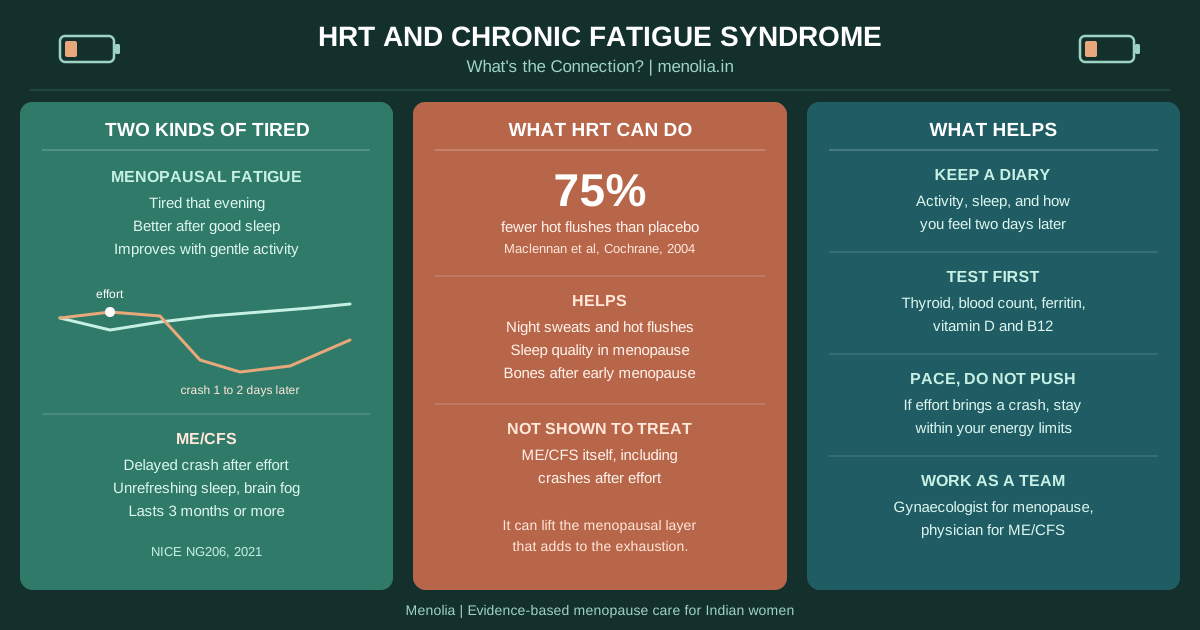
- Post-exertional malaise, a worsening of symptoms after activity that is often delayed by hours or days, is out of proportion to the activity, and can take days, weeks or longer to recover from
- Unrefreshing sleep or sleep disturbance, including waking exhausted, flu-like and stiff
- Cognitive difficulties, often described as brain fog: trouble finding words, slowed thinking, poor short-term memory
NICE NG206 (2021) advises suspecting ME/CFS when these have persisted for at least 6 weeks in an adult and daily life is significantly reduced, and confirming the diagnosis once they have lasted 3 months and are not explained by another condition. The 2015 criteria from the US National Academy of Medicine (then the Institute of Medicine) similarly require a substantial reduction in pre-illness activity, unrefreshing sleep, post-exertional malaise, and either cognitive impairment or orthostatic intolerance, meaning symptoms that worsen on standing (Jason LA et al., Fatigue, 2015, PMID 26345409).
Here is how the two patterns tend to differ in daily life. It is a guide for the conversation with your doctor, not a way to diagnose yourself.
| Feature | More typical of menopausal fatigue | More typical of ME/CFS |
|---|---|---|
| After a busy day | Tired that evening, better after sleep | Fine at first, then a crash a day or two later |
| Sleep | Broken by night sweats; a good night helps | Unrefreshing even after a long night |
| Response to gradual activity | Energy usually improves over weeks | Pushing harder often makes symptoms worse |
| Other features | Hot flushes, night sweats, cycle changes | Brain fog, flu-like feeling, sore throat, dizziness on standing |
| Effect on daily life | Wearing, but work and home continue | Work, household or social life sharply reduced |
ME/CFS is not rare, and it affects women more than men. A meta-analysis of 46 studies covering more than a million people (Lim EJ et al., J Transl Med, 2020, PMID 32093722) estimated overall prevalence at 0.68%, with a higher figure in women (1.36%) than in men (0.86%). A 2023 review (Pollack B et al., Front Rehabil Sci, 2023, PMID 37234076) noted that 70% to 80% of people with ME/CFS and related conditions are women. It is also widely missed: an expert group writing in the Mayo Clinic Proceedings estimated that up to 91% of people with ME/CFS in the United States remain undiagnosed (Bateman L et al., Mayo Clin Proc, 2021, PMID 34454716).
Where Menopause and ME/CFS Meet
The research on this overlap is small, but it points in a consistent direction.
Earlier and surgical menopause turn up more often in women with CFS. In a case-control study from the US Centers for Disease Control and Prevention, 84 women with CFS were compared with 73 healthy women of similar age (Boneva RS et al., Menopause, 2015, PMID 25647777). More of the women with CFS had reached menopause (61.9% against 37.0%), and their average age at menopause was much younger (37.6 against 48.6 years). They also reported more heavy menstrual bleeding, endometriosis, pelvic pain and hysterectomy (54.8% against 19.2%). Where the dates were recorded, hysterectomy or removal of the ovaries had happened before CFS began in 71% of cases. An earlier, smaller study by the same group (Boneva RS et al., J Womens Health, 2011, PMID 21091051) found menopause arriving about 4.4 years earlier in women with CFS, although in that sample the difference could have been due to chance.
These are associations. They do not show that early menopause causes ME/CFS, and the authors themselves called for more work to understand the relationship. They do suggest that a gynaecological history is worth taking seriously in any woman with unexplained, disabling fatigue.
Menopausal symptoms are heavier for women already living with CFS. In a telephone survey of 216 women aged 35 to 55 with fibromyalgia, chronic fatigue syndrome or both (Wilbur J et al., Health Care Women Int, 2006, PMID 16844673), peri- and postmenopausal women reported more severe musculoskeletal, digestive and hot-flush symptoms than premenopausal women. Our post on menopause and fibromyalgia looks at that pain-focused overlap in more detail.
Menopausal status may shape some ME/CFS symptoms. A 2026 German analysis of 608 women and 137 men with diagnosed ME/CFS (Habermann-Horstmeier L et al., J Transl Med, 2026, PMID 42522006) found that premenopausal women reported flu-like symptoms more often than postmenopausal women, while digestive symptoms were similar in both groups. This was an exploratory, cross-sectional study, so it raises questions rather than answering them.
Some symptoms belong to both lists. NICE NG206 (2021) includes temperature sensitivity, with profuse sweating, chills or hot flushes, among the symptoms that can come with ME/CFS, alongside dizziness and palpitations on standing. So a hot flush in a woman of 47 with ME/CFS could come from either condition. The timing helps: flushes that arrived with irregular periods, and that come with night sweats and vaginal dryness, point towards menopause.
Exhausted for months, and not sure whether it is menopause, ME/CFS, or both? Dr. Suganya can go through your symptoms, reports and daily pattern with you over a video consultation and help you plan the next step.
What HRT Can Do, and Where Its Evidence Stops
This is the question most women come with, so it deserves a clear answer.
HRT is very effective for the menopausal causes of tiredness. A Cochrane review of 24 placebo-controlled trials with 3,329 women (Maclennan AH et al., Cochrane Database Syst Rev, 2004, PMID 15495039) found that oral hormone therapy reduced the weekly frequency of hot flushes by about 75% compared with placebo, and reduced their severity too. In the KEEPS trial of recently menopausal women (Cintron D et al., Menopause, 2018, PMID 28832429), both oral and transdermal hormone therapy improved sleep quality compared with placebo, and the improvement tracked with fewer hot flushes and night sweats. If night sweats are breaking your sleep, treating them removes one important source of exhaustion.
There is no trial evidence that HRT treats ME/CFS itself. When I searched the medical literature before writing this post, I could not find a randomised trial of hormone therapy in women with ME/CFS. So HRT should not be expected to lift post-exertional malaise, brain fog or the underlying illness, and it is fair to ask for evidence if anyone suggests otherwise.
In practice, that leaves three situations:
- Your fatigue is menopausal. If hot flushes and night sweats are driving poor sleep, HRT is often the most effective single step. Our guide to HRT in India covers who it suits and the options available here.
- You have ME/CFS and troublesome menopausal symptoms. HRT can treat the menopausal layer, so that broken sleep and night sweats are not adding to an illness that already limits you. It will not treat the ME/CFS, and your expectations should be set accordingly.
- You have ME/CFS and early or surgical menopause. For women whose menopause came before the usual age, hormone replacement is generally advised until around the age natural menopause would have happened, mainly to protect bones and heart. That recommendation stands on its own, whether or not you have ME/CFS. Our posts on premature menopause and surgical menopause explain why.
Whether HRT is right for you depends on your age, how long it has been since your last period, and your personal and family history. That is a decision to make with your doctor, and if you have an ME/CFS specialist or physician involved, with them in the loop too.
Why the Usual Fatigue Advice Needs Adjusting
For ordinary menopausal tiredness, I usually suggest starting with a short walk and building a little each week. That advice works for most women. For someone with ME/CFS, the same advice can backfire.
NICE NG206 (2021) advises that people with suspected ME/CFS should not push through their symptoms and should manage their activity within the energy they have. For confirmed ME/CFS, it recommends against graded exercise therapy, meaning programmes built on fixed, step-by-step increases in activity, and against telling people to simply go to the gym or exercise more. A review of the guideline for primary care doctors (Kingdon C et al., Healthcare, 2022, PMID 36553962) summarised these changes and noted that cognitive behavioural therapy should be offered only as a supportive option, not as a cure. The Mayo Clinic Proceedings expert group reported that several governments and major health organisations have withdrawn graded exercise and CBT as the treatment of choice for ME/CFS (Bateman L et al., Mayo Clin Proc, 2021, PMID 34454716).
What helps instead is energy management, sometimes called pacing:
- Find your baseline. Notice how much physical, mental and social activity you can manage on most days without a crash in the following two days.
- Stay inside it. Split tasks into smaller pieces, sit for jobs you would normally stand for, and rest before you feel wiped out.
- Plan around bigger days. A family function or a hospital visit costs energy. Build in quieter days before and after.
- Watch for delayed crashes. Because post-exertional malaise often arrives a day or two later, a simple diary makes the pattern visible.
This is where getting the diagnosis right matters most. A woman with menopausal fatigue who rests too much can lose fitness. A woman with ME/CFS who is told to keep pushing can become more unwell. Neither should be guessing.
The Tests That Come First
ME/CFS is diagnosed on symptoms, after other causes have been looked for. NICE NG206 (2021) lists a baseline set of investigations to exclude other conditions, including a full blood count, ferritin, thyroid function, liver and kidney tests, calcium, HbA1c, ESR and CRP, coeliac screening, creatine kinase and a urine test, with vitamin D and B12 considered case by case.
For Indian women in their forties and fifties, a few causes come up often enough to mention:
- Thyroid problems. An underactive thyroid causes tiredness, low mood and weight gain. Our guide to hypothyroidism and menopause explains how easily the two are confused.
- Anaemia and low ferritin. Heavy perimenopausal periods can drain iron stores over months.
- Vitamin D and B12 deficiency. Both are common here and both add to fatigue.
- Sleep apnoea. Loud snoring, gasping at night and daytime sleepiness need their own assessment, and our post on sleep apnoea after 45 explains why it becomes more common.
- Depression. Low mood and exhaustion feed each other, and depression is treatable. Our post on menopause and low mood covers the signs.
- Autoimmune conditions. Joint swelling, rashes or long morning stiffness deserve a separate look, and our post on menopause and autoimmune flares covers how these conditions shift at this stage.
An illness similar to ME/CFS can also follow COVID-19 (Bateman L et al., Mayo Clin Proc, 2021, PMID 34454716), so mention any infection that came before the fatigue. Normal test results do not mean your exhaustion is imagined. In ME/CFS, routine tests are usually normal, which is exactly why the pattern of symptoms matters so much.
A Practical Starting Plan
- Keep a two-week diary. Record your activity, sleep, hot flushes or night sweats, periods, and how you felt the next day and the day after. Delayed crashes show up clearly on paper.
- Get the baseline tests done with your doctor, as listed above.
- Treat the menopausal symptoms that are breaking your sleep. Discuss hormonal and non-hormonal options.
- Protect sleep. A fixed wake-up time, a cool room and a quiet wind-down help both conditions. Our post on perimenopause sleep problems walks through what helps.
- If crashes follow effort, pace rather than push. Hold off on any exercise plan that increases activity week by week until a doctor has reviewed the pattern.
- Bring in a physician experienced with ME/CFS if the fatigue has lasted three months or more, is sharply limiting your life, and other causes have been ruled out.
When a woman with this picture consults me, I start by separating what belongs to menopause from what does not, treat the menopausal part directly, and work alongside her physician on the rest. Women do best when each part of the problem is handled by the right person.
Frequently Asked Questions
Can menopause cause chronic fatigue syndrome?
This has not been shown. Women with chronic fatigue syndrome report earlier menopause, hysterectomy and removal of the ovaries more often than women without it, and in one study surgery often came before the fatigue began. These are associations from small studies, and they cannot prove cause.
Does HRT help chronic fatigue syndrome?
No trial has shown that HRT treats ME/CFS itself. In placebo-controlled trials, oral HRT reduced hot flushes by about 75%, and HRT improves sleep in menopausal women, so it can help when menopausal symptoms are adding to the exhaustion. It should not be expected to relieve post-exertional malaise or brain fog from ME/CFS.
How do I know if my tiredness is menopause or ME/CFS?
Menopausal fatigue usually improves after a good night’s sleep, with treated night sweats and with gradual activity. ME/CFS brings a delayed crash after effort, unrefreshing sleep, brain fog, and a sharp drop in what you can manage day to day. A doctor makes the diagnosis after at least 3 months of symptoms and after ruling out other causes.
What is post-exertional malaise?
It is a worsening of symptoms after physical, mental or emotional effort that is out of proportion to the activity. It often begins hours or a day or two later and can last days or longer. It is the feature that most clearly separates ME/CFS from ordinary tiredness.
Is exercise good for fatigue after menopause?
For ordinary menopausal tiredness, gradual activity usually helps energy, sleep and mood. If you get delayed crashes after effort, current guidance advises against programmes that increase activity step by step, and favours staying within your energy limits instead. Talk to your doctor before starting any exercise plan in that situation.
Can I take HRT if I have ME/CFS?
Having ME/CFS does not by itself rule out HRT. The usual considerations apply: your age, time since your last period, and personal and family history, such as blood clots or breast cancer. If you have hot flushes, night sweats or early menopause, HRT may be worth discussing with your doctor.
Which doctor should I see for chronic fatigue around menopause?
A gynaecologist can assess the menopausal side and whether HRT or a non-hormonal option suits you. A physician experienced with ME/CFS can confirm the diagnosis, rule out other causes and guide energy management. Many women benefit from both working together.
If exhaustion has been shaping your days for months around menopause, you do not have to sort it out alone. Message Dr. Suganya Venkat on WhatsApp to talk it through over a video consultation.