The question comes up in nearly every follow-up call I have with a woman who has been on HRT for a year or more.
“I feel so much better. But at some point, I have to stop, right? How do I do that?”
Sometimes the question is framed differently. A friend told her she should not stay on it too long. Her previous doctor had mentioned stopping at sixty. She has a surgery coming up and does not know what to do about her prescription.
What I want to tell you in this post is what I tell them: stopping HRT is a choice, not an obligation. There is no fixed date at which you must come off it. There is no age-based cut-off written into any current clinical guideline. Stopping is a conversation between you and your doctor, guided by how you feel and what your annual review shows.
If and when you do decide to stop, this post will walk you through how that is typically managed, what you may experience, and what to do if symptoms return strongly enough to reconsider.
There Is No Fixed Date You Must Stop
This is the point I want to spend the most time on, because it is the one that causes the most unnecessary distress.
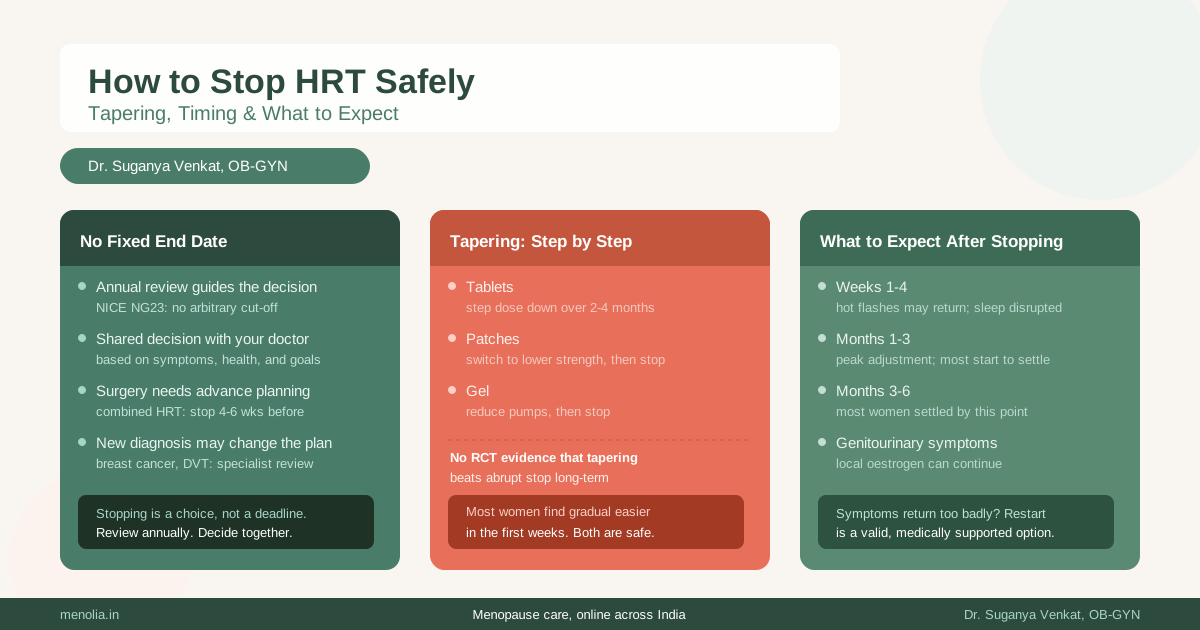
NICE, whose menopause guideline (NG23, 2015, updated 2019) is widely followed by doctors in India alongside domestic clinical guidance, states explicitly that HRT should be reviewed at least annually. The review is about whether the balance of benefits and risks still makes sense for you as an individual. It is not a countdown to a mandatory stop.
There is no recommendation in NICE NG23 that women must stop HRT at five years, or at sixty, or at any other fixed point. The five-year figure that circulates in conversation refers to how long the largest HRT trials ran, not a clinical limit on how long you can safely take it.
For some women, the benefits of continuing will clearly outweigh the risks for many years. For others, the picture shifts at some point and stopping makes sense. That assessment is individual. Your age, your symptom burden, your bone density, your cardiovascular risk, your personal history, and your quality of life all factor in. No two women have the same calculation.
If you have been told you must stop at a specific age, it is worth having that conversation again with the understanding that current guidance does not set an arbitrary cut-off. The full HRT overview covers the evidence on long-term use in more detail.
When Stopping Is Genuinely Indicated
While there is no arbitrary time limit, there are specific circumstances where stopping HRT is medically recommended. These are different from simply having been on it for a certain number of years.
Before certain elective surgeries. Combined HRT (oestrogen plus a synthetic progestogen taken orally) is associated with a small increased risk of venous thromboembolism, particularly when you are immobile for a prolonged period. Current guidance recommends stopping combined oral HRT four to six weeks before major elective surgery. Discuss this with your surgeon and the doctor who prescribes your HRT well in advance of the scheduled date. Transdermal oestrogen (patches, gel) carries a lower clot risk and the approach may differ depending on the surgical team’s assessment.
A new diagnosis of hormone-receptor-positive breast cancer. This is a clear contraindication. If you receive this diagnosis while on HRT, your oncology team will guide you on stopping as part of your treatment plan. The HRT and breast cancer risk post covers the evidence on risk in more detail.
A cardiovascular event or a new diagnosis carrying high VTE risk. A stroke, a deep vein thrombosis, or a pulmonary embolism during HRT use generally leads to stopping and a specialist review before any decision to restart.
Outside these specific circumstances, stopping is an elective, shared decision.
Tapering vs Stopping Abruptly
When women do decide to stop, the next question is almost always: should I reduce the dose gradually, or just stop?
There is no strong randomised controlled trial evidence that gradual tapering produces better long-term symptom outcomes than stopping abruptly. Studies that have looked at HRT discontinuation have not consistently shown that one approach prevents the return of symptoms better than the other over a period of months.
What gradual tapering does offer is a more comfortable experience in the weeks immediately after stopping. When you reduce the dose in steps, the hormonal change is less sudden. Many women find the transition to lower and then zero hormone levels easier to manage than a sharp drop from a full dose to nothing.
Stopping abruptly is not harmful. If you are already on a low dose, or if there is a clinical reason to stop quickly (surgery is scheduled in two weeks, for example), stopping all at once is a reasonable approach and does not carry a specific medical risk beyond the possibility of a sharper return of symptoms.
Most women who are stopping for personal reasons and have the flexibility to choose find a gradual reduction more manageable in the short term. What gradual means in practice depends on the form of HRT you are taking.
Tapering by Form: What It Looks Like in Practice
These approaches are common in clinical practice. Your doctor may recommend a different schedule depending on your current dose, how long you have been on HRT, and how your symptoms respond during the process. The right plan is one you and your prescribing doctor agree on together.
Tablets
If you take an oestrogen tablet daily (for example, 2mg estradiol), a common approach is to step the dose down in stages. One arrangement is two months at the current dose, then two months at half the dose, then stopping. For women who have been on HRT for many years, some doctors use a three-stage step-down spread over four to six months.
If you take a separate progestogen (such as Utrogestan or norethisterone), the timing of reducing that is coordinated with the oestrogen step-down. Your doctor will advise on this.
Patches
Patches come in a few dose strengths. The tapering approach is to switch from a higher-strength patch to a lower-strength one for a period, then stop. Some women also extend the patch-change interval (for example, changing a twice-weekly patch once weekly for a period) before stopping entirely.
Gel
Gel is the most flexible form to taper because you can adjust the number of pumps each day. If you are currently applying two pumps daily, one pump for six to eight weeks and then stopping is a typical step-down.
Vaginal oestrogen
Local vaginal oestrogen used for genitourinary symptoms (vaginal dryness, discomfort, urinary changes) is a different category from systemic HRT. It works almost entirely locally in the vaginal tissue and is used at very low doses with minimal systemic absorption. Many women with genitourinary syndrome of menopause continue vaginal oestrogen indefinitely, because the symptoms return promptly when it is stopped and the local benefit is clear. If you are stopping systemic HRT but still have genitourinary symptoms, discuss whether continuing vaginal oestrogen makes sense for you.
If you are thinking through whether to stop HRT and want to talk it over with a doctor who understands the full picture, I offer online consultations where we can look at your situation together.
What to Expect After Stopping
The most common experience is some return of vasomotor symptoms. Hot flashes and night sweats that had disappeared or reduced on HRT may come back, usually within a few weeks of stopping.
For most women, the returning symptoms are milder than the original ones before they started HRT. This is not guaranteed. Some women do experience a significant return, particularly after stopping abruptly from a full dose. Here is a realistic picture of the timeline.
Weeks one to four. Hormone levels fall as the medication clears. Vasomotor symptoms return, often peaking within the first month. Sleep may be disrupted. Mood can shift.
Months one to three. This is the most active adjustment period for most women. The body recalibrates without the hormonal buffer. Many women find symptoms begin to ease during this window.
Months three to six. Most women who are going to settle will have settled by this point. For a smaller group, symptoms persist at a level that affects daily life significantly.
What tends to continue without specific treatment. Genitourinary symptoms (vaginal dryness, discomfort with sex, urinary changes) may gradually return and worsen after stopping systemic HRT, because those tissues depend on oestrogen for health and do not recalibrate the way the thermostat does. This is a separate situation from vasomotor symptoms. Local vaginal oestrogen can be continued or started independently, regardless of what you decide about systemic HRT.
For non-hormonal and lifestyle-based ways to manage returning hot flashes, the hot flash treatment overview covers options across the full spectrum that your doctor may consider alongside or instead of systemic HRT.
When Returning Symptoms Make Continuing HRT Reasonable
If symptoms return severely enough to affect your sleep, your mood, your relationships, or your daily life, continuing HRT is a completely reasonable choice.
This is not giving up on stopping. It is making a decision about quality of life based on how your body is responding. Many women restart HRT after stopping and regain the same relief they had before. There is no medical reason you cannot restart, as long as the risk-benefit picture at your current health status still supports it.
The women who tend to find stopping most difficult are those who stopped primarily because they felt they should, rather than because their symptoms were well controlled or because their clinical picture had changed. If you stopped because of external pressure and feel significantly worse, that is worth discussing with your doctor.
If you stopped because a specific health situation indicated it (surgery, a new diagnosis), then any decision to restart involves specialist input rather than a straightforward prescription renewal.
The HRT side effects guide is also useful context here: it covers how the body adjusts when HRT is started, which parallels what happens when it is stopped and then restarted.
Bone Health After Stopping
HRT provides meaningful bone protection while you are taking it. When you stop, that protective effect does not persist indefinitely. Bone loss resumes at a rate closer to what it was before you started HRT.
This is not a reason to stay on HRT solely for bone protection. There are other approaches, including bisphosphonates, adequate calcium and vitamin D intake, and weight-bearing exercise, which your doctor can discuss as part of your stopping plan.
If you have osteoporosis or significantly low bone density, your doctor will likely want to discuss what bone protection looks like after stopping HRT, rather than simply stopping without a plan in place. The bone health and osteoporosis guide covers the full picture of bone protection in menopause.
Stopping Is a Decision, Not a Deadline
The pressure many women feel around stopping HRT often comes from outside the clinic room. A relative who read something online. A friend who stopped at fifty-five and frames HRT as something you move past. A vague cultural discomfort with taking medication for what is sometimes called a natural process.
NICE and the International Menopause Society are clear: for most women, HRT is a safe and effective way to manage menopausal symptoms, and there is no mandatory stopping point. The annual review is designed to check whether it still makes sense for you, at this point in your life, with your current health profile. Not to count down to a forced ending.
Stopping is one option at that review. Continuing is another. Both are valid depending on the individual picture.
Practical Takeaways
- NICE NG23 does not set an arbitrary stop age. The annual review assesses your individual benefit-risk balance.
- Tapering gradually is more comfortable for most women. Stopping abruptly is not medically harmful.
- Vasomotor symptoms (hot flashes, night sweats) may return after stopping, usually peaking in the first month and settling over three to six months.
- Genitourinary symptoms (vaginal dryness, discomfort) may worsen after stopping systemic HRT. Local vaginal oestrogen can be continued independently.
- Bone protection from HRT reduces when HRT stops. Discuss alternatives with your doctor as part of your stopping plan.
- If stopping causes significant disruption, restarting is a valid option after a review of your current health picture.
- Before major elective surgery: discuss your HRT with both your surgeon and your prescribing doctor. Combined oral HRT may need to stop four to six weeks beforehand.
Frequently Asked Questions
Is there a maximum age or time limit for taking HRT? No current clinical guideline sets a mandatory age limit or time limit. NICE NG23 recommends annual review of benefits and risks, and that assessment is individual. Some women take HRT for many years and continue to benefit from it. The review is about whether it still makes sense for you, not about counting years.
What happens to my body when I stop HRT? Oestrogen and progesterone levels fall as the medication clears from your system. Vasomotor symptoms (hot flashes, night sweats) may return, usually within a few weeks. Sleep, mood, and energy can be affected during the adjustment period. For most women, these effects settle over three to six months. Genitourinary symptoms may return gradually and tend to persist without specific local treatment.
Should I taper HRT gradually or stop all at once? The evidence comparing the two approaches is limited and does not clearly favour one over the other for long-term symptom outcomes. Most women find a gradual dose reduction more comfortable in the short term. Stopping abruptly is not harmful. Your doctor will advise based on your current dose, the form of HRT you are on, how long you have been taking it, and why you are stopping.
Will my hot flashes come back when I stop HRT? They may. How likely this is depends on how long ago you went through menopause and how symptomatic you were before starting HRT. For many women, returning symptoms are milder than the original ones. For others, they return at a level that is difficult to manage. Most settle within three to six months. If they do not, restarting HRT is an option to review with your doctor.
Do I need to stop HRT before a surgical procedure? Discuss this with your surgeon and your prescribing doctor well in advance. Combined HRT (oestrogen plus progestogen taken orally) is generally stopped four to six weeks before major elective surgery requiring prolonged immobility, to reduce blood-clot risk. Transdermal oestrogen carries lower clot risk and the guidance may differ. This is a clinical decision that depends on the type of surgery and your individual profile.
Will stopping HRT affect my bones? Yes. The bone protection HRT provides reduces when you stop taking it. Bone loss resumes. If bone health is a concern, discuss alternatives with your doctor as part of your stopping plan. Options include bisphosphonates, adequate calcium and vitamin D, and weight-bearing exercise. A bone density scan (DEXA) can provide a baseline picture.
Can I restart HRT after stopping if symptoms return badly? Yes. There is no medical reason you cannot restart HRT if a review of your current health situation supports it. Many women restart and regain the same relief they had before. Restart should be discussed with your doctor, who will reassess your current health profile and prescribe accordingly.
If you are thinking about stopping HRT and want to talk through what that looks like for your specific situation, I am available for an online consultation where we can look at the full picture together.