She woke at half past three with her right hand completely numb.
She mentioned it to her husband, who suggested she must have been lying on it. She tried a different sleeping position the next night. The numbness came back. By the end of the week it was happening every night, and she had started shaking her hand in the dark to get the feeling back. In the mornings, opening a jar or buttoning a kurta was uncomfortable for the first hour or so.
She was 48, her periods had become irregular, and no one had mentioned that the two things might be connected.
What she had was carpal tunnel syndrome. What she did not have was any explanation anyone had offered her, which is exactly what this post is about.
What Carpal Tunnel Syndrome Is
The carpal tunnel is a narrow channel on the palm side of the wrist, formed by bones on three sides and a tough ligament across the top. Through this channel runs the median nerve, which provides sensation to the thumb, index finger, middle finger, and the thumb-side half of the ring finger. It also carries the nerve signals for thumb grip strength.
When the tissue inside this tunnel swells, the nerve gets compressed. Compressed nerves signal their distress in a specific way: tingling, numbness, sometimes burning, and occasionally a dull ache that travels up the forearm. The symptoms are classically worse at night, when the wrist naturally curls during sleep, and during activities that hold the wrist bent: reading a phone, knitting, or driving with hands gripping the wheel.
This is the condition. What brings it on in the menopause years is worth understanding.
How Oestrogen Loss Drives It
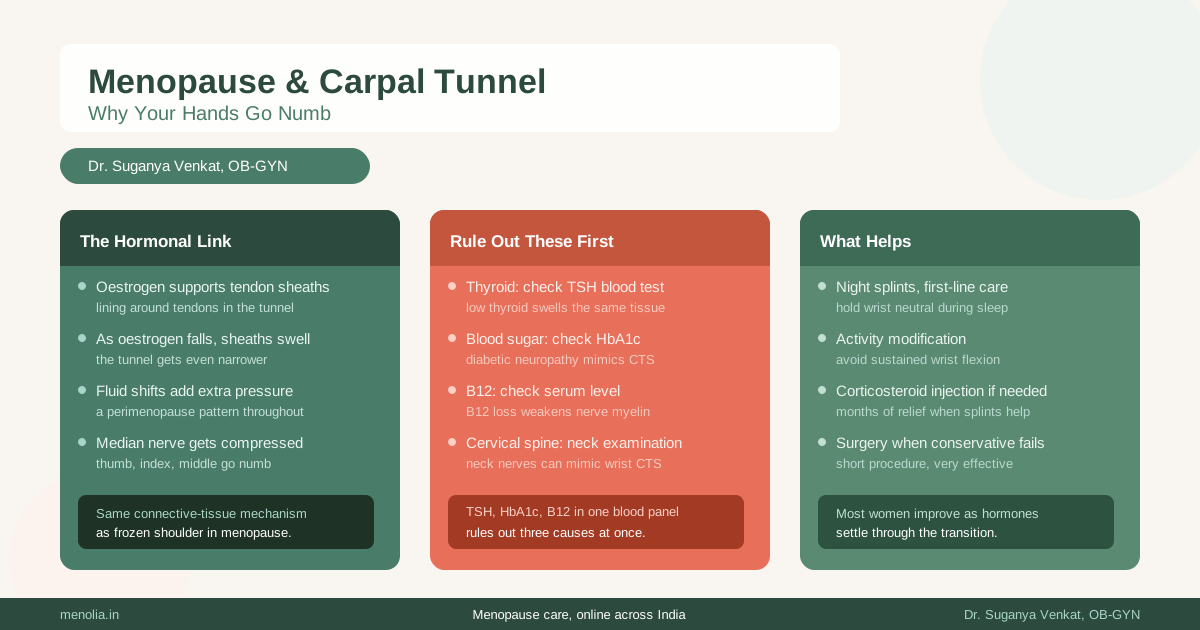
Oestrogen does not only regulate the menstrual cycle. It also maintains the health of connective tissue throughout the body. Tendons, ligaments, and the synovial lining that sheaths tendons as they pass through narrow channels like the carpal tunnel are all oestrogen-sensitive.
When oestrogen falls during perimenopause, this tenosynovial tissue can swell. The same mechanism is behind frozen shoulder in menopause, another connective-tissue condition that clusters in the perimenopause years. In the carpal tunnel, even a small amount of tenosynovial swelling can be enough to crowd the median nerve, because the tunnel has very little room to spare.
Fluid shifts during perimenopause add to this. Many women notice their rings feel tighter in the morning, their ankles are slightly puffy, and their hands feel swollen on waking. This general tissue-water increase compounds the swelling inside the tunnel.
The end result: a woman who has had no wrist problems for decades develops carpal tunnel syndrome in her late forties or early fifties, often with no history of heavy manual work, pregnancy, or any of the other recognised triggers. The trigger, unannounced, has been hormonal.
Carpal tunnel syndrome is significantly more common in women than in men, and the peak of new diagnoses in women falls precisely in the menopause transition years (Katz JN, Simmons BP. Carpal tunnel syndrome. N Engl J Med. 2002;346(23):1807-12). Women are referred to orthopaedic surgeons and neurologists, which is entirely appropriate, but the hormonal context is frequently missing from the conversation.
How to Recognise It
There are several causes of hand numbness, and knowing which nerve is involved helps narrow the cause considerably.
The median nerve, which is the nerve affected in carpal tunnel syndrome, supplies the thumb, index finger, middle finger, and the thumb-side of the ring finger. If those are the fingers going numb, the carpal tunnel is the likely site.
The ulnar nerve, which runs on the little-finger side of the wrist, supplies the little finger and the ring-finger half nearest to it. Numbness specifically in those two fingers points to a different problem.
A few other patterns to notice:
The night-worsening pattern. Carpal tunnel symptoms classically wake you in the early hours. You may find yourself shaking or flicking the hand to restore sensation. This is so consistent it has its own name in clinical practice: the “wake and shake” sign.
The position-dependent nature. Holding a mobile phone with the wrist bent, driving for more than twenty minutes, or cradling a book with the wrist flexed will bring on or worsen the tingling. Straightening the wrist often gives some relief.
Morning stiffness. Difficulty with fine motor tasks, button fastening, or gripping a cup tightly in the first thirty to forty-five minutes after waking.
If you are in perimenopause or have already stopped your periods, the combination of night-worse tingling in those specific fingers and that position-dependence makes carpal tunnel the most likely explanation. A clinical assessment by a doctor can usually confirm this quickly.
Rule Out These Causes First
Hand numbness during menopause is not always carpal tunnel. Three conditions in particular can produce very similar symptoms and are worth ruling out before assuming a structural wrist problem.
Thyroid. An underactive thyroid can cause tenosynovial swelling independently of oestrogen, and thyroid dysfunction becomes more common after forty. A low thyroid can trigger or worsen carpal tunnel symptoms through exactly the same mechanism. Thyroid changes during menopause are worth reading if you have not already had a thyroid check recently. The test is a simple TSH blood draw.
Blood sugar. High blood sugar over time causes peripheral neuropathy: damage to the small nerves that carry sensation. This can produce numbness and tingling in the hands and feet. Diabetes risk rises significantly after menopause for hormonal reasons, so a fasting glucose or HbA1c is a sensible part of any hand-numbness investigation.
B12 deficiency. B12 is required for the myelin sheath that insulates nerve fibres. When B12 is low, nerves become vulnerable, producing tingling, numbness, and sometimes the same “electric current” sensation that can accompany menopause itself. Indian vegetarian women are at particular risk. B12 deficiency rises after forty for several reasons, including changes in stomach acid production. A serum B12 level will show whether this is a factor.
Cervical spondylosis. Compression of a nerve root in the neck can produce hand tingling that mimics carpal tunnel. The distinguishing feature is usually that neck movement makes it worse and the finger pattern is slightly different, but this is something a doctor will assess when examining you.
A TSH, HbA1c, and B12 can rule out the three most common mimics in a single blood draw. It is worth doing this before pursuing wrist procedures.
What Helps
The good news is that most women with menopause-associated carpal tunnel syndrome respond well to conservative measures, particularly when symptoms are mild to moderate.
Night splints. These are the most consistently effective first step. A splint holds the wrist in a neutral position through the night, preventing the involuntary flexion that compresses the nerve during sleep. Systematic reviews confirm that wrist splinting significantly reduces nocturnal symptoms. Most pharmacies in India stock wrist splints; they require no prescription. Worn consistently for four to six weeks, they bring meaningful relief for many women.
Activity modification. During the day, reducing sustained wrist flexion helps. Using a speakerphone instead of cradling the phone, taking breaks during long periods of typing or needlework, and positioning a keyboard so the wrists remain straight rather than bent are practical changes that make a real difference over time. Many Indian women have occupational patterns that contribute: rolling chapatis, grinding, embroidery, and prolonged knitting all involve repetitive wrist flexion. The combination of these patterns with the hormonal narrowing at menopause creates a compounding effect.
Anti-inflammatory care. Icing the wrist for ten to fifteen minutes after activities that trigger symptoms can reduce local swelling. Avoiding positions that press directly on the wrist (resting the wrist edge on a hard desk, for example) is similarly useful.
Corticosteroid injection. If splints and activity changes give partial but not sufficient relief, a corticosteroid injection into the carpal tunnel is an option. Evidence supports its effectiveness for several months in many people. It is done by an orthopaedic or hand surgeon, or a sports medicine physician. It is not a permanent solution, but it can provide a substantial window of symptom relief while other measures are in place.
HRT. Some observational evidence suggests that hormone replacement therapy, by addressing the underlying oestrogen deficiency, may help reduce carpal tunnel symptoms in perimenopausal women. The evidence is mixed and this is not a reason to start HRT specifically for the wrist. But if you are already in a conversation with your OB-GYN about HRT for other menopause symptoms, the potential benefit for connective-tissue conditions like carpal tunnel is worth raising.
Surgery. Carpal tunnel release is a short, highly effective procedure. It involves cutting the ligament that forms the roof of the tunnel, giving the nerve more room. Recovery typically takes a few weeks. Surgery is not needed for most women with menopause-associated carpal tunnel, particularly if symptoms are mild to moderate and respond to conservative management. The indication is usually failure of conservative care after several months, significant weakness in grip or pinching ability, or confirmed nerve damage on nerve conduction studies. It is elective, not urgent, and worth discussing with a hand surgeon if conservative measures are not working.
If your hands are going numb at night and you would like to talk through what is happening and what makes sense for you, I offer consultations online across India.
WhatsApp me to book a consultation (Rs 399 for a 30-minute video call)
What to Expect Through the Transition
For some women, menopause-associated carpal tunnel syndrome improves on its own once the hormonal transition is complete and the fluid shifts and connective-tissue changes settle. This is not universal, but it is a reason not to rush into surgery during the transition years if symptoms are manageable with conservative care.
The sensible approach in the meantime: conservative measures for symptoms, regular check-ins with your doctor if weakness develops, and nerve conduction studies if the clinical picture is not clear.
The electric shock and skin crawling sensations that some women experience around menopause arise from a similar process of oestrogen’s influence on sensory nerves and can coexist with carpal tunnel symptoms. These are separate phenomena but part of the same broader picture of how hormonal change affects the nervous system.
If your other joints are also causing problems, menopause-related body aches cover the musculoskeletal picture more broadly.
Frequently Asked Questions
Is carpal tunnel syndrome more common during menopause? Yes. Carpal tunnel syndrome is significantly more common in women than in men, and the highest rate of new diagnoses in women occurs in the perimenopause and early postmenopause years. Oestrogen loss causes tenosynovial swelling inside the carpal tunnel, narrowing the space around the median nerve. The same connective-tissue mechanism underlies frozen shoulder, which also peaks at this life stage.
Can perimenopause cause carpal tunnel? Yes. Perimenopause is when many women first notice carpal tunnel symptoms, often years before periods actually stop. Fluctuating and falling oestrogen drives fluid retention and tenosynovial swelling inside the wrist, which narrows the tunnel and compresses the median nerve. If tingling in the thumb, index, and middle fingers is waking you at night in your 40s, the hormonal transition is a recognised contributor. A night splint is a reasonable first step while you get it assessed.
How do I know it is carpal tunnel and not something else causing my hand numbness? The classic pattern is tingling and numbness specifically in the thumb, index finger, and middle finger; symptoms that are worse at night and wake you from sleep; relief when you shake or flick the hand; and worsening with wrist flexion when holding a phone, driving, or knitting. If those specific fingers are involved and the pattern is position-dependent and night-worse, carpal tunnel is the likely cause. A doctor can confirm with a brief clinical examination, and nerve conduction studies can quantify nerve compression if needed.
Can thyroid or B12 deficiency cause the same symptoms? Yes, both can. Hypothyroidism causes independent tenosynovial swelling that can produce or worsen carpal tunnel syndrome. B12 deficiency causes peripheral neuropathy from myelin changes. Blood tests for TSH and B12 are a sensible first step, particularly because both are more common in women after forty and are straightforward to treat.
Do night splints help for carpal tunnel? Yes, for most women with mild to moderate carpal tunnel syndrome. Splints hold the wrist in a neutral position through the night, preventing the involuntary wrist flexion that compresses the nerve during sleep. Systematic reviews confirm that wrist splinting reduces nocturnal symptoms significantly in this group. Splints are available at pharmacies without a prescription and are the standard first-line conservative treatment.
Will the hand numbness go away on its own once menopause is complete? For some women, yes. Once the hormonal transition is complete and the perimenopause-related fluid shifts settle, the pressure inside the carpal tunnel can reduce and symptoms may improve. This is not guaranteed, but it is a reason to try conservative management first during the transition rather than proceeding directly to surgery, particularly if symptoms are manageable.
What foods support nerve health during menopause? Managing blood sugar, addressing B12 and vitamin D, and reducing chronic inflammation all support nerve health. Dahi is a good dietary B12 source for vegetarian women. Rajma and chana provide B vitamins and plant protein. Ragi is rich in magnesium, which is involved in nerve transmission. Methi has anti-inflammatory properties and helps with metabolic health. These are useful across the board for managing menopause, not only for nerve-related symptoms.
When should I see a doctor about hand numbness during menopause? If the numbness is progressing, if you notice weakness in grip or difficulty opposing the thumb to the other fingers, if the symptoms are affecting daily function, or if they are not responding to splints and activity modification after four to six weeks, see a doctor. Nerve conduction studies can assess whether nerve damage is progressing. Surgery is highly effective when indicated, but the decision should be made carefully with good clinical information, not urgently.
Hand numbness during menopause deserves the same attention as any other symptom of this transition. If this is something you are dealing with and you want a clear picture of what is going on and what your options are, I am happy to talk it through.
WhatsApp me to book a consultation (Rs 399 for a 30-minute video call)