Two versions of the same question come up again and again once women reach their fifties. One is prompted by a relative: a cousin in the US laid up with shingles, a friend’s mother hospitalised with pneumonia, and the worry that follows. The other is quieter, almost embarrassed: when was my last tetanus shot, and does the one I had decades ago still count? Neither is an unusual thing to ask. Most Indian women over 50 have a childhood immunisation card somewhere in a cupboard and nothing since, because adult vaccination has never been part of how we talk about health here the way it is for children.
That gap is not a small oversight. The vaccines available to women in this age group protect against serious illness: shingles that can leave nerve pain for months, pneumonia bad enough to need hospitalisation, flu that hits harder as immune response naturally declines with age. None of this is about fear. It is about a short list of practical, well-studied vaccines that most women simply haven’t been offered, because nobody raised it.
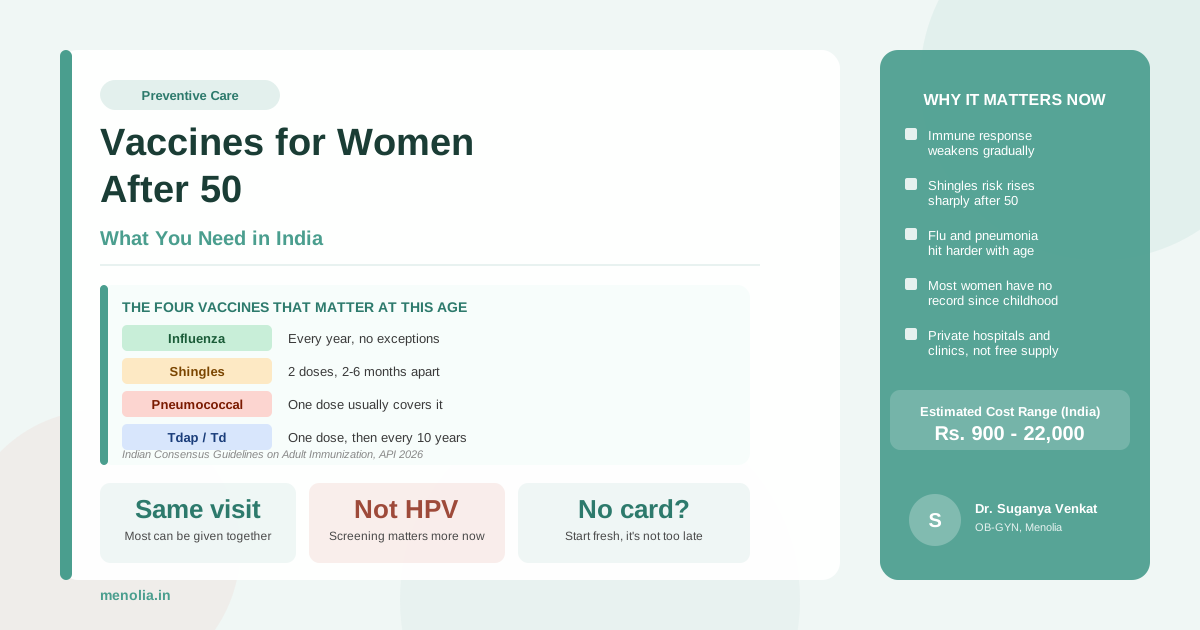
The short list, if you just want the answer: a flu shot every year, the shingles vaccine (Shingrix, two doses), one pneumococcal vaccine, and a Tdap shot if you’ve never had one as an adult, with a booster every ten years after that. The rest of this post explains who each one is for, what it costs in India, and the one vaccine women often ask about that isn’t the right answer at this age.
Why This Age Group Specifically
Immune response weakens gradually with age, a process called immunosenescence. Infections a 30-year-old shrugs off can hit a 55-year-old harder and take longer to clear, which is why flu and pneumonia turn more dangerous in this decade even when they are no more frequent. The herpes zoster virus, the one that causes chickenpox in childhood and shingles later in life, is also more likely to reactivate as that immunity fades, and its risk climbs steadily from 50 onward regardless of menopausal status. None of this changes overnight on a birthday. It simply makes your fifties a sensible decade to build a vaccine record if you don’t already have one, and to keep a couple of things current after that.
The Vaccines That Matter at This Age
This list follows the adult immunisation guidance issued by the Association of Physicians of India (API), most recently updated in its 2024 guidelines, read alongside the US CDC’s adult immunisation recommendations, which many Indian private hospitals also reference when women ask for global-standard guidance. Where the Indian and US recommendations differ, I’ve said which is which rather than blend them.
The prices quoted below are private-sector indicative ranges as of August 2026 and vary by city, brand, and clinic, so confirm the current cost with your provider before booking.
Influenza (flu), every year
Who: every woman 50 and above, every year, with no exceptions for general health.
Why: flu strains change season to season, so last year’s vaccine doesn’t protect against this year’s circulating strain. A yearly dose is the only way to stay covered, and at this age flu is more likely to lead to complications like pneumonia than it was two decades earlier.
Side effects: usually just a sore arm for a day, occasionally a mild low-grade fever, settling within a day or two.
Cost in India (2026, private, per dose): roughly ₹900 to ₹1,300 for the standard Vaxigrip formulation, or ₹2,000 to ₹3,000 for Fluarix, plus a consultation or administration fee depending on the clinic.
Shingles (recombinant zoster vaccine, brand name Shingrix)
Who: every woman 50 and above, including those who have already had shingles once or who received the older Zostavax vaccine years ago.
Why: shingles is a reactivation of the chickenpox virus that most Indian adults were exposed to in childhood. It typically presents as a painful, blistering rash on one side of the body, and the complication that makes it worth preventing is postherpetic neuralgia, nerve pain in the affected area that can persist for months after the rash clears. Shingrix is given as two doses, two to six months apart, and is not a live vaccine, so it doesn’t carry the restrictions that older live-virus shingles vaccines did.
Side effects to expect: Shingrix tends to make you feel it for a day or two. A sore arm is the most common, sometimes with tiredness, muscle aches, a headache, or a mild feverish, flu-like feeling. This is more common after the second dose, usually settles within two to three days, and is a sign of the immune system responding rather than something to be worried about. It’s worth booking the second dose for a time when you can take it a bit easy the next day.
If shingles itself appears: antiviral tablets work best when started within 72 hours of the rash showing up, so see a doctor promptly rather than waiting to see whether it settles on its own. A rash near the eye, or on the tip of the nose, needs same-day medical review, because shingles affecting the eye can threaten vision if it isn’t treated quickly. This is exactly what the vaccine prevents.
Cost in India (2026, private, per dose): roughly ₹8,800 to ₹11,000 per dose, so ₹17,600 to ₹22,000 for the full two-dose course. This is the most expensive vaccine on this list by a clear margin, which is often the actual barrier rather than any medical uncertainty about whether it helps.
Pneumococcal vaccine
Who: every woman 50 and above who hasn’t had a documented pneumococcal vaccine before, or whose history is unclear.
Why: pneumococcal bacteria are a leading cause of pneumonia, and pneumonia severe enough to need hospitalisation becomes more likely as the decades add up. In October 2024 the US CDC lowered its recommended age for a pneumococcal vaccine to 50, and Indian API adult-immunisation guidance (updated 2024) points the same way. For most women starting fresh, that means a single dose of the newer PCV20 conjugate vaccine, which covers you without needing a second, older-style vaccine afterward. Prevenar 20 (PCV20) has been launched in India for adults, though stock still varies by city and pharmacy, so it’s worth asking your provider whether they carry it. The alternative path, still valid, is PCV15 followed by PPSV23 at least a year later. Which one applies to you depends on what you’ve already had, so this is worth a specific conversation rather than a snap choice at a pharmacy counter.
Side effects: typically a sore arm, and sometimes a mild fever or tiredness for a day or so.
Cost in India (2026, private): PCV20 (Prevenar 20) runs approximately ₹5,000 to ₹6,500 per dose. PPSV23 (Pneumovax 23) is cheaper, around ₹1,750 to ₹3,500 per dose, but is typically the second vaccine in a two-step course rather than a standalone option for someone starting from scratch.
Tdap (tetanus, diphtheria, pertussis), then a booster every 10 years
Who: every adult, one lifetime dose of Tdap specifically if you’ve never had it as an adult (childhood DPT doesn’t count), then a Td or Tdap booster every 10 years after that.
Why: tetanus protection fades over time, and most Indian women’s last documented dose was in childhood or around a pregnancy decades ago. Diphtheria and pertussis (whooping cough) immunity fades too, which is why the adult booster covers all three rather than tetanus alone.
Side effects: usually a sore arm, occasionally a mild fever or a day of feeling a bit off.
Cost in India (2026, private, per dose): approximately ₹1,200 to ₹1,700, depending on the brand and whether administration is charged separately.
What This Looks Like as an Actual Visit
These vaccines are given at a private clinic, a hospital OPD, or a pharmacy near you, not on a video call. A consultation with me is to work out which ones you actually need and in what order; the injections themselves happen wherever you go to be vaccinated.
You do not need four separate appointments. A woman with no clear vaccine history can typically get flu, Tdap, Shingrix (dose one), and a pneumococcal vaccine at the same visit, in different injection sites, if she’s due for all of them. Shingrix’s second dose then comes two to six months later, and that’s the only follow-up appointment this requires. Most women leave the vaccination appointment surprised at how straightforward it was, having expected something closer to a project than a twenty-minute conversation and two or three injections.
Not sure what you’ve already had, or which of these actually applies to you? Dr. Suganya can go through your vaccine history and put together a straightforward plan, over a video consultation.
The One Vaccine That Isn’t the Right Answer Here: HPV
This comes up more than any other, because HPV vaccination is well known now, and women assume it applies at every age. It doesn’t, and being honest about that matters more than reassuring you either way.
In India, HPV vaccination is licensed only up to age 45, and that upper limit applies to Gardasil 9. The benefit comes from preventing new infection with cancer-causing HPV strains before exposure happens. By 50, most sexually active women have been exposed to HPV at some point, so a vaccine designed to prevent new infection has much less to add, and it isn’t a routine recommendation at this age.
After 50, protection against cervical cancer comes from continued cervical screening rather than from a vaccine. HPV can lie dormant for decades and reactivate later in life, which is exactly why screening past menopause still matters even though the vaccine window has closed. If you’re wondering whether to pursue HPV vaccination at this stage, keep your Pap and HPV co-testing current instead. That’s where the protection is.
What About COVID-19?
COVID-19 boosters sit outside this routine over-50 list because they work differently. Rather than a fixed once or twice-in-a-lifetime schedule, COVID vaccination is handled as an updated booster offered periodically, and in India it is currently given situationally rather than on a fixed annual schedule for this age group. If you have heart, lung, kidney, or immune conditions, or diabetes, it’s worth asking your doctor whether an updated COVID booster is advised for you specifically. This one is individual rather than a blanket recommendation for every woman over 50, so treat it as a conversation to have rather than a box to tick.
What About the RSV Vaccine?
RSV (respiratory syncytial virus) vaccines like Arexvy and Abrysvo are now recommended for older adults in several countries, including the US, where they’re offered from around 50 to 60 onward. In India they are still working through the approval process for adults and aren’t yet routinely available the way flu or Shingrix are, which is why they aren’t on the core list above. If that changes, it’s a reasonable one to ask your doctor about, particularly if you have chronic heart or lung disease.
Where This Fits With Your Other Screening
Vaccines are one piece of preventive care after 50, alongside the screening tests that catch problems early rather than preventing infection outright. If you haven’t reviewed your full screening picture recently, our post-menopause health checks guide covers the eight tests that matter most at this stage, including mammograms, bone density testing, and colorectal cancer screening. Vaccines and screening aren’t competing priorities; they cover different kinds of risk, and doing both is how this decade of preventive care works.
Frequently Asked Questions
Do I really need the shingles vaccine if I’ve never had shingles?
Yes. The shingles vaccine doesn’t require a prior episode to be worthwhile; it’s recommended for every adult 50 and above regardless of history, because nearly everyone who had chickenpox in childhood carries the dormant virus and remains at risk of it reactivating. If you have already had shingles once, you still need the vaccine, since a second episode is possible and the vaccine is recommended even after a prior infection.
Is the pneumococcal vaccine a one-time thing or does it repeat?
For most women starting fresh at 50 or later, a single dose of PCV20 is enough with no follow-up dose needed. The older two-step approach, PCV15 followed by PPSV23 a year later, is still valid if that’s the path your doctor recommends based on your specific history. Either way, this is generally a one-time investment, not an annual vaccine like flu.
Why does the flu vaccine need to be repeated every year when the others don’t?
Influenza viruses mutate constantly, and the vaccine formulation is updated each season to match the strains expected to circulate. A flu vaccine from last year offers little protection against this year’s strain, which is why it’s the only vaccine on this list that needs yearly repetition rather than a one-time or ten-yearly schedule.
Can I get all these vaccines at the same visit, or do they need to be spaced out?
Flu, Tdap, Shingrix’s first dose, and a pneumococcal vaccine can typically all be given at the same visit, at different injection sites, without needing to space them apart. Shingrix’s second dose is the one that has a mandatory gap, given two to six months after the first. Your doctor will confirm what’s appropriate for your specific combination and health history.
Is there a government or free option for any of these vaccines in India?
The Universal Immunisation Programme in India is built around childhood vaccines, so these adult vaccines are generally accessed through private hospitals, clinics, and pharmacies rather than free government supply. A few workplace or hospital health schemes may cover some of them, so it’s worth checking whether any scheme you have access to includes adult vaccination.
I had a tetanus shot when I delivered my last baby decades ago. Does that still count?
It counts as your baseline, but tetanus protection is not lifelong. The standard recommendation is one lifetime dose of Tdap as an adult if you’ve never had it, followed by a Td or Tdap booster every ten years after that. If your last dose was around a delivery 20 or 30 years ago, you are very likely due for a booster now, and it’s worth confirming rather than assuming you’re still covered.
Should I get these vaccines before or after menopause, or does the timing not matter?
Vaccine recommendations at this age are based on age and general immune status, not menopausal stage specifically, so there’s no reason to wait for or rush around menopause itself. The one exception where hormonal status matters directly is pregnancy, which doesn’t apply once you’re past your reproductive years, so for a woman over 50 the practical answer is simply: start when you’re ready, regardless of where you are in the menopause transition.
I’m Dr. Suganya Venkat, an OB-GYN with over 15 years of experience, and at Fertilia and Menolia we build preventive care conversations like this one into every review past 50, alongside the screening tests women already expect. Vaccination is a small ask for the protection it offers at this stage of life.
If you want to go through your own vaccine history and figure out exactly what applies to you, message Dr. Suganya Venkat on WhatsApp. A single conversation usually clears up more than a search engine ever will.