A woman on HRT for eight months wrote to me after her annual diabetes screening came back with a small note she hadn’t expected: her ALT was 52, just above her lab’s upper limit of 40. Nothing else in the panel was flagged. She hadn’t gone looking for it, and her first thought was the same one most women have in this situation: is this the HRT?
It’s a reasonable question, and one I hear often enough that it’s worth answering properly rather than in a rushed line at the end of a consultation. Most of the time a mildly raised ALT or AST picked up on a routine panel while you’re on HRT has very little to do with the HRT itself. But “most of the time” isn’t “always,” and the route you’re taking, oral or transdermal, does change the picture. This post walks through what a mild elevation usually means, when oestrogen is genuinely the more likely explanation, when it almost certainly isn’t, and what the practical next step looks like.
Routine Liver Tests Aren’t Part of Standard HRT Monitoring
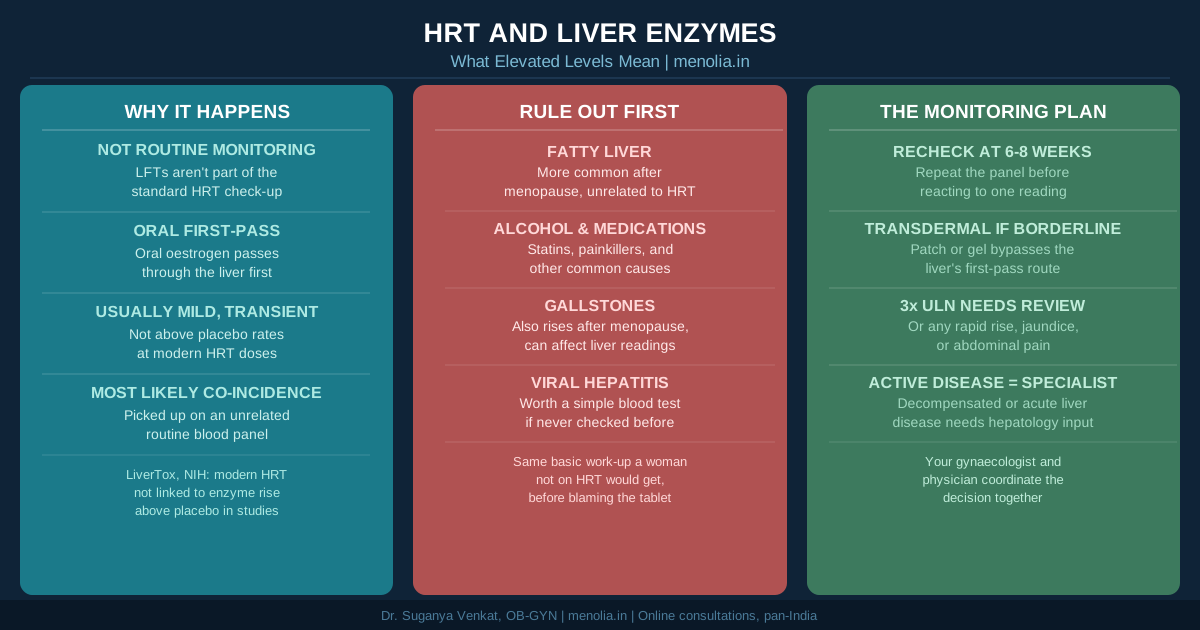
The first thing worth knowing is that a liver function test isn’t something your gynaecologist routinely orders as part of starting or continuing HRT. There’s no scheduled LFT check the way there is a blood pressure reading or, in some cases, a mammogram interval. So if you’re on HRT and a mildly elevated ALT or AST shows up, it’s almost always picked up incidentally, on a diabetes panel, a general health check, an insurance medical, or a test ordered for something else entirely, not because anyone was specifically watching your liver on account of the HRT.
That matters for how you interpret the number. It wasn’t flagged because your HRT triggered a monitoring protocol. It was flagged because you happened to have blood drawn for another reason, and the liver panel came back slightly outside range. The two facts, being on HRT and having a mildly raised enzyme, sit next to each other on the same report, but sitting next to each other isn’t the same as one causing the other.
When Oral Oestrogen Can Genuinely Raise Enzymes, and Why It’s Usually Mild
Oral oestrogen tablets pass through the liver first before reaching the rest of your circulation, a route called first-pass metabolism. This is the same mechanism behind why oral HRT is more strongly linked to clotting-factor changes and why transdermal patches or gel are generally preferred for women with a higher baseline clotting or cardiovascular risk, the same logic covered in our guides on HRT and blood clots and HRT with high blood pressure.
That same first pass through the liver is capable of producing a small, usually transient rise in liver enzymes in some women, particularly in the early months of starting oral oestrogen. According to LiverTox (ncbi.nlm.nih.gov/books/NBK548539, the NIH’s clinical database on drug-induced liver injury, reviewed 2026-09-08), current oestrogen formulations used for menopausal hormone therapy have not been shown to raise ALT or alkaline phosphatase at rates meaningfully above placebo in the studies available, a marked contrast to older, much higher-dose oestrogen preparations from decades past that did cause more frequent enzyme changes. Clinically significant liver injury from modern HRT doses is recognised but rare, and when it does happen it more often shows up as a cholestatic pattern (itching, sometimes jaundice) appearing within the first one to three cycles, not as an isolated, symptomless ALT bump picked up months or years in.
Transdermal oestrogen, delivered through a patch or gel, bypasses this first pass through the liver almost entirely, which is why it’s the preferred route when a liver value is already borderline or when there’s a reason to minimise hepatic exposure, the same transdermal-first reasoning that applies with thyroid medication (our HRT and thyroid medication guide covers that interaction) and with blood pressure and clotting risk.
Got a mildly elevated liver enzyme on a routine panel while you’re on HRT? Dr. Suganya reviews your full picture, route, dose, and other results, over a video consultation before deciding what, if anything, needs to change.
When It’s Almost Certainly Not the HRT
Before assuming the oestrogen is responsible, it’s worth ruling out the causes that are, statistically, far more likely to explain a mild ALT or AST elevation in a woman over 45, with or without HRT in the picture.
Fatty liver (MASLD, previously called NAFLD) becomes considerably more common after menopause, as falling oestrogen changes how the body stores and processes fat, including in the liver itself. This is frequently the real explanation behind a mildly raised ALT that coincides with starting HRT purely by timing, since both tend to show up in the same decade of a woman’s life for unrelated reasons. If you haven’t already, our guide on menopause and fatty liver covers what a NAFLD/MASLD finding on a scan or blood test means and what actually helps.
Other common, entirely unrelated causes include: alcohol intake, even amounts that don’t feel excessive; other medications, including some statins, certain antibiotics, and over-the-counter paracetamol taken more often than realised; viral hepatitis, which is worth ruling out with a simple blood test if it hasn’t been checked before; and gallstones, which also rise in frequency after menopause (our menopause and gallstones guide explains that separate oestrogen-bile connection) and can affect liver enzymes when they cause any degree of bile duct obstruction.
The practical point: a mild ALT or AST elevation in a woman on HRT deserves the same basic work-up it would get in a woman who isn’t on HRT. Blaming the tablet or patch first, before checking the more common explanations, risks stopping a medication that’s helping her symptoms for a cause it likely didn’t create.
What Genuinely Needs a Specialist, Not a Wait-and-Watch
There’s a real difference between a mild, incidental elevation and a finding that needs urgent attention, and it’s worth being clear about where that line sits.
Decompensated liver disease, active acute hepatitis, active cholestasis, or an unexplained and persistently rising liver enzyme picture are genuine reasons to hold HRT and involve a hepatologist or physician before deciding anything further. This isn’t a decision your gynaecologist makes alone, the same collaborative approach that applies whenever a comorbidity genuinely changes the risk picture rather than just needing route adjustment.
Signs that warrant prompt review rather than a routine recheck: ALT or AST at three times or more above your lab’s upper limit of normal, or rising quickly on repeat testing; jaundice, dark urine, or pale stools; persistent right-sided abdominal pain, marked nausea, or unusual fatigue alongside the abnormal result; or a personal history of oestrogen-related liver problems, such as cholestasis of pregnancy.
Stable chronic liver conditions with otherwise normal liver function, including well-controlled fatty liver without significant fibrosis, aren’t automatically a bar to HRT. According to NICE guideline NG23 on menopause (nice.org.uk/guidance/ng23, checked 2026-09-08), the recommendation is individualised care and referral to a menopause specialist when HRT is contraindicated or when the right approach isn’t clear, rather than a blanket rule tied to a single liver diagnosis. The British Menopause Society’s 2020 HRT recommendations (thebms.org.uk) similarly support transdermal estradiol as the preferred route whenever a relevant risk factor, including a borderline liver picture, is part of the conversation.
What the Practical Monitoring Looks Like
For most women, this is straightforward. If a mild ALT or AST elevation shows up incidentally while you’re on HRT:
Repeat the test in six to eight weeks. This is the same recheck window used for other route-dependent interactions, like the thyroid recheck after starting oral HRT, and it gives a clearer picture than reacting to a single, possibly one-off reading.
If it’s stable or improving, and there’s no other liver symptom, this usually doesn’t require stopping HRT. Your gynaecologist and, if needed, your physician can simply continue monitoring alongside your other routine health checks.
If it’s rising, or if you have symptoms, that’s when a switch to transdermal oestrogen (if you’re currently on oral) or a fuller work-up for the underlying cause, fatty liver, alcohol, medications, viral hepatitis, gallstones, makes sense, guided by whichever doctor is coordinating that particular investigation.
Not sure whether a liver result needs to change your HRT plan? Dr. Suganya works through your numbers, your route, and what to check next over a WhatsApp consultation at Rs 399, so you’re not left guessing between two appointments.
What This Looks Like in Practice
At Fertilia and Menolia, Dr. Suganya Venkat sees this scenario the same way most incidental findings play out in a video consultation: a woman brings a report she wasn’t expecting, worried it means her HRT is doing something wrong, and the actual answer is usually simpler than she feared. A single mildly raised ALT on oral HRT, with no symptoms and no other risk factor, is common enough to expect rather than panic over. It’s still worth naming clearly, checking again in six to eight weeks, and ruling out the more likely explanations, rather than assuming either that it’s nothing or that the HRT must be to blame.
If you’re earlier in the decision and want the full picture on HRT before narrowing down to a specific concern like this one, our complete guide to HRT in India is a good place to start.
Frequently Asked Questions
Can HRT cause elevated liver enzymes?
Oral oestrogen can occasionally cause a mild, usually transient rise in liver enzymes because it passes through the liver first before reaching general circulation. Modern HRT doses are not linked to enzyme elevations at rates meaningfully above placebo in available studies, and clinically significant liver injury from HRT is rare. Transdermal oestrogen (patch or gel) bypasses this first-pass route and is far less likely to affect liver enzymes at all.
What ALT or AST level on HRT should worry me?
A mild elevation, a little above your lab’s upper limit of normal, usually just needs a recheck in six to eight weeks rather than immediate concern. A level three times or more above the upper limit, a level that’s rising quickly on repeat testing, or any elevation alongside jaundice, dark urine, pale stools, or abdominal pain needs prompt medical review rather than waiting.
Is transdermal HRT safer than oral HRT for liver enzymes?
Generally yes. Transdermal oestrogen is absorbed through the skin and bypasses the liver’s first-pass metabolism almost entirely, which is why it’s usually the preferred route when a liver value is already borderline. This doesn’t mean oral HRT is unsafe for most women; it means the oral route is more likely to be the one that needs a liver recheck if a mild elevation appears.
Do I need a liver test before starting HRT?
Routine liver function testing isn’t a standard requirement before starting HRT for most women. If you have a known liver condition, a history of liver problems in pregnancy, or symptoms suggesting a liver issue, that’s worth discussing with your gynaecologist before starting, so the route and monitoring plan can be built around it.
Could my elevated liver enzymes be from something other than HRT?
Very often, yes. Fatty liver (which becomes more common after menopause), alcohol intake, certain medications including some statins and frequent paracetamol use, viral hepatitis, and gallstones are all more statistically likely explanations for a mild ALT or AST rise in a woman over 45 than the HRT itself, regardless of whether the timing happens to overlap.
Can I stay on HRT if I have fatty liver?
Often yes, if your liver function is otherwise stable and there’s no significant fibrosis or active inflammation. This is usually assessed alongside your overall metabolic and cardiovascular picture, with transdermal oestrogen typically the preferred route if systemic HRT is appropriate. This decision is individualised, and NICE guideline NG23 (nice.org.uk/guidance/ng23) recommends referral to a menopause specialist when the right approach isn’t clear.
When does a liver problem mean I should stop HRT altogether?
Active or decompensated liver disease, active hepatitis, active cholestasis, or an unexplained and persistently worsening liver enzyme pattern are genuine reasons to hold HRT while a hepatologist or physician assesses the underlying cause. This is a specialist-led decision made together with your gynaecologist, not something to decide alone from a single lab value.
If a liver result has you wondering whether your HRT needs to change, that’s worth a direct conversation rather than guessing from the number alone. Message Dr. Suganya Venkat on WhatsApp to talk it through.